
K1.1 抑制下调 CYP3A4 负责克服癌症球体模型中对多柔比星的耐药性。
Down-Regulation of CYP3A4 by the K1.1 Inhibition Is Responsible for Overcoming Resistance to Doxorubicin in Cancer Spheroid Models.
机构信息
Department of Pharmacology, Graduate School of Medical Sciences, Nagoya City University, Nagoya 467-8601, Japan.
出版信息
Int J Mol Sci. 2023 Oct 27;24(21):15672. doi: 10.3390/ijms242115672.
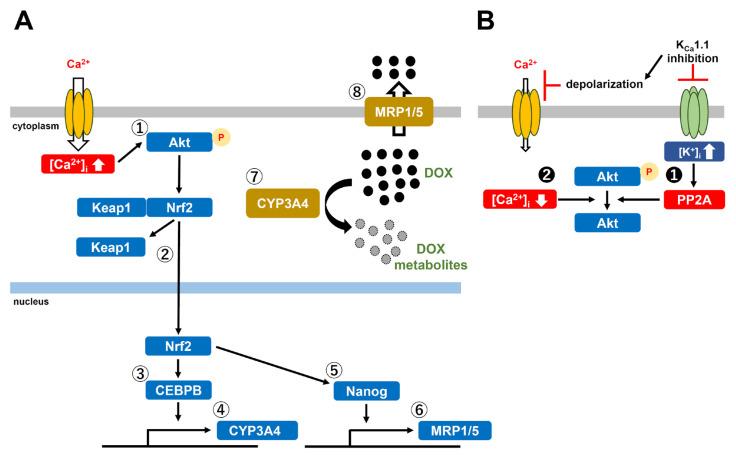
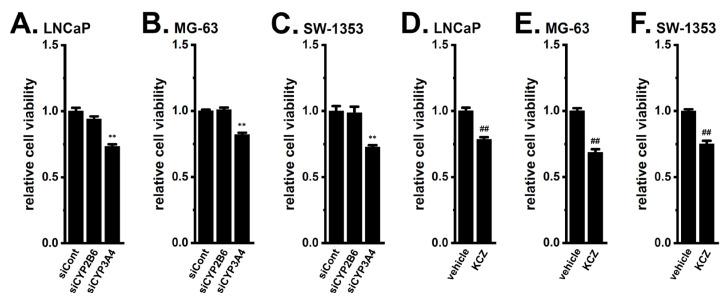
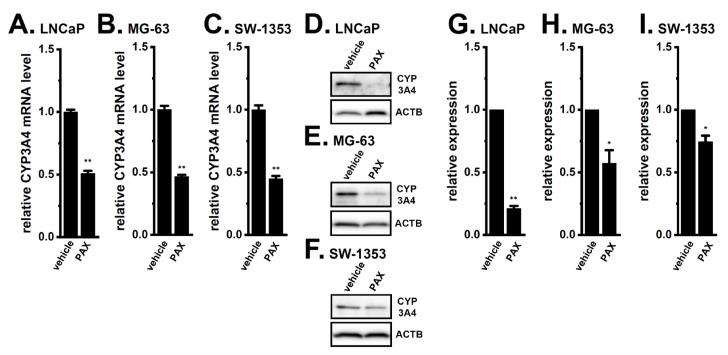
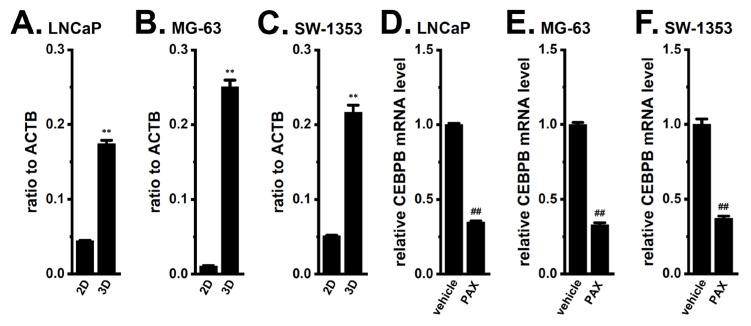
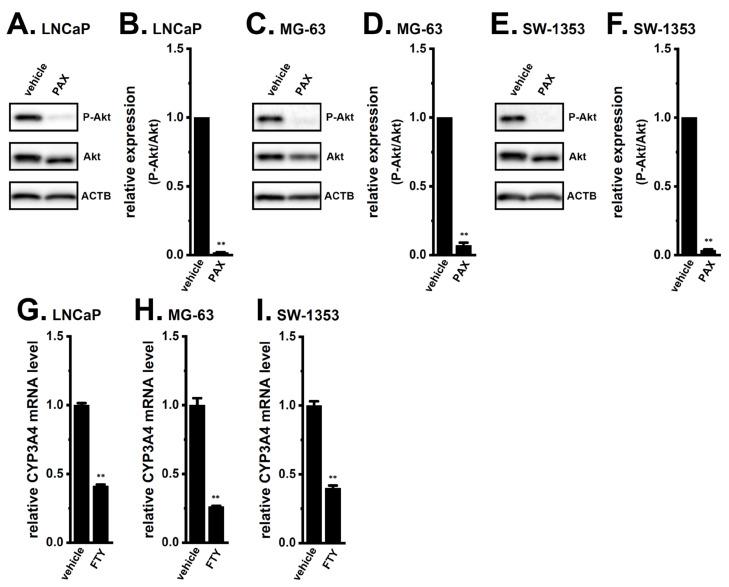
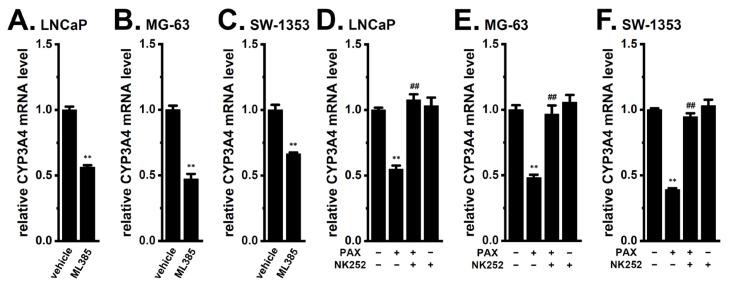
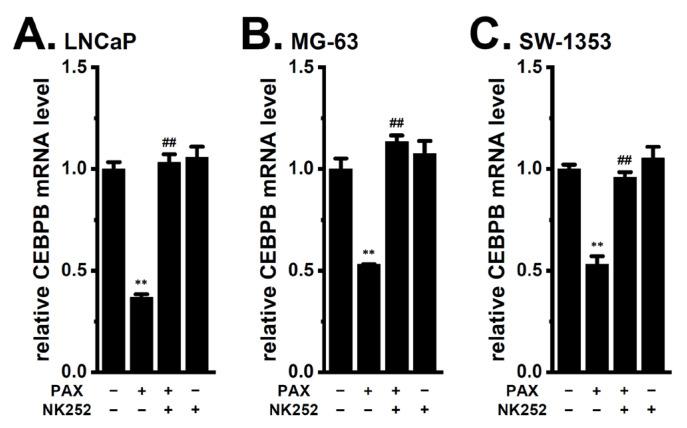
The large-conductance Ca-activated K channel, K1.1, plays a pivotal role in cancer progression, metastasis, and the acquisition of chemoresistance. Previous studies indicated that the pharmacological inhibition of K1.1 overcame resistance to doxorubicin (DOX) by down-regulating multidrug resistance-associated proteins in the three-dimensional spheroid models of human prostate cancer LNCaP, osteosarcoma MG-63, and chondrosarcoma SW-1353 cells. Investigations have recently focused on the critical roles of intratumoral, drug-metabolizing cytochrome P450 enzymes (CYPs) in chemoresistance. In the present study, we examined the involvement of CYPs in the acquisition of DOX resistance and its overcoming by inhibiting K1.1 in cancer spheroid models. Among the CYP isoforms involved in DOX metabolism, CYP3A4 was up-regulated by spheroid formation and significantly suppressed by the inhibition of K1.1 through the transcriptional repression of CCAAT/enhancer-binding protein, CEBPB, which is a downstream transcription factor of the Nrf2 signaling pathway. DOX resistance was overcome by the siRNA-mediated inhibition of CYP3A4 and treatment with the potent CYP3A4 inhibitor, ketoconazole, in cancer spheroid models. The phosphorylation levels of Akt were significantly reduced by inhibiting K1.1 in cancer spheroid models, and K1.1-induced down-regulation of CYP3A4 was reversed by the treatment with Akt and Nrf2 activators. Collectively, the present results indicate that the up-regulation of CYP3A4 is responsible for the acquisition of DOX resistance in cancer spheroid models, and the inhibition of K1.1 overcame DOX resistance by repressing CYP3A4 transcription mainly through the Akt-Nrf2-CEBPB axis.
大电导钙激活钾通道,K1.1,在癌症的进展、转移和获得化疗耐药性方面起着关键作用。先前的研究表明,通过下调三维球体模型中人前列腺癌细胞 LNCaP、骨肉瘤 MG-63 和软骨肉瘤 SW-1353 中的多药耐药相关蛋白,K1.1 的药理抑制克服了对阿霉素(DOX)的耐药性。最近的研究集中在肿瘤内、药物代谢细胞色素 P450 酶(CYPs)在化疗耐药性中的关键作用。在本研究中,我们研究了 CYPs 在获得 DOX 耐药性及其通过抑制 K1.1 在癌症球体模型中克服耐药性中的作用。在参与 DOX 代谢的 CYP 同工酶中,CYP3A4 被球体形成上调,并通过 K1.1 的抑制显著抑制,通过 Nrf2 信号通路的下游转录因子 CCAAT/增强子结合蛋白,CEBPB 的转录抑制。通过在癌症球体模型中 siRNA 抑制 CYP3A4 和使用强效 CYP3A4 抑制剂酮康唑治疗克服了 DOX 耐药性。在癌症球体模型中,抑制 K1.1 显著降低了 Akt 的磷酸化水平,并且通过用 Akt 和 Nrf2 激活剂处理,K1.1 诱导的 CYP3A4 下调得到逆转。总之,目前的结果表明,CYP3A4 的上调是癌症球体模型中获得 DOX 耐药性的原因,并且通过抑制 Akt-Nrf2-CEBPB 轴主要通过抑制 CYP3A4 转录来克服 K1.1 的抑制 DOX 耐药性。






 Zotero 插件