
与年龄相关的 COVID-19 对男性生育力的影响。
Age-Related COVID-19 Influence on Male Fertility.
机构信息
D.O. Ott Research Institute of Obstetrics, Gynecology, and Reproductive Medicine, 199034 St. Petersburg, Russia.
出版信息
Int J Mol Sci. 2023 Oct 30;24(21):15742. doi: 10.3390/ijms242115742.
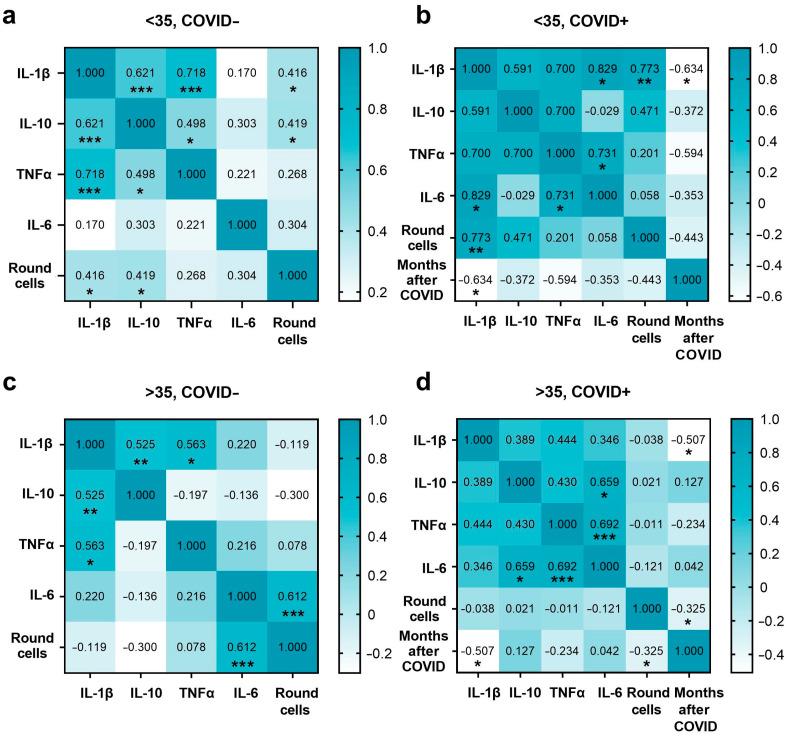
The impact of coronavirus on the reproductive health of men attracts the special attention of many researchers. While studies suggest changes in sperm parameters and the possibility of testicular inflammation, further studies are needed to elucidate any potential age-related changes in these findings, which is the purpose of the present study. The semen quality parameters, cytokine concentration, and markers of the pro- and antioxidant system were assessed in 60 men five to seven months after the coronavirus infection and in 77 controls (without a history of coronavirus infection). Additionally, participants were divided into two age groups: less than 35 years and 35 years or older. Notably increased round cell count in ejaculate and reduced sperm hyaluronan binding ability were observed among post-infection patients younger than 35 years. In the same group, a decline in seminal plasma zinc levels and nitrotyrosine in the cell fraction was found. In men over 35 years of age, Coronavirus Disease 2019 (COVID-19) led to increased sperm DNA fragmentation, a decrease in the total antioxidant capacity, and an elevation in the levels of interleukin-1β and interleukin-10. The concentration of interleukin-1β decreased over time following recovery in all affected patients. The data obtained suggest the potential adverse impact of the coronavirus infection on male reproductive health; however, these effects appear to be age-dependent.
冠状病毒对男性生殖健康的影响引起了许多研究人员的特别关注。虽然研究表明精子参数发生了变化,并且存在睾丸炎症的可能性,但仍需要进一步的研究来阐明这些发现中是否存在任何与年龄相关的潜在变化,这就是本研究的目的。本研究评估了 60 名男性在冠状病毒感染后 5 至 7 个月的精液质量参数、细胞因子浓度和前抗氧化系统标志物,以及 77 名对照组(无冠状病毒感染史)的相应参数。此外,参与者被分为两个年龄组:<35 岁和≥35 岁。值得注意的是,在感染后的年轻男性(<35 岁)中,发现精液中圆形细胞计数增加,精子透明质酸结合能力降低。在同一组中,还发现精液锌水平和细胞部分硝基酪氨酸下降。在年龄>35 岁的男性中,COVID-19 导致精子 DNA 碎片化增加,总抗氧化能力降低,白细胞介素-1β和白细胞介素-10 水平升高。所有受影响的患者在康复后,白细胞介素-1β的浓度随时间下降。研究结果表明,冠状病毒感染可能对男性生殖健康产生不利影响;然而,这些影响似乎是年龄依赖性的。


 Zotero 插件