
探讨饲养密度对斑马鱼性腺表观遗传修饰的影响。
Exploring the Effects of Rearing Densities on Epigenetic Modifications in the Zebrafish Gonads.
机构信息
IHPE, Université de Montpellier, CNRS, IFREMER, Université de Perpignan Via Domitia, 34090 Montpellier, France.
CIRAD, UMR ISEM, 34398 Montpellier, France.
出版信息
Int J Mol Sci. 2023 Nov 6;24(21):16002. doi: 10.3390/ijms242116002.
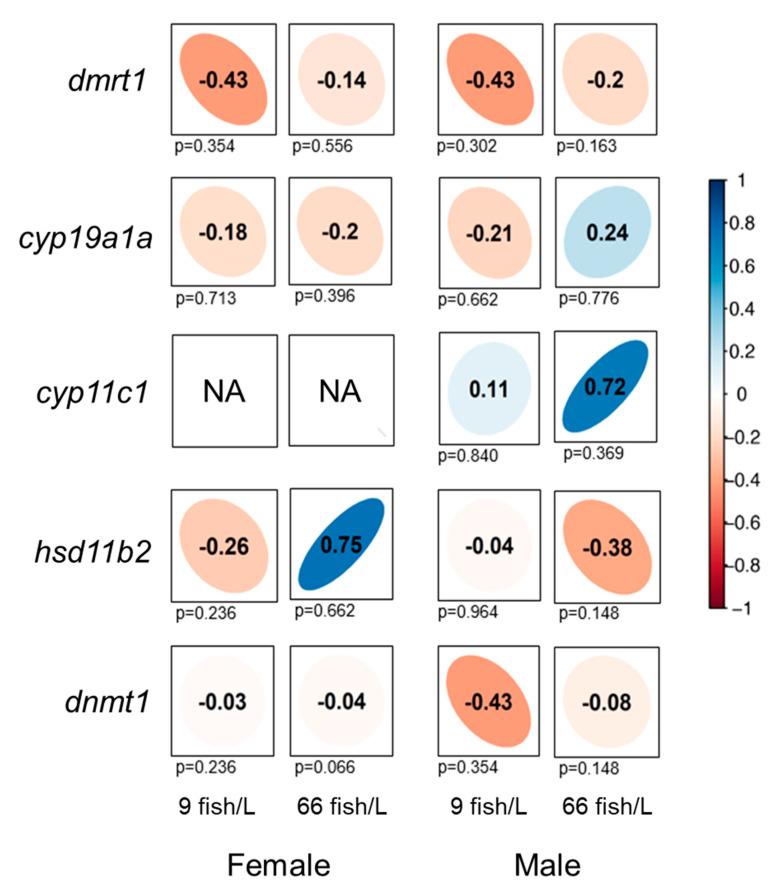
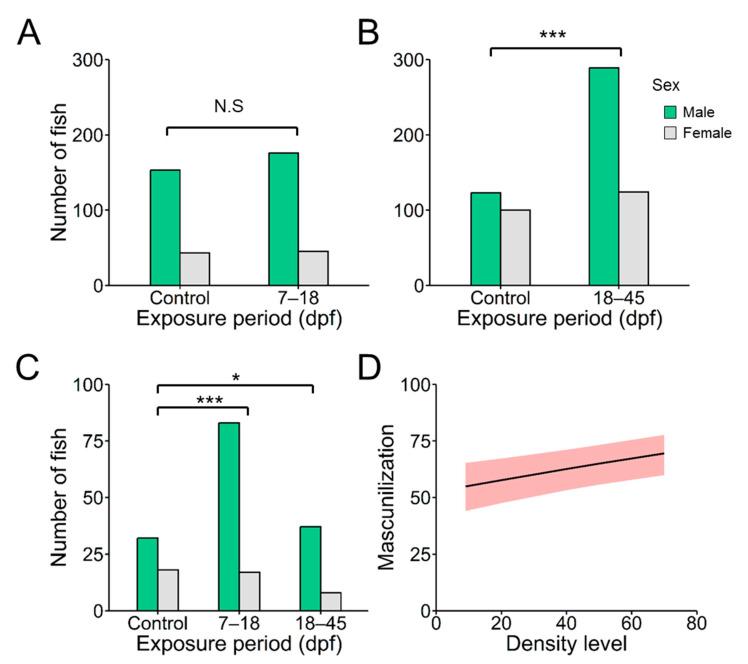
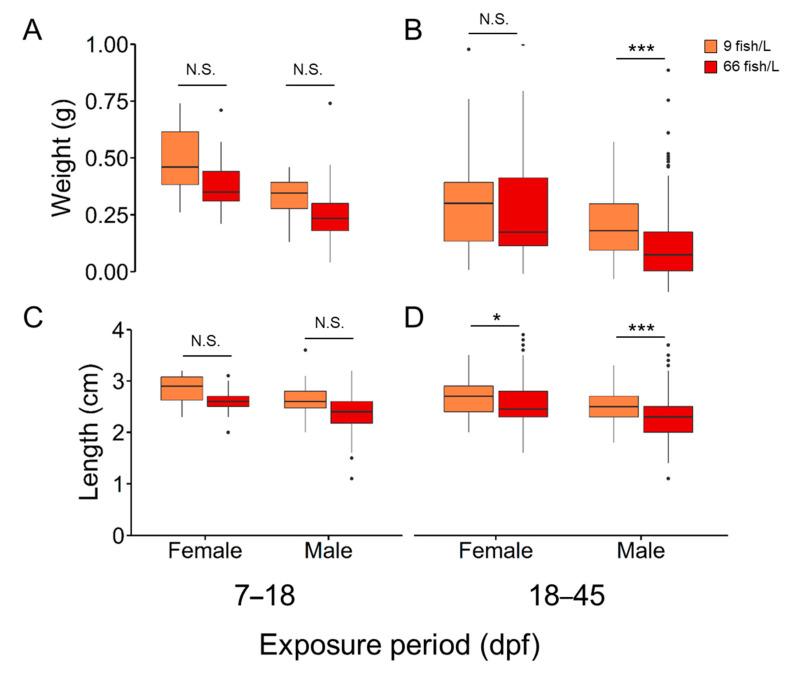
Rearing density directly impacts fish welfare, which, in turn, affects productivity in aquaculture. Previous studies have indicated that high-density rearing during sexual development in fish can induce stress, resulting in a tendency towards male-biased sex ratios in the populations. In recent years, research has defined the relevance of the interactions between the environment and epigenetics playing a key role in the final phenotype. However, the underlying epigenetic mechanisms of individuals exposed to confinement remain elucidated. By using zebrafish (), the DNA methylation promotor region and the gene expression patterns of six genes, namely , , , , , and , involved in the DNA maintenance methylation, reproduction, and stress were assessed. Zebrafish larvae were subjected to two high-density conditions (9 and 66 fish/L) during two periods of overlapping sex differentiation of this species (7 to 18 and 18 to 45 days post-fertilization, dpf). Results showed a significant masculinization in the populations of fish subjected to high densities from 18 to 45 dpf. In adulthood, the gene was differentially hypomethylated in ovaries and its expression was significantly downregulated in the testes of fish exposed to high-density. Further, the gene showed downregulation of gene expression in the ovaries of fish subjected to elevated density, as previously observed in other studies. We proposed as a potential testicular epimarker and the expression of ovarian as a potential biomarker for predicting stress originated from high densities during the early stages of development. These findings highlight the importance of rearing densities by long-lasting effects in adulthood conveying cautions for stocking protocols in fish hatcheries.
养殖密度直接影响鱼类福利,进而影响水产养殖的生产力。先前的研究表明,鱼类在性发育过程中的高密度养殖会引起应激,导致种群中雄性偏向的性别比例。近年来,研究已经确定了环境与表观遗传学之间的相互作用在最终表型中起着关键作用。然而,个体在受到限制时的潜在表观遗传机制仍有待阐明。本研究使用斑马鱼(Danio rerio)评估了六个基因( , , , , 和 )的 DNA 维持甲基化、繁殖和应激相关的 DNA 甲基化启动子区域和基因表达模式,这些基因涉及 DNA 维持甲基化、繁殖和应激。斑马鱼幼鱼在两个重叠的性分化期(受精后 7 至 18 天和 18 至 45 天)经历了两种高密度条件(9 和 66 尾/升)。结果表明,从 18 至 45 天的高密度下的鱼群显著雄性化。在成年期,在暴露于高密度的鱼的卵巢中 基因表现出显著的低甲基化,其在睾丸中的表达显著下调。此外,在暴露于高浓度的鱼的卵巢中, 基因的表达下调,如先前在其他研究中观察到的那样。我们提出 作为一种潜在的睾丸表观遗传标记,以及卵巢 表达作为预测早期发育阶段高浓度引起的应激的潜在生物标志物。这些发现强调了养殖密度的重要性,其在成年期的长期影响会引起鱼类孵化场放流方案的关注。


 Zotero 插件