
某些精油对耐药临床 spp. 菌株的体外抗真菌活性。
In Vitro Antifungal Activity of Selected Essential Oils against Drug-Resistant Clinical spp. Strains.
机构信息
Department Public Health and Pediatrics, Microbiology Division, University of Torino, 10126 Turin, Italy.
出版信息
Molecules. 2023 Oct 25;28(21):7259. doi: 10.3390/molecules28217259.
BACKGROUND
Treatment options for aspergillosis include amphotericin B (AMB) and azole compounds, such as itraconazole (ITZ). However, serious side effects related to these antifungal agents are increasingly evident, and resistance continues to increase. Currently, a new trend in drug discovery to overcome this problem is represented by natural products from plants, or their extracts. Particularly, there is a great interest in essential oils (EOs) recognized for their antimicrobial role towards bacteria, fungi and viruses.
METHODS
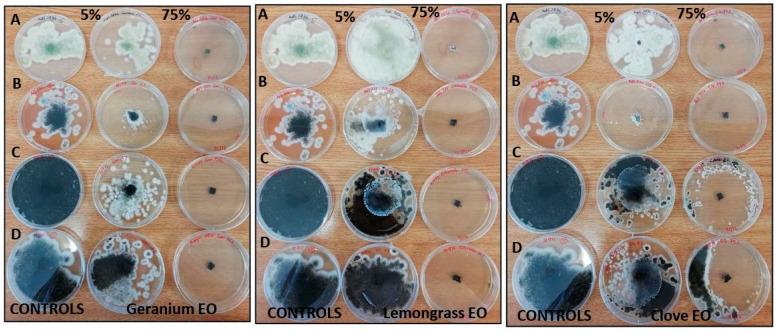
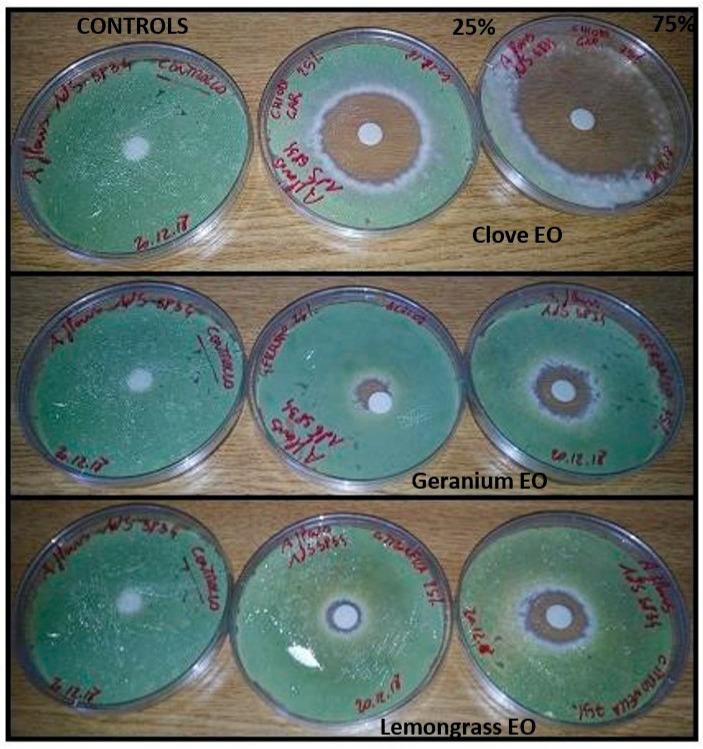
In this study, we evaluated the antifungal activity of eleven commercial EOs-clove, eucalyptus, geranium, hybrid lavender, lavender, lemon, lemongrass, neroli, oregano, tea tree and red red thyme-in comparison with AMB and ITZ against , and clinical isolates. Antifungal activity was determined by broth microdilution method, agar diffusion technique, fungistatic and fungicidal activities and vapor contact assay.
RESULTS
Gas chromatography-mass spectrometry analysis displayed two groups of distinct biosynthetical origin: monoterpenes dominated the chemical composition of the most oils. Only two aromatic compounds (eugenol 78.91% and eugenyl acetate 11.64%) have been identified as major components in clove EO. Lemongrass EO exhibits the strongest antimicrobial activity with a minimum inhibitory concentration of 0.56 mg/mL and a minimum fungicidal concentration of 2.25-4.5 mg/mL against spp. strains. Clove and geranium EOs were fairly effective in inhibiting spp. growth.
CONCLUSIONS
These results demonstrate the antimicrobial potential of some EOs and support the research of new alternatives or complementary therapies based on EOs.
背景
曲霉菌病的治疗选择包括两性霉素 B (AMB) 和唑类化合物,如伊曲康唑 (ITZ)。然而,与这些抗真菌药物相关的严重副作用越来越明显,耐药性持续增加。目前,克服这一问题的药物发现新趋势是以植物或其提取物为代表的天然产物。特别是,精油 (EOs) 因其对细菌、真菌和病毒的抗菌作用而备受关注。
方法
在这项研究中,我们评估了 11 种商业 EO-丁香、桉树、天竺葵、杂交薰衣草、薰衣草、柠檬、柠檬草、橙花、牛至、茶树和红 thyme-对 、 和 临床分离株的抗真菌活性,与 AMB 和 ITZ 进行比较。通过肉汤微量稀释法、琼脂扩散技术、抑菌和杀菌活性以及蒸汽接触测定法来测定抗真菌活性。
结果
气相色谱-质谱分析显示了两组不同的生物合成来源:单萜类化合物主导了大多数油的化学成分。只有两种芳香化合物(丁香酚 78.91%和丁香烯乙酸酯 11.64%)被鉴定为丁香精油的主要成分。柠檬草精油对 种菌株表现出最强的抗菌活性,最小抑菌浓度为 0.56 mg/mL,最小杀菌浓度为 2.25-4.5 mg/mL。丁香和天竺葵精油对 种菌株的生长有相当的抑制作用。
结论
这些结果表明了一些 EOs 的抗菌潜力,并支持了基于 EOs 的新替代或补充疗法的研究。


 Zotero 插件