
多层网络模型确定 Akt1 为神经退行性变的常见调节剂。
A multi-layered network model identifies Akt1 as a common modulator of neurodegeneration.
机构信息
Department of Biomedical Engineering, Chung-Ang University, Seoul, Republic of Korea.
College of Life Sciences and Biotechnology, Korea University, Seoul, Republic of Korea.
出版信息
Mol Syst Biol. 2023 Dec 6;19(12):e11801. doi: 10.15252/msb.202311801. Epub 2023 Nov 20.
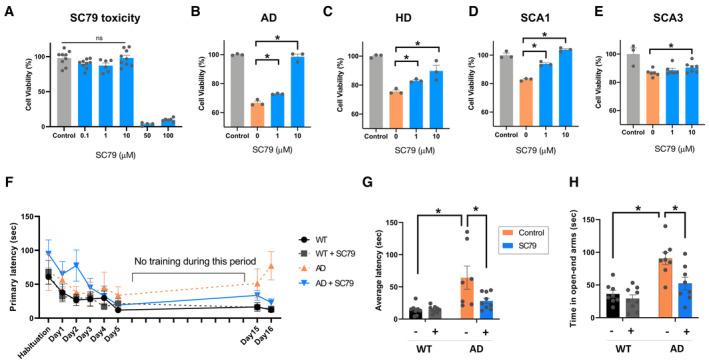
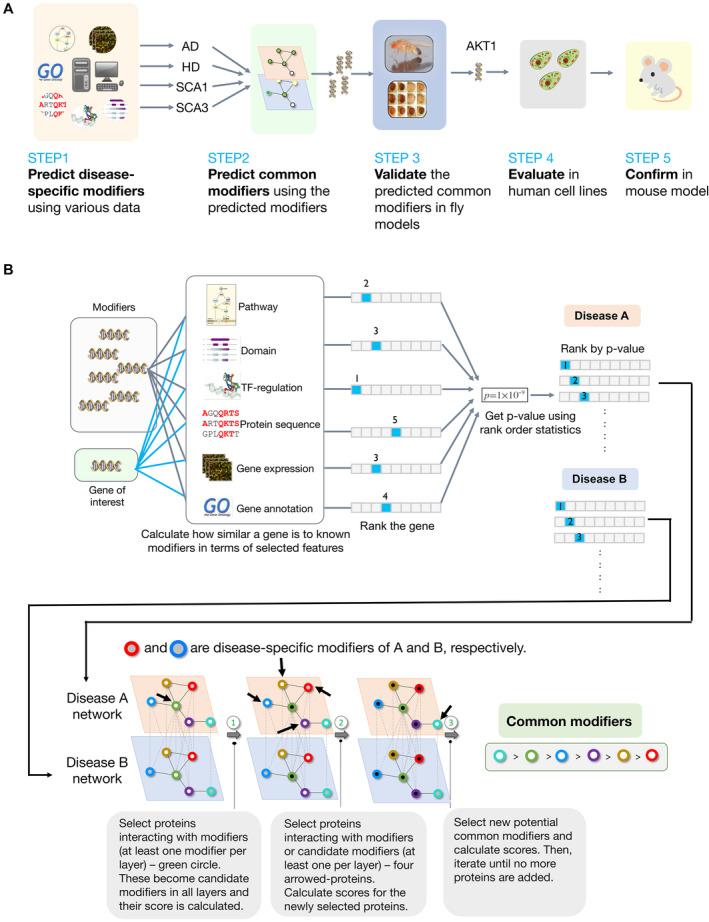
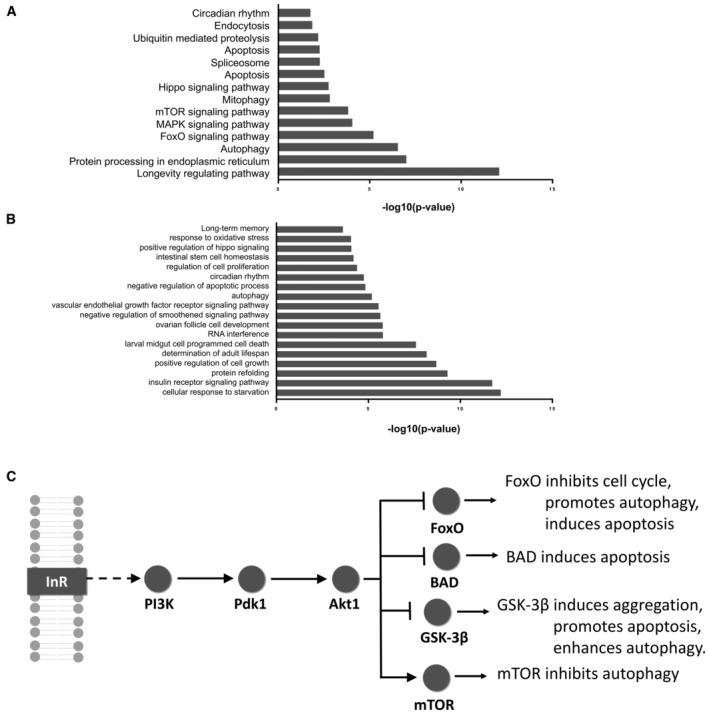
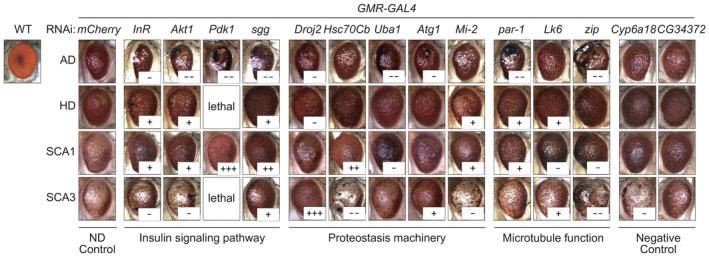
The accumulation of misfolded and aggregated proteins is a hallmark of neurodegenerative proteinopathies. Although multiple genetic loci have been associated with specific neurodegenerative diseases (NDs), molecular mechanisms that may have a broader relevance for most or all proteinopathies remain poorly resolved. In this study, we developed a multi-layered network expansion (MLnet) model to predict protein modifiers that are common to a group of diseases and, therefore, may have broader pathophysiological relevance for that group. When applied to the four NDs Alzheimer's disease (AD), Huntington's disease, and spinocerebellar ataxia types 1 and 3, we predicted multiple members of the insulin pathway, including PDK1, Akt1, InR, and sgg (GSK-3β), as common modifiers. We validated these modifiers with the help of four Drosophila ND models. Further evaluation of Akt1 in human cell-based ND models revealed that activation of Akt1 signaling by the small molecule SC79 increased cell viability in all models. Moreover, treatment of AD model mice with SC79 enhanced their long-term memory and ameliorated dysregulated anxiety levels, which are commonly affected in AD patients. These findings validate MLnet as a valuable tool to uncover molecular pathways and proteins involved in the pathophysiology of entire disease groups and identify potential therapeutic targets that have relevance across disease boundaries. MLnet can be used for any group of diseases and is available as a web tool at http://ssbio.cau.ac.kr/software/mlnet.
蛋白质错误折叠和聚集的积累是神经退行性蛋白病的标志。尽管已经有多个遗传位点与特定的神经退行性疾病 (NDs) 相关联,但对于大多数或所有蛋白病可能具有更广泛相关性的分子机制仍未得到很好的解决。在这项研究中,我们开发了一种多层网络扩展 (MLnet) 模型来预测与一组疾病共有的蛋白质修饰物,因此,可能对该组疾病具有更广泛的病理生理学相关性。当应用于四种 NDs(阿尔茨海默病 (AD)、亨廷顿病和脊髓小脑共济失调 1 型和 3 型)时,我们预测了胰岛素途径的多个成员,包括 PDK1、Akt1、InR 和 sgg(GSK-3β),作为共同修饰物。我们借助四个果蝇 ND 模型对这些修饰物进行了验证。在人类基于细胞的 ND 模型中进一步评估 Akt1 发现,小分子 SC79 激活 Akt1 信号可增加所有模型的细胞活力。此外,用 SC79 治疗 AD 模型小鼠可增强其长期记忆并改善失调的焦虑水平,AD 患者通常会受到这些影响。这些发现验证了 MLnet 是一种发现与整个疾病组病理生理学相关的分子途径和蛋白质的有价值工具,并确定了跨越疾病边界具有相关性的潜在治疗靶点。MLnet 可用于任何疾病组,并且可作为网络工具在 http://ssbio.cau.ac.kr/software/mlnet 上使用。

 Zotero 插件