
Bcl-2 家族成员在系统性红斑狼疮和类风湿关节炎中 B 细胞和 T 细胞的差异表达模式。
Differential expression pattern of Bcl-2 family members in B and T cells in systemic lupus erythematosus and rheumatoid arthritis.
机构信息
Department of Experimental Immunology, Amsterdam Infection & Immunity Institute (AIII), Amsterdam UMC, University of Amsterdam, Amsterdam, The Netherlands.
Department of Hematology, Cancer Center Amsterdam, Amsterdam UMC, University of Amsterdam, Amsterdam, The Netherlands.
出版信息
Arthritis Res Ther. 2023 Nov 22;25(1):225. doi: 10.1186/s13075-023-03203-7.
OBJECTIVE
This study aimed to evaluate the expression level of anti-apoptotic Bcl-2 family proteins in B and T cells in patients with systemic lupus erythematosus (SLE) and rheumatoid arthritis (RA) in relation to disease activity and the effect of various Bcl-2 family inhibitors (BH3 mimetics) as potential treatment.
METHODS
We included 14 SLE patients, 12 RA patients, and 13 healthy controls to study anti-apoptotic Bcl-2, Bcl-XL, and Mcl-1 expression and cell survival in different B and T cell subsets using stimulation assays and intracellular flow cytometry. Effect of various BH3 mimetics was assessed by cell viability analyses.
RESULTS
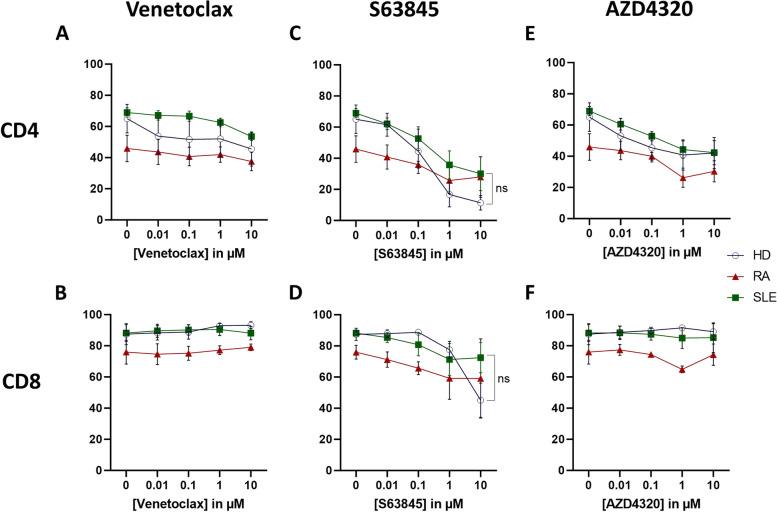
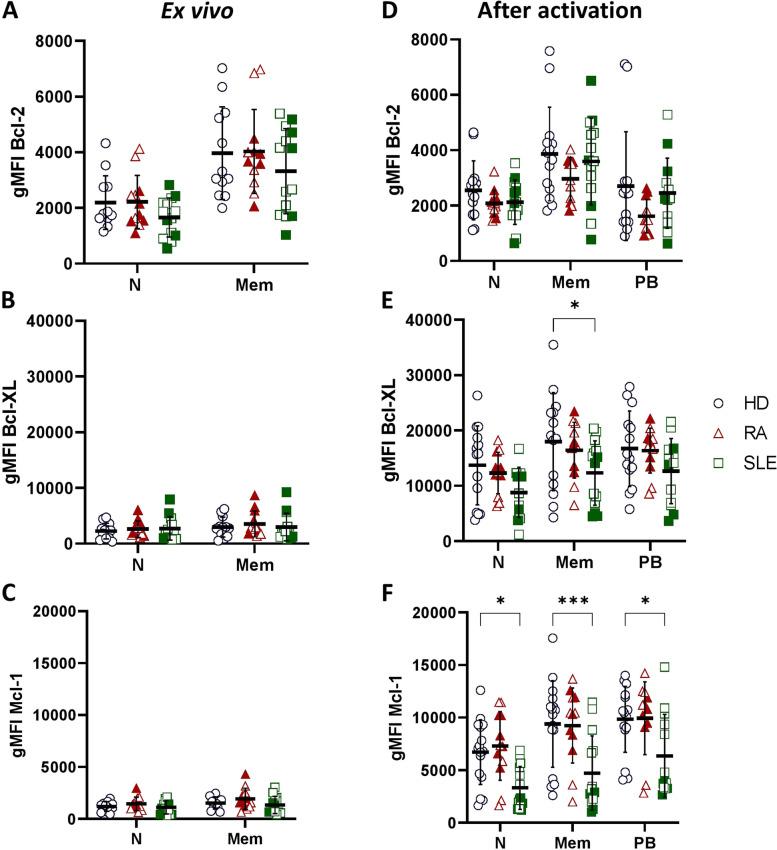
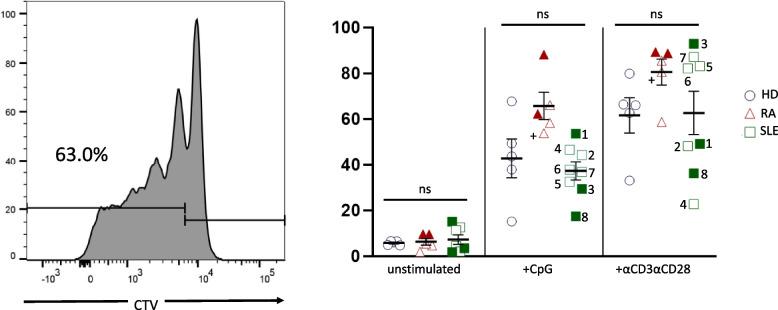
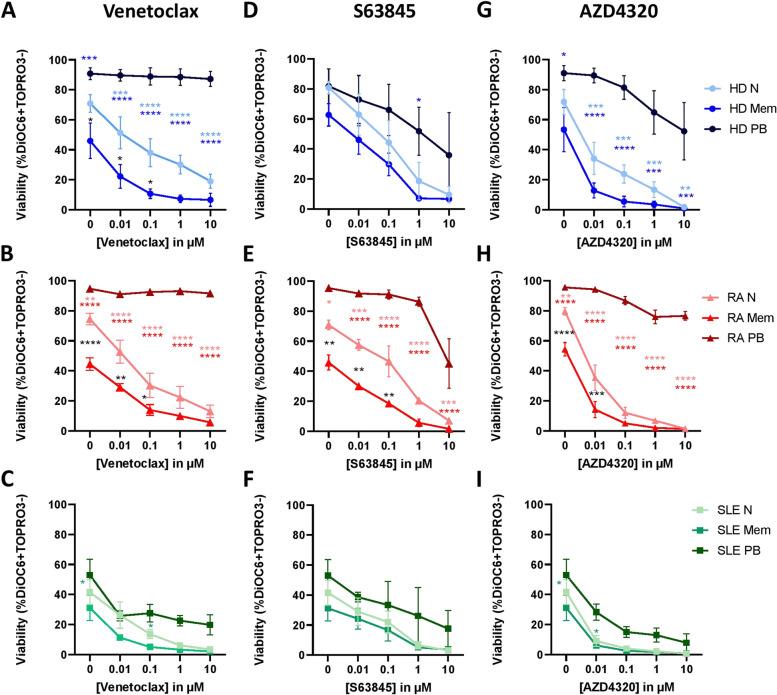
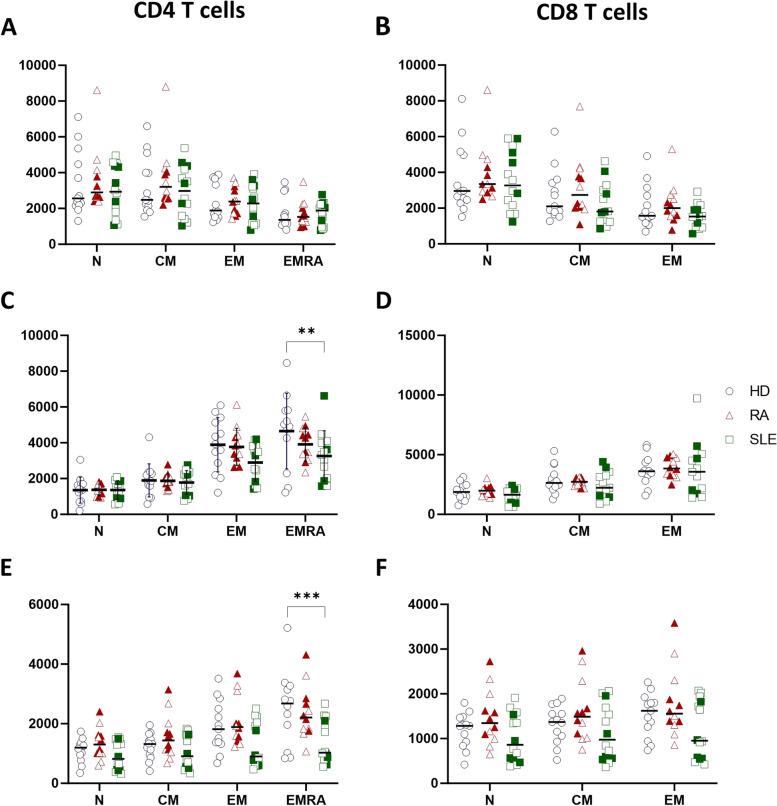
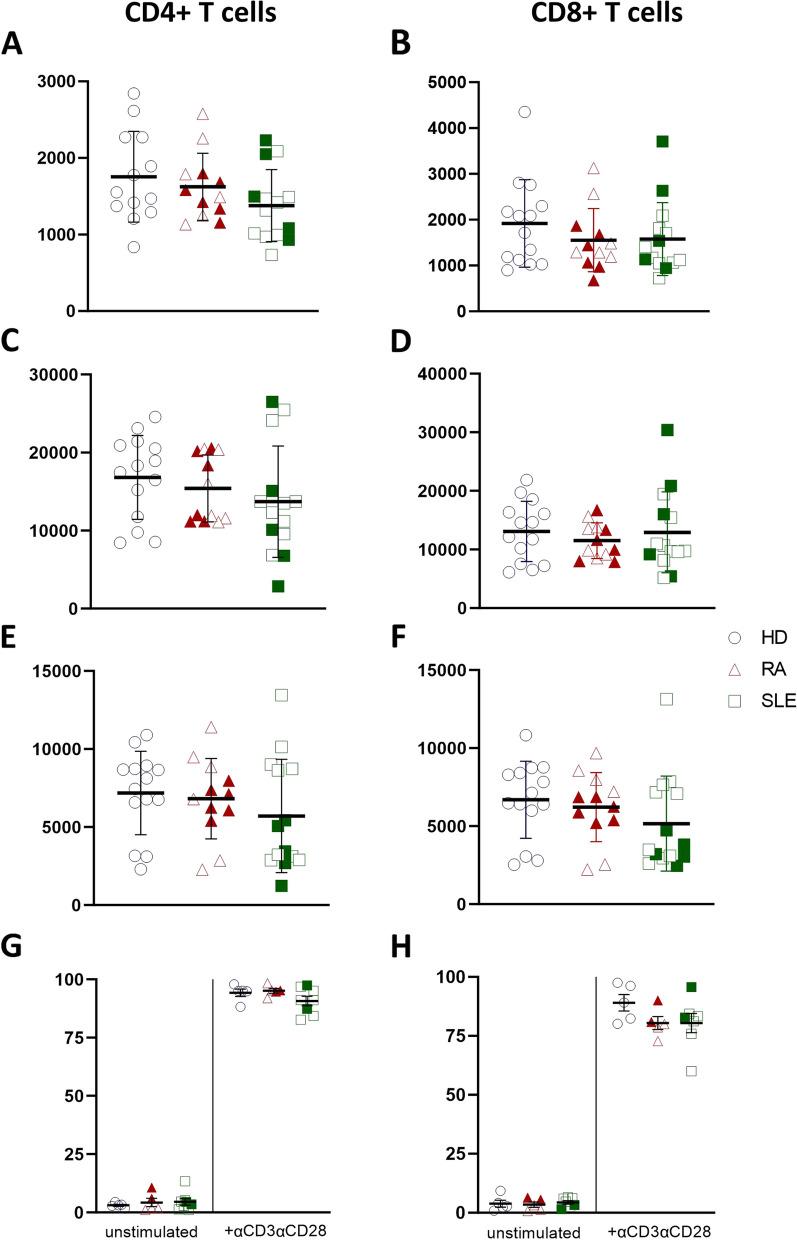
In SLE, significant differences in Bcl-2 family members were confined to the B cell compartment with decreased induction of Bcl-XL (p ≤ 0.05) and Mcl-1 (p ≤ 0.001) upon CpG stimulation. In RA, we did not observe any differences in expression levels of Bcl-2 family proteins. Expression patterns did not correlate with disease activity apart from decreased induction of Mcl-1 in B cells in active SLE. After in vitro stimulation with CpG, plasmablasts were more viable after treatment with three different BH3 mimetics compared to naïve or memory B cells in control and patient cells. After activation, Mcl-1 inhibition was most effective in reducing plasmablast and T cell viability, however, less in patients than controls.
CONCLUSION
Our study provides evidence for the increased differential expression pattern of Bcl-2 family members in B and T cell subsets of patients with SLE compared to controls. Tested BH3 mimetics showed higher efficacy in controls compared to both autoimmune diseases, though nonsignificant due to low patient numbers.
目的
本研究旨在评估系统性红斑狼疮(SLE)和类风湿关节炎(RA)患者 B 和 T 细胞中抗凋亡 Bcl-2 家族蛋白的表达水平与疾病活动的关系,以及各种 Bcl-2 家族抑制剂(BH3 模拟物)作为潜在治疗方法的效果。
方法
我们纳入了 14 例 SLE 患者、12 例 RA 患者和 13 名健康对照者,通过刺激实验和细胞内流式细胞术研究不同 B 和 T 细胞亚群中抗凋亡 Bcl-2、Bcl-XL 和 Mcl-1 的表达和细胞存活情况。通过细胞活力分析评估各种 BH3 模拟物的作用。
结果
在 SLE 中,Bcl-2 家族成员的差异仅限于 B 细胞区室,CpG 刺激时 Bcl-XL(p ≤ 0.05)和 Mcl-1(p ≤ 0.001)的诱导减少。在 RA 中,我们没有观察到 Bcl-2 家族蛋白表达水平的任何差异。除了在活动期 SLE 中 B 细胞中 Mcl-1 的诱导减少外,表达模式与疾病活动无关。在用 CpG 体外刺激后,与对照和患者细胞中的幼稚或记忆 B 细胞相比,三种不同 BH3 模拟物处理后浆母细胞的活力更高。在激活后,Mcl-1 抑制在降低浆母细胞和 T 细胞活力方面最为有效,但在患者中的效果低于对照者。
结论
我们的研究为 SLE 患者与对照者相比 B 和 T 细胞亚群中 Bcl-2 家族成员的差异表达模式提供了证据。测试的 BH3 模拟物在对照者中的疗效高于两种自身免疫性疾病,但由于患者数量较少,效果不显著。
 Zotero 插件