
腹部肥胖与消化系统癌症:前瞻性研究的系统评价和荟萃分析。
Abdominal obesity and digestive system cancer: a systematic review and meta-analysis of prospective studies.
机构信息
School of Public Health, Shanxi Medical University, Taiyuan, China.
Heping Hospital Affiliated to Changzhi Medical College, Changzhi, China.
出版信息
BMC Public Health. 2023 Nov 27;23(1):2343. doi: 10.1186/s12889-023-17275-2.
BACKGROUND
The diagnostic criteria for abdominal obesity are usually waist circumference or waist-to-hip ratio. The magnitude of the risks for cancers of the digestive system and abdominal obesity is unknown. To assess whether abdominal obesity increases the risk of digestive cancer, we conducted a systematic review and meta-analysis of prospective cohort studies in a database.
METHODS
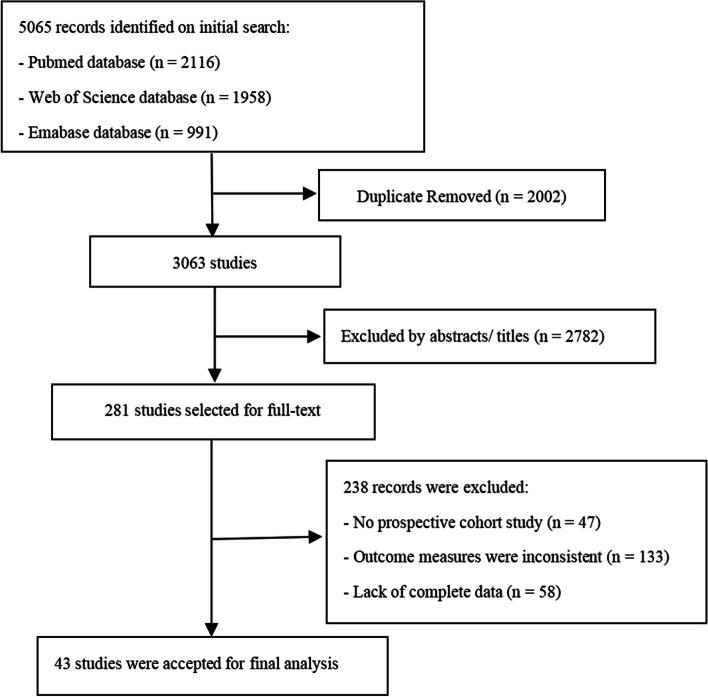
PubMed, Embase, and Web of Science databases were searched from their inception to December 2022. The 9-star Newcastle Ottawa Scale was used to assess study quality. Pooled relative risks and 95% confidence intervals were calculated using fixed or random effect models respectively. The stability of the results was explored by one-by-one exclusion. Subgroup analysis was conducted to explore sources of heterogeneity. Publication bias was evaluated by Begg's and Egger's tests.
RESULTS
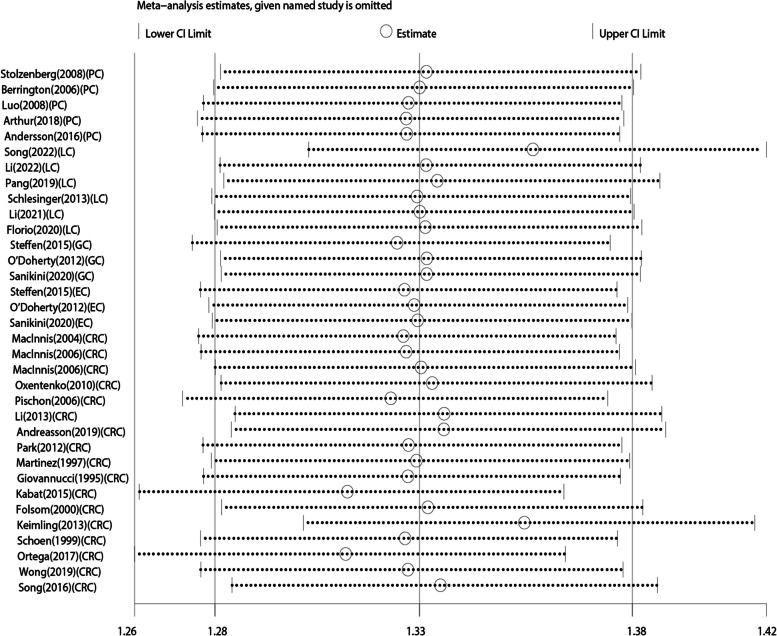
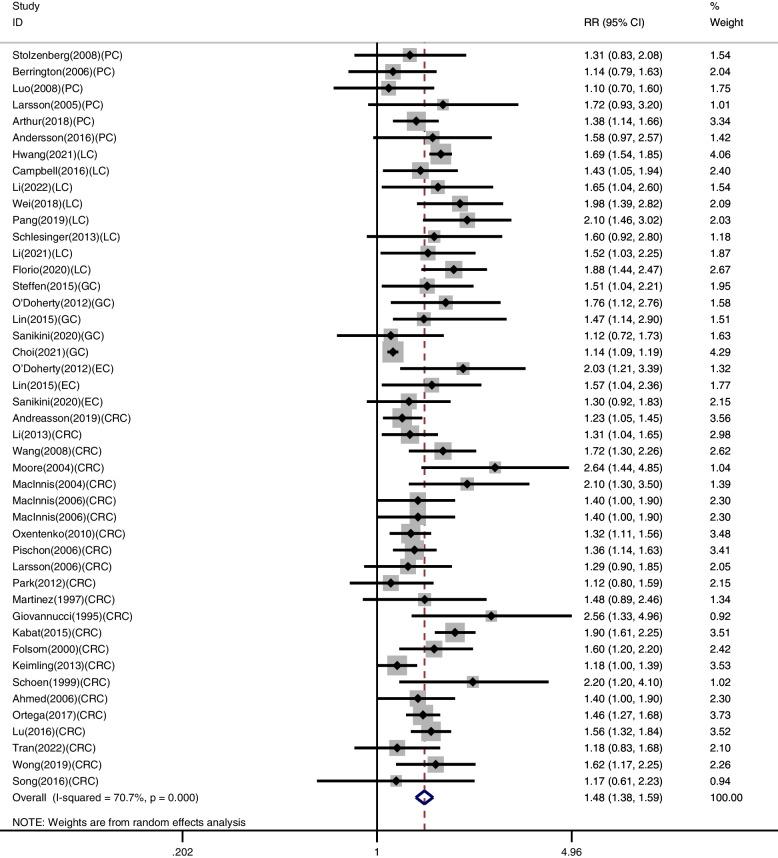
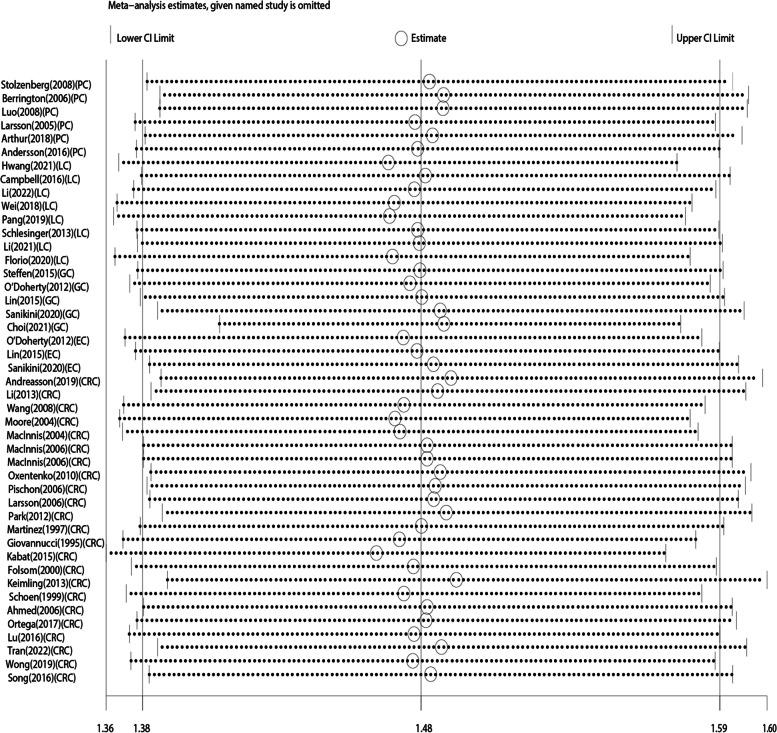
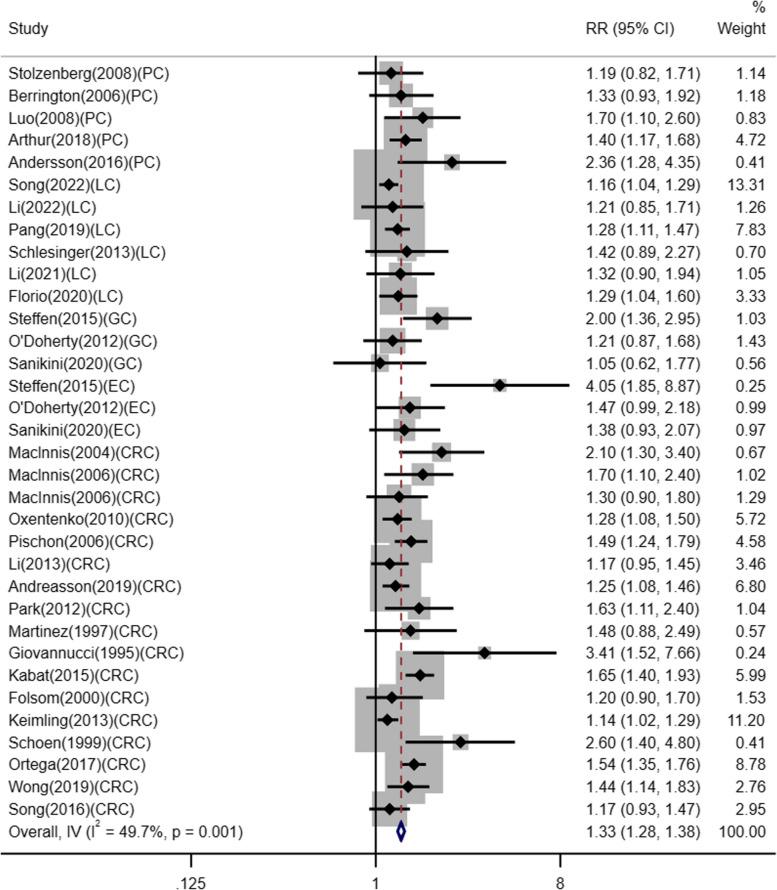
A total of 43 cohort studies were included. There were 42 and 31 studies in the meta-analysis of waist circumference and waist-to-hip ratio on digestive system cancer, respectively. The results of the meta-analysis revealed that the greater waist circumference and waist-to-hip ratio were correlated with increased incidence of digestive system cancers: waist circumference: RR 1.48, 95% CI 1.38-1.59, p < 0.001; waist-to-hip ratio: RR 1.33, 95% CI 1.28-1.38, p = 0.001. Subgroup analysis by cancer type showed that higher WC and WHR would increase the prevalence of LC, PC, GC, EC, and CRC. The sensitivity analysis was conducted by a one-by-one elimination method, and the results of the meta-analysis remained stable. It is proved that the results were robust by the trim-and-fill method.
CONCLUSIONS
There was evidence to suggest that abdominal obesity increased the incidence of digestive cancer, it is necessary to take appropriate measures to reduce abdominal obesity. Waist circumference and waist-to-hip ratio may be better predictors of digestive system cancers. However, the association between waist circumference and digestive system cancer was greater, so more attention should be paid to measuring abdominal obesity with waist circumference.
背景
腹部肥胖的诊断标准通常是腰围或腰臀比。消化系统癌症和腹部肥胖风险的大小尚不清楚。为了评估腹部肥胖是否会增加消化系统癌症的风险,我们在数据库中对前瞻性队列研究进行了系统回顾和荟萃分析。
方法
从数据库建立到 2022 年 12 月,我们在 PubMed、Embase 和 Web of Science 数据库中进行了检索。使用 9 星纽卡斯尔-渥太华量表评估研究质量。使用固定或随机效应模型分别计算汇总相对风险和 95%置信区间。通过逐一排除来探索结果的稳定性。进行亚组分析以探索异质性的来源。使用 Begg 和 Egger 检验评估发表偏倚。
结果
共纳入 43 项队列研究。在腰围和腰臀比与消化系统癌症关系的荟萃分析中,分别有 42 项和 31 项研究。荟萃分析结果显示,腰围和腰臀比越大,与消化系统癌症发病率的增加相关:腰围:RR 1.48,95%CI 1.38-1.59,p<0.001;腰臀比:RR 1.33,95%CI 1.28-1.38,p=0.001。按癌症类型进行的亚组分析显示,较高的 WC 和 WHR 会增加 LC、PC、GC、EC 和 CRC 的患病率。通过逐一排除的方法进行敏感性分析,荟萃分析结果保持稳定。通过修剪和填充法证明结果是稳健的。
结论
有证据表明腹部肥胖会增加消化系统癌症的发病率,有必要采取适当措施减少腹部肥胖。腰围和腰臀比可能是更好的消化系统癌症预测指标。然而,腰围与消化系统癌症的相关性更大,因此应该更加注意用腰围来衡量腹部肥胖。
 Zotero 插件