
靶向转移性骨肉瘤中的转化生长因子β信号通路。
Targeting transforming growth factor beta signaling in metastatic osteosarcoma.
作者信息
Ge Rongrong, Huang Gavin M
机构信息
Hillman Cancer Center at Central Pennsylvania, University of Pittsburg Medical Center, Harrisburg, PA, 17109, USA.
Harrisburg Academy School, 10 Erford Rd, Wormleysburg, PA, 17043, USA.
出版信息
J Bone Oncol. 2023 Nov 8;43:100513. doi: 10.1016/j.jbo.2023.100513. eCollection 2023 Dec.
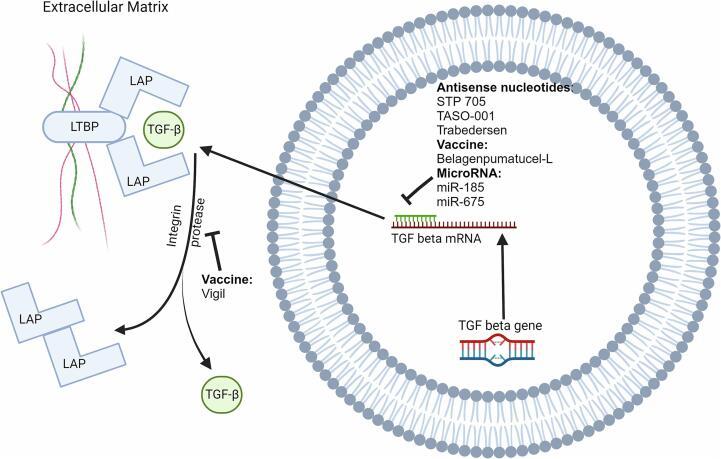
Osteosarcoma is a rare type of bone cancer, and half of the cases affect children and adolescents younger than 20 years of age. Despite intensive efforts to improve both chemotherapeutics and surgical management, the clinical outcome for metastatic osteosarcoma remains poor. Transforming growth factor β (TGF-β) is one of the most abundant growth factors in bones. The TGF-β signaling pathway has complex and contradictory roles in the pathogenesis of human cancers. TGF-β is primarily a tumor suppressor that inhibits proliferation and induces apoptosis of premalignant epithelial cells. In the later stages of cancer progression, however, TGF-β functions as a metastasis promoter by promoting tumor growth, inducing epithelial-mesenchymal transition (EMT), blocking antitumor immune responses, increasing tumor-associated fibrosis, and enhancing angiogenesis. In contrast with the dual effects of TGF-β on carcinoma (epithelial origin) progression, TGF-β seems to mainly have a pro-tumoral effect on sarcomas including osteosarcoma (mesenchymal origin). Many drugs that target TGF-β signaling have been developed: neutralizing antibodies that prevent TGF-β binding to receptor complexes; ligand trap employing recombinant Fc-fusion proteins containing the soluble ectodomain of either type II (TβRII) or the type III receptor ((TβRIII), preventing TGF-β from binding to its receptors; antisense nucleotides that reduce TGF-β expression at the transcriptional/translational level; small molecule inhibitors of serine/threonine kinases of the type I receptor (TβRI) preventing downstream signaling; and vaccines that contain cell lines transfected with TβRII antisense genes, or target furin convertase, resulting in reduced TGF-β signaling. TGF-β antagonists have been shown to have effects on osteosarcoma and . One of the small molecule TβRI inhibitors, Vactosertib, is currently undergoing a phase 1/2 clinical trial to evaluate its effect on osteosarcoma. Several phase 1/2/3 clinical trials have shown TGF-β antagonists are safe and well tolerated. For instance, Luspatercept, a TGF-β ligand trap, has been approved by the FDA for the treatment of anemia associated with myeloid dysplastic syndrome (MDS) with ring sideroblasts/mutated SF3B1 with acceptable safety. Clinical trials evaluating the long-term safety of Luspatercept are in process.
骨肉瘤是一种罕见的骨癌,半数病例发生在20岁以下的儿童和青少年身上。尽管在改善化疗和手术治疗方面付出了巨大努力,但转移性骨肉瘤的临床预后仍然很差。转化生长因子β(TGF-β)是骨骼中含量最丰富的生长因子之一。TGF-β信号通路在人类癌症的发病机制中具有复杂且矛盾的作用。TGF-β主要是一种肿瘤抑制因子,可抑制癌前上皮细胞的增殖并诱导其凋亡。然而,在癌症进展的后期,TGF-β通过促进肿瘤生长、诱导上皮-间质转化(EMT)、阻断抗肿瘤免疫反应、增加肿瘤相关纤维化以及促进血管生成,发挥转移促进剂的作用。与TGF-β对癌(上皮起源)进展的双重作用不同,TGF-β似乎主要对包括骨肉瘤(间质起源)在内的肉瘤具有促肿瘤作用。已经开发了许多靶向TGF-β信号通路的药物:阻止TGF-β与受体复合物结合的中和抗体;采用含有II型(TβRII)或III型受体(TβRIII)可溶性胞外域的重组Fc融合蛋白的配体陷阱,阻止TGF-β与其受体结合;在转录/翻译水平降低TGF-β表达的反义核苷酸;抑制I型受体(TβRI)丝氨酸/苏氨酸激酶的小分子抑制剂,从而阻止下游信号传导;以及含有转染了TβRII反义基因的细胞系或靶向弗林蛋白酶的疫苗,导致TGF-β信号传导减少。TGF-β拮抗剂已被证明对骨肉瘤有作用。小分子TβRI抑制剂之一Vactosertib目前正在进行1/2期临床试验,以评估其对骨肉瘤的疗效。多项1/2/3期临床试验表明,TGF-β拮抗剂是安全的且耐受性良好。例如,TGF-β配体陷阱Luspatercept已被美国食品药品监督管理局(FDA)批准用于治疗与伴有环形铁粒幼细胞/突变SF3B1的骨髓增生异常综合征(MDS)相关的贫血,其安全性可接受。评估Luspatercept长期安全性的临床试验正在进行中。


 Zotero 插件