
老年癌症患者的精神需求:一项修正的概念分析
Spiritual needs of older adults with cancer: A modified concept analysis.
作者信息
Cheng Linan, Chen Hongxiu, Lin Lu, Li Huiling, Zhang Fengying
机构信息
School of Nursing, Soochow University, Suzhou, China.
West China Hospital/West China School of Nursing, Sichuan University, Chengdu, China.
出版信息
Asia Pac J Oncol Nurs. 2023 Aug 6;10(11):100288. doi: 10.1016/j.apjon.2023.100288. eCollection 2023 Nov.
OBJECTIVE
To clarify the concept of spiritual needs and explain its meaning to older adults with cancer.
METHODS
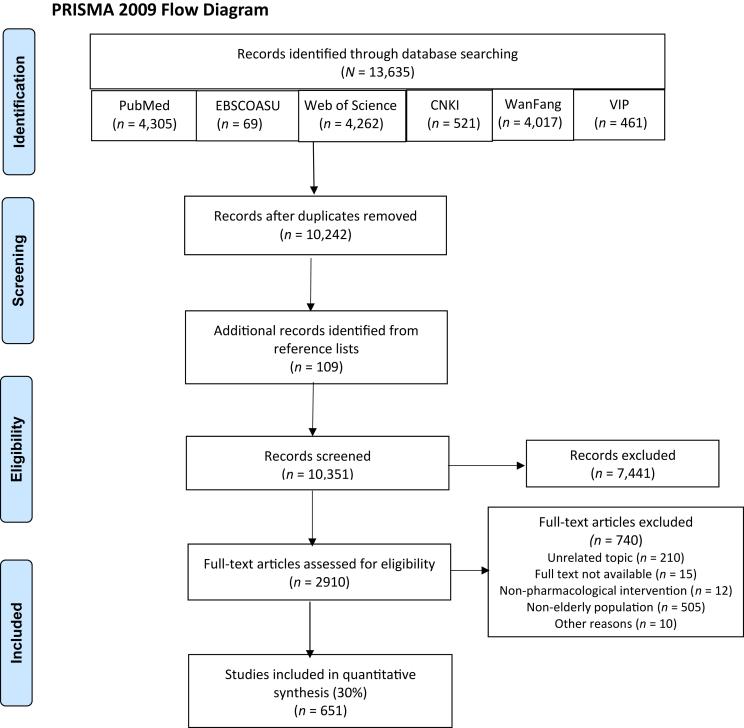
Electronic databases (Web of Science, PubMed, EBSCOASU, CNKI, Wanfang, and VIP) were systematically searched and analyzed using "spiritual needs" as keywords. Rodgers' evolutionary method guided the concept analysis to identify attributes, antecedents, and consequences. Two rounds of Delphi expert consultations ensured accuracy, reliability, and feasibility for implementation.
RESULTS
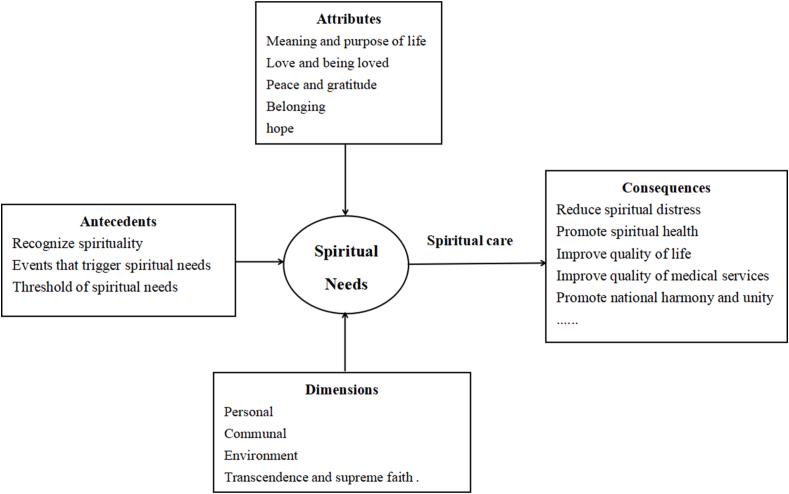
Spiritual needs express an individual's expectations of comfort and inner peace that satisfy his or her perception of the meaning and purpose of life, the ability to love and be loved, feelings of peace and gratitude, and a sense of belonging and hope. Spiritual needs have four dimensions: personal, communal, environmental, and transcendence or supreme. The attributes of spiritual needs include meaning and purpose of life, love and being loved, peace and gratitude, belonging, and hope. The antecedents include spiritual recognition and events that trigger spiritual needs and spiritual need thresholds. The outcomes of addressing and meeting the spiritual needs of older adults with cancer include promoting their spiritual health and enhancing their quality of life. After two rounds of Delphi experts' consultation, the expert authority coefficients (Cr) were 0.83 and 0.88, respectively. Experts agreed on the concept of spiritual needs.
CONCLUSIONS
Exploring antecedents of spiritual needs in older adults with cancer clarifies obstacles to spiritual practice, offering intervention strategies for spiritual care and well-being. Meeting their spiritual needs enhances spiritual health and quality of life, essential in humanistic nursing care.
目的
阐明精神需求的概念,并向老年癌症患者解释其含义。
方法
以“精神需求”为关键词,系统检索和分析电子数据库(科学网、PubMed、EBSCOASU、中国知网、万方和维普)。罗杰斯的进化方法指导概念分析,以确定属性、前因和后果。两轮德尔菲专家咨询确保了实施的准确性、可靠性和可行性。
结果
精神需求表达了个体对舒适和内心安宁的期望,这种期望满足了他或她对生命意义和目的的感知、爱与被爱的能力、平和与感恩之情、归属感和希望感。精神需求有四个维度:个人、群体、环境以及超越或至上维度。精神需求的属性包括生命的意义和目的、爱与被爱、平和与感恩、归属感和希望。前因包括精神认知以及触发精神需求的事件和精神需求阈值。满足老年癌症患者精神需求的结果包括促进他们的精神健康和提高他们的生活质量。经过两轮德尔菲专家咨询,专家权威系数(Cr)分别为0.83和0.88。专家们对精神需求的概念达成了一致。
结论
探索老年癌症患者精神需求的前因,明确了精神实践的障碍,为精神关怀和幸福提供了干预策略。满足他们的精神需求可增强精神健康和生活质量,这在人文护理中至关重要。
 Zotero 插件