
与莫努匹拉韦相关的不良事件:美国食品药品监督管理局不良事件报告系统中的真实世界不成比例性分析
Adverse events associated with molnupiravir: a real-world disproportionality analysis in food and drug administration adverse event reporting system.
作者信息
Liang Yankun, Ma Lin, Wang Yuting, Zheng Jingping, Su Ling, Lyu Jun
机构信息
Department of Clinical Research, The First Affiliated Hospital of Jinan University, Guangzhou, Guangdong, China.
School of Pharmaceutical Sciences, Jinan University, Guangzhou, Guangdong, China.
出版信息
Front Pharmacol. 2023 Oct 31;14:1253799. doi: 10.3389/fphar.2023.1253799. eCollection 2023.
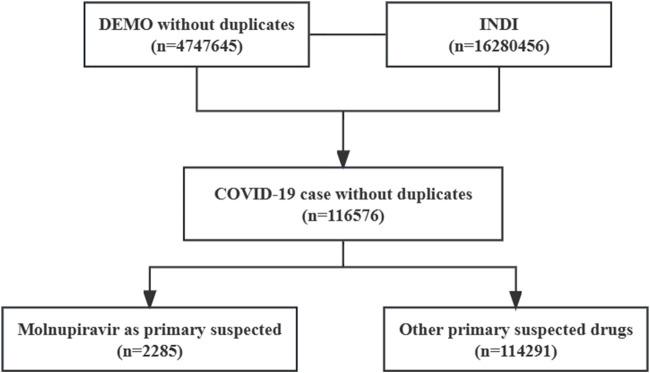
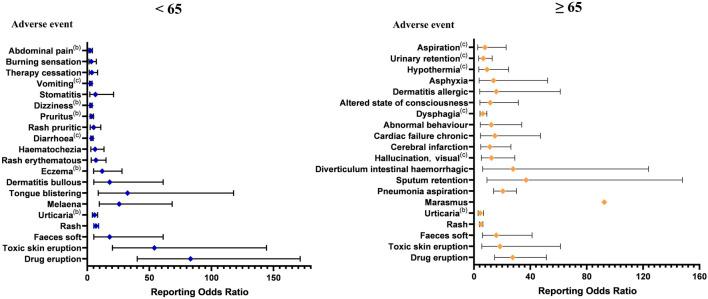
Molnupiravir, an urgently approved drug during the Coronavirus Disease 2019 (COVID-19) pandemic, serves as the basis for our study, which relies on the Food and Drug Administration Adverse Event Reporting System (FAERS). The objective is to extract adverse event (AE) signals associated with molnupiravir from the FAERS database, thereby providing a reference for post-marketing monitoring of adverse events. Specifically, we extracted individual case safety reports (ICSRs) from the database, focusing on cases with COVID-19 indications and molnupiravir identified as the primary suspect drug. Descriptive analysis of the extracted data was performed, followed by four disproportionality analyses using the reporting odds ratio (ROR) method. These analyses were conducted across four levels, encompassing overall data, reports by health professionals, as well as age and gender differentiations, ensuring the robustness of the analysis results. In total, 116,576 ICSRs with COVID-19 indications and 2,285 ICSRs with molnupiravir as the primary suspect were extracted. Notably, after excluding cases with unknown age or gender, a higher proportion of molnupiravir-related ICSRs were observed among individuals aged 65 years and older (70.07%) and women (54.06%). The most frequently reported adverse events and AE signals were associated with gastrointestinal disorders, as well as skin and subcutaneous tissue disorders. Moreover, individuals aged 65 years and older exhibited a higher risk of cardiac disorders, hepatobiliary disorders, renal and urinary disorders, and vascular disorders. In conclusion, this study found molnupiravir demonstrated a lower risk of serious adverse events compared to other RNA antiviral drugs like remdesivir in patients under 65 years old. However, close monitoring of its safety is still necessary for elderly patients aged 65 years and above. Further studies are warranted to continuously assess the safety profile of molnupiravir as its usage increases, especially in high risk populations.
莫努匹拉韦是在2019年冠状病毒病(COVID-19)大流行期间紧急获批的药物,是我们这项研究的基础,该研究依托美国食品药品监督管理局不良事件报告系统(FAERS)。目的是从FAERS数据库中提取与莫努匹拉韦相关的不良事件(AE)信号,从而为不良事件的上市后监测提供参考。具体而言,我们从数据库中提取了个体病例安全报告(ICSR),重点关注有COVID-19适应症且莫努匹拉韦被确定为主要可疑药物的病例。对提取的数据进行了描述性分析,随后使用报告比值比(ROR)方法进行了四项不成比例分析。这些分析在四个层面进行,包括总体数据、卫生专业人员报告的数据以及年龄和性别差异数据,以确保分析结果的稳健性。总共提取了116,576份有COVID-19适应症的ICSR和2,285份以莫努匹拉韦为主要可疑药物的ICSR。值得注意的是,在排除年龄或性别未知的病例后,65岁及以上个体(70.07%)和女性(54.06%)中与莫努匹拉韦相关的ICSR比例更高。报告最频繁的不良事件和AE信号与胃肠道疾病以及皮肤和皮下组织疾病有关。此外,65岁及以上个体出现心脏疾病、肝胆疾病、肾脏和泌尿系统疾病以及血管疾病的风险更高。总之,本研究发现,与其他RNA抗病毒药物如瑞德西韦相比,莫努匹拉韦在65岁以下患者中严重不良事件风险较低。然而,对于65岁及以上的老年患者,仍有必要密切监测其安全性。随着莫努匹拉韦使用量的增加,尤其是在高危人群中,有必要进行进一步研究以持续评估其安全性。



 Zotero 插件