
非小细胞肺癌中脱辅基蛋白及ATP-I1171N/S/T的比较原子水平见解
Comparative Atomistic Insights on Apo and ATP-I1171N/S/T in Nonsmall-Cell Lung Cancer.
作者信息
Balasundaram Ambritha, C Doss George Priya
机构信息
Laboratory of Integrative Genomics, Department of Integrative Biology, School of BioSciences and Technology, Vellore Institute of Technology, Vellore, Tamil Nadu 632014, India.
出版信息
ACS Omega. 2023 Nov 6;8(46):43856-43872. doi: 10.1021/acsomega.3c05785. eCollection 2023 Nov 21.
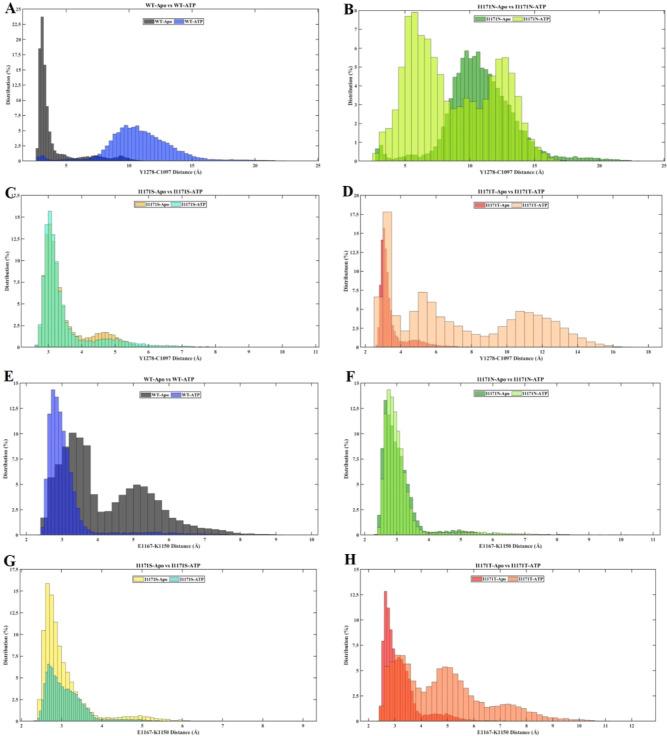
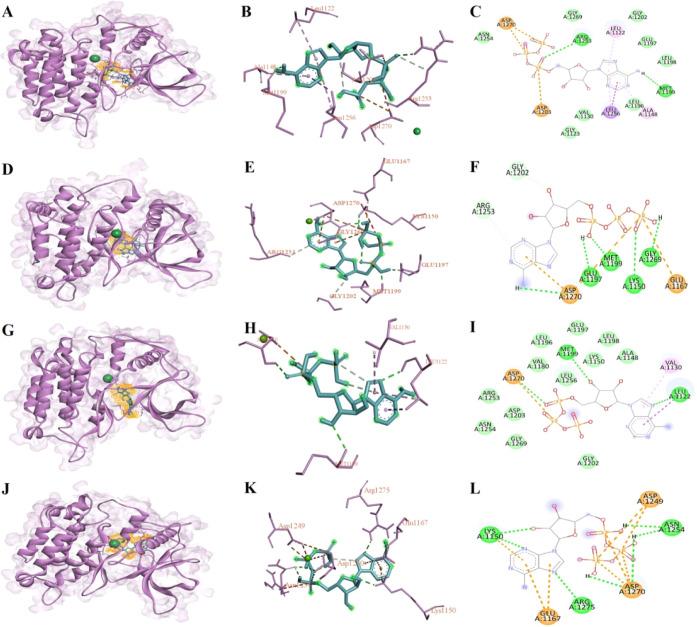
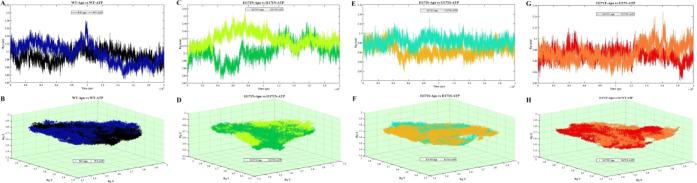
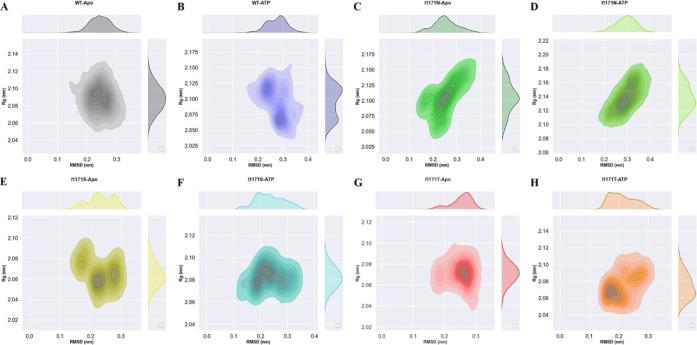
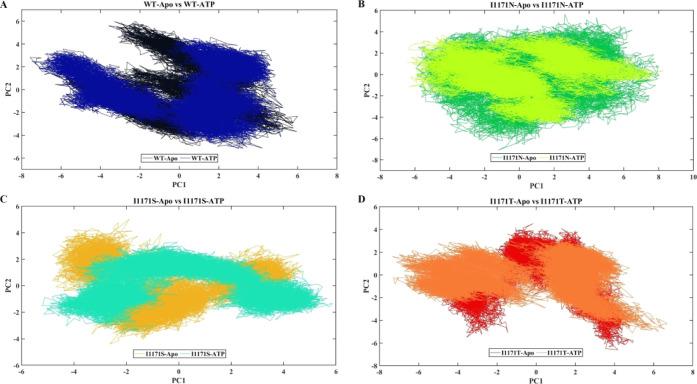
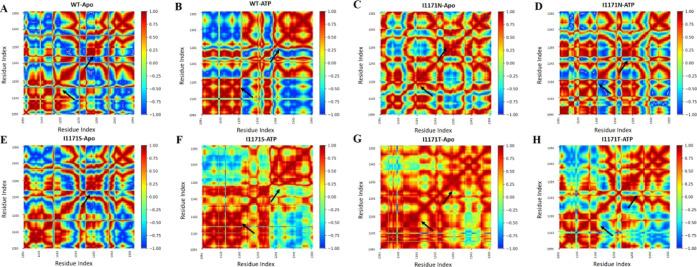
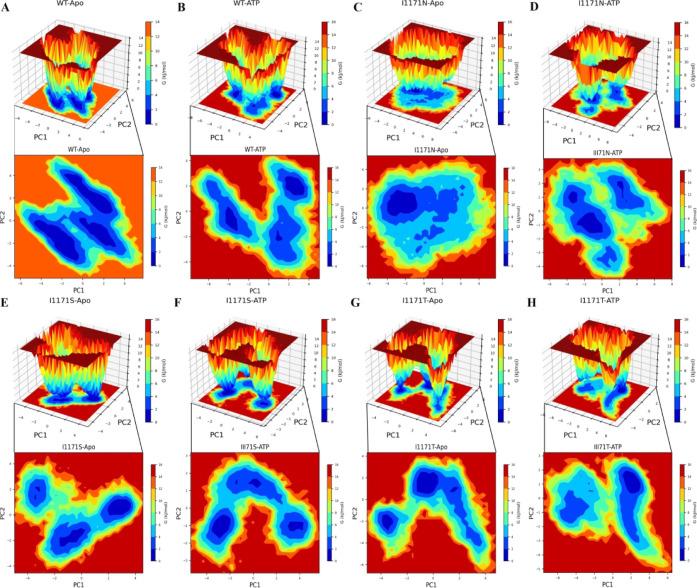
Anaplastic lymphoma kinase (ALK) rearrangements occur in about 5% of nonsmall cell lung cancer (NSCLC) patients. Despite being first recognized as EML4-ALK, fusions with several additional genes have been identified, all of which cause constitutive activation of the ALK kinase and subsequently lead to tumor development. ALK inhibitors first-line crizotinib, second-line ceritinib, and alectinib are effective against NSCLC patients with these rearrangements. Patients progressing on crizotinib had various mutations in the ALK kinase domain. ALK fusion proteins are activated by oligomerization through the fusion partner, which leads to the autophosphorylation of the kinase's domain and consequent downstream activation. The proposed computational study focuses on understanding the activation mechanism of ALK and ATP binding of wild-type (WT) and I1171N/S/T mutations. We analyzed the conformational change of ALK I1171N/S/T mutations and ATP binding using molecular docking and molecular dynamics simulation approaches. According to principal component analysis and free energy landscape, it is clear that I1171N/S/T mutations in Apo and ATP showed different energy minima/unstable structures compared to WT-Apo. The results revealed that I1171N/S/T mutations and ATP binding significantly supported a change toward an active-state conformation, whereas WT-Apo remained inactive. We demonstrated that I1171N/S/T mutations are persistent in an active state and independent of ATP. The I1171S/T mutations showed greater intermolecular H-bonds with ATP than WT-ATP. The molecular mechanics Poisson-Boltzmann surface area analysis revealed that the I1171N/S/T mutation binding energy was similar to that of WT-ATP. This study shows that I1171N/S/T can form stable bonds with ATP and may contribute to a constitutively active kinase. Based on the Y1278-C1097 H-bond and E1167-K1150 salt bridge interaction, I1171N strongly promotes the constitutively active kinase independent of ATP. This structural mechanism study will aid in understanding the oncogenic activity of ALK and the basis for improving the ALK inhibitors.
间变性淋巴瘤激酶(ALK)重排在约5%的非小细胞肺癌(NSCLC)患者中发生。尽管最初被认为是EML4-ALK,但已鉴定出与其他几个基因的融合,所有这些融合都会导致ALK激酶的组成性激活,进而导致肿瘤发展。ALK抑制剂一线的克唑替尼、二线的色瑞替尼和阿来替尼对有这些重排的NSCLC患者有效。在克唑替尼治疗中进展的患者在ALK激酶结构域有各种突变。ALK融合蛋白通过与融合伙伴的寡聚化而被激活,这导致激酶结构域的自磷酸化并随之激活下游信号。拟进行的计算研究专注于理解野生型(WT)和I1171N/S/T突变体的ALK激活机制及ATP结合情况。我们使用分子对接和分子动力学模拟方法分析了ALK I1171N/S/T突变体的构象变化和ATP结合情况。根据主成分分析和自由能景观,很明显,与WT-Apo相比,Apo和ATP中的I1171N/S/T突变体显示出不同的能量最低点/不稳定结构。结果表明,I1171N/S/T突变体和ATP结合显著支持向活性状态构象的转变,而WT-Apo仍处于非活性状态。我们证明I1171N/S/T突变体持续处于活性状态且不依赖于ATP。I1171S/T突变体与ATP形成的分子间氢键比WT-ATP更多。分子力学泊松-玻尔兹曼表面积分析表明,I1171N/S/T突变体的结合能与WT-ATP相似。这项研究表明I1171N/S/T可以与ATP形成稳定的键,并可能促成组成性激活的激酶。基于Y1278-C1097氢键和E1167-KI150盐桥相互作用,I1171N强烈促进不依赖于ATP的组成性激活激酶。这项结构机制研究将有助于理解ALK的致癌活性以及改进ALK抑制剂的基础。



 Zotero 插件