
法国国家药品与健康产品管理局(ANSM)预防和管理药品短缺的 10 年经验。
Prevention and management of health products shortages by the French national agency (ANSM), 10 years of experience.
机构信息
Agence Nationale de Sécurité du Médicament et des Produits de Santé (ANSM), Saint Denis, France.
Hôpital Saint Joseph Paris (Médecine Vasculaire), INSERM 1153 CRESS, Université de Paris Cité, Paris, France.
出版信息
Front Public Health. 2023 Nov 17;11:1293110. doi: 10.3389/fpubh.2023.1293110. eCollection 2023.
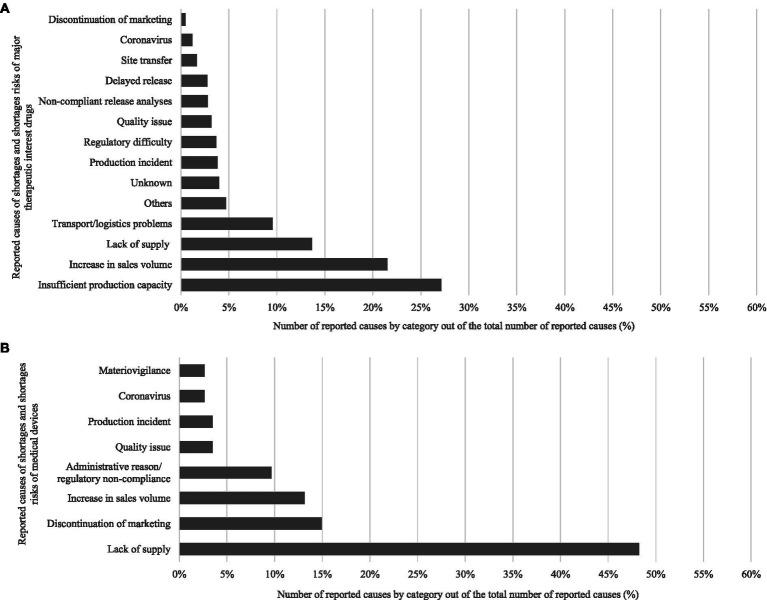
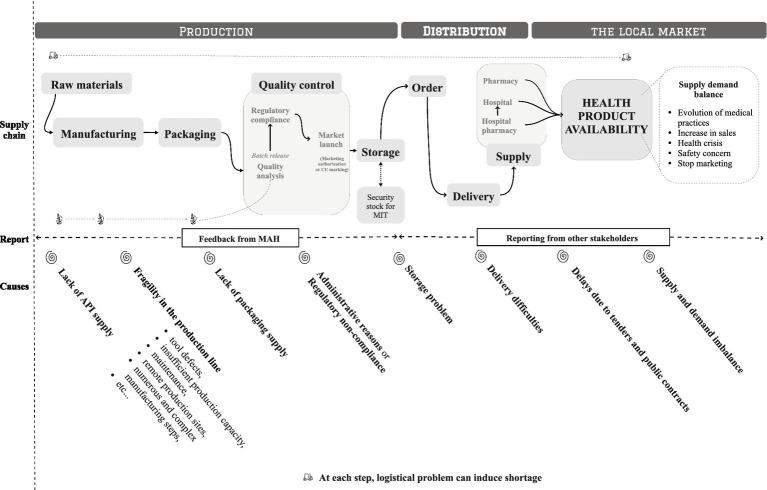
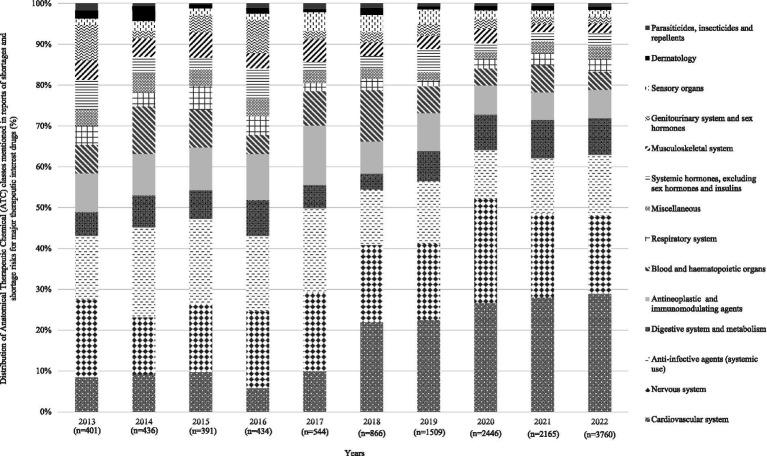
Shortages of drugs and medical devices have tended to increase in France and worldwide, with consequences for patients and healthcare professionals. Preventing shortages of health products has become a priority for regulatory authorities, including the French National Agency for Medicines and Health Products Safety (ANSM). To highlight perspectives for a better prevention, we described and analyzed the management of shortages in the availability of health products in France over the last 10 years. The supply chain was mapped to identify the main causes of shortages and stakeholders involved in managing shortages throughout the supply chain. National and European initiatives and regulatory measures were reviewed. A retrospective nationwide data analysis from the French reporting system of health product shortage reports was conducted over 10 years for drugs (2013-2022) and over an 18-month period for medical devices, from 1st March 2022 to 31st August 2023. An increase in drug shortage reports was observed, rising from 404 in 2013 to 3,761 in 2022 for drugs, with a relatively constant distribution of affected therapeutic classes. In 2022, the main reported causes of drug shortage risk were insufficient production capacity (27.1%), increased sales volume (21.5%), or lack of supply (13.6%). Over half of the reports on medical devices (55.4%) were objectified as indispensable, and their causes were mainly due to a lack of supply (48.2%), discontinuation of marketing (14.9%), increased sales volume (13.2%), and regulatory reasons (9.6%). ANSM and French authorities have engaged a public health policy for prevention and management of health product shortages including financial penalties, minimum safety stocks for Major Therapeutic Interest drugs, and a shortage management plan. Based on 10 years of experience, four priority measures have been identified to anticipate the risk of heath products shortages based: the importance of a national coordination from raw materials to local market, the implementation of new prevention and management actions in the supply chain, strengthening European cooperation and regulation including the establishment of a list of critical drugs, and promoting transparency and information.
药品和医疗器械短缺在法国乃至全球都有加剧的趋势,这给患者和医疗保健专业人员带来了影响。因此,包括法国国家药品和保健品安全局(ANSM)在内的监管机构已将预防药品短缺作为优先事项。为了突出更好地预防短缺的前景,我们描述和分析了过去 10 年来法国卫生产品供应短缺的管理情况。我们绘制了供应链图,以确定短缺的主要原因以及整个供应链中参与管理短缺的利益相关者。我们还审查了国家和欧洲的倡议和监管措施。我们对 10 年来法国药品短缺报告系统的全国性回顾性数据分析进行了研究(2013-2022 年),并对医疗器械短缺报告进行了为期 18 个月的分析,时间为 2022 年 3 月 1 日至 2023 年 8 月 31 日。我们发现药品短缺报告数量有所增加,从 2013 年的 404 例上升到 2022 年的 3761 例,受影响的治疗类别相对稳定。2022 年,药品短缺风险的主要报告原因是生产能力不足(27.1%)、销售量增加(21.5%)或供应不足(13.6%)。超过一半的医疗器械报告(55.4%)被认为是不可或缺的,其原因主要是供应不足(48.2%)、停止销售(14.9%)、销售量增加(13.2%)和监管原因(9.6%)。ANSM 和法国当局已经制定了一项公共卫生政策,以预防和管理卫生产品短缺,包括经济处罚、主要治疗利益药物的最低安全库存以及短缺管理计划。基于 10 年的经验,确定了四项优先措施来预测卫生产品短缺的风险:从原材料到当地市场的国家协调的重要性、在供应链中实施新的预防和管理措施、加强欧洲合作和监管,包括建立关键药物清单,以及提高透明度和信息共享。

 Zotero 插件