
APETALA2-MYBL2模块通过影响拟南芥种子中MBW复合物的形成来抑制原花青素的生物合成。
The APETALA2-MYBL2 module represses proanthocyanidin biosynthesis by affecting formation of the MBW complex in seeds of Arabidopsis thaliana.
作者信息
Jiang Wenbo, Yin Qinggang, Liu Jinyue, Su Xiaojia, Han Xiaoyan, Li Qian, Zhang Jin, Pang Yongzhen
机构信息
Institute of Animal Science, Chinese Academy of Agricultural Sciences, Beijing 100193, China.
Key Laboratory of Plant Resources and Beijing Botanical Garden, Institute of Botany, Chinese Academy of Sciences, Beijing 100093, China.
出版信息
Plant Commun. 2024 Mar 11;5(3):100777. doi: 10.1016/j.xplc.2023.100777. Epub 2023 Dec 5.
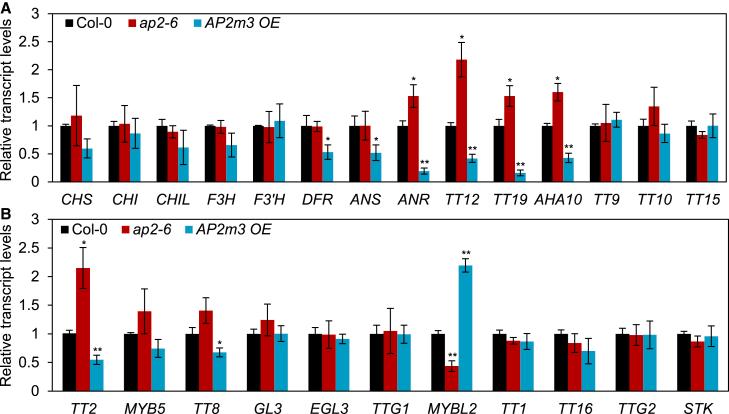
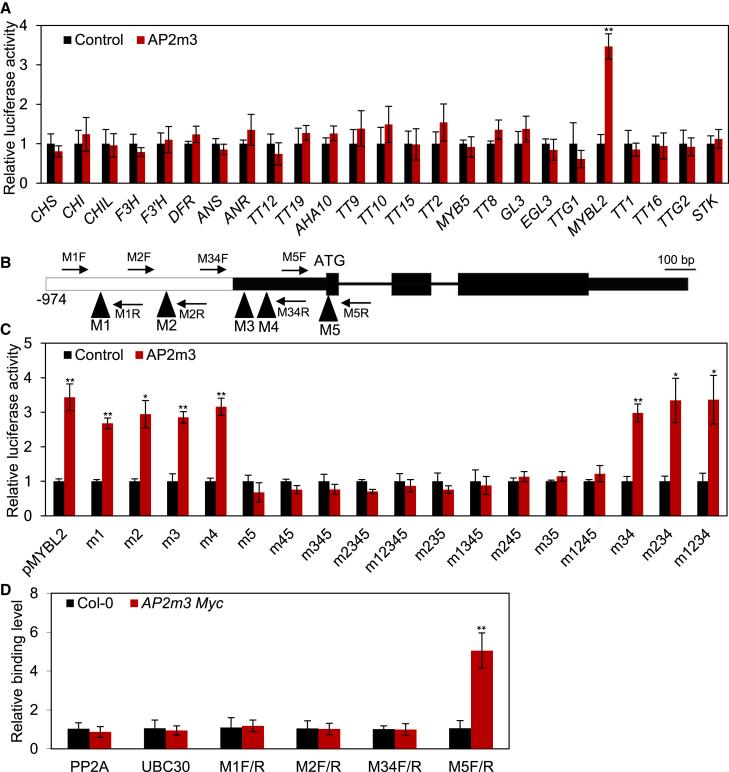
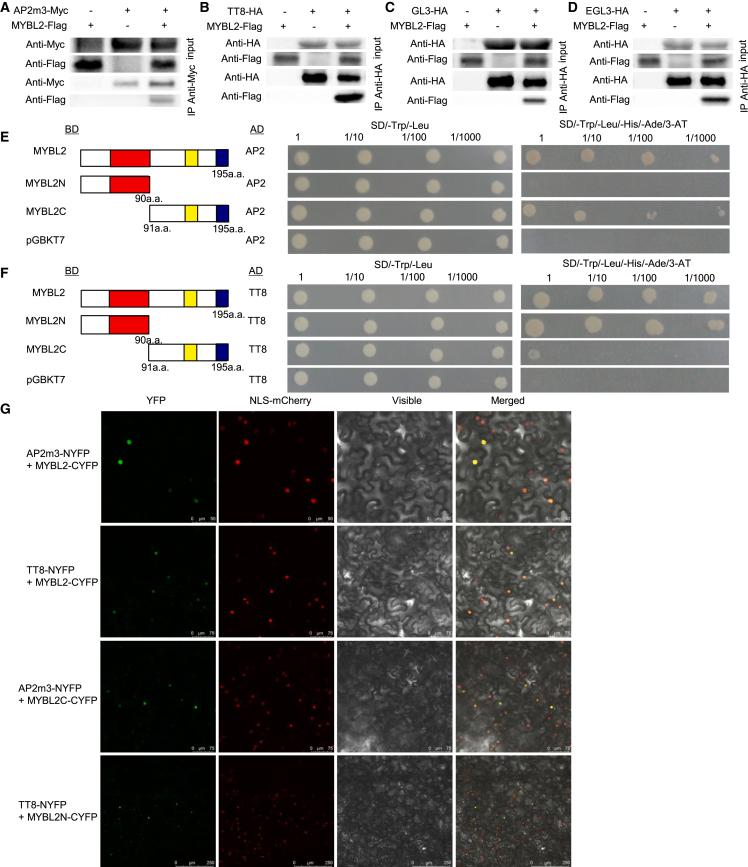
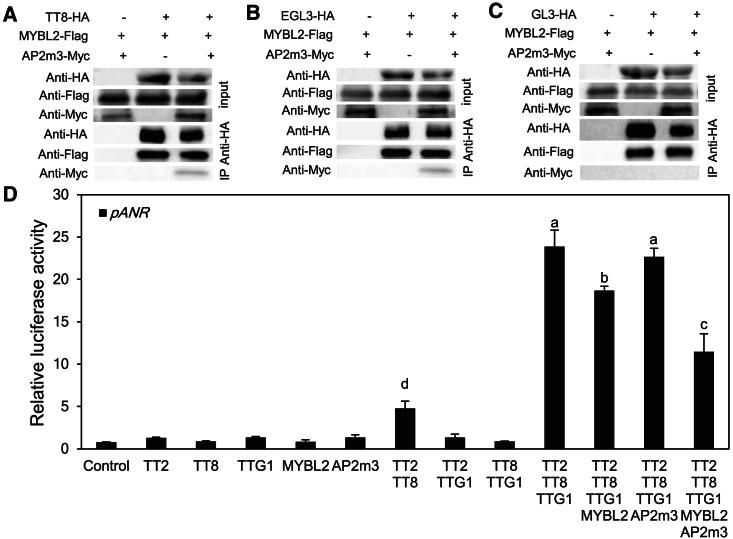
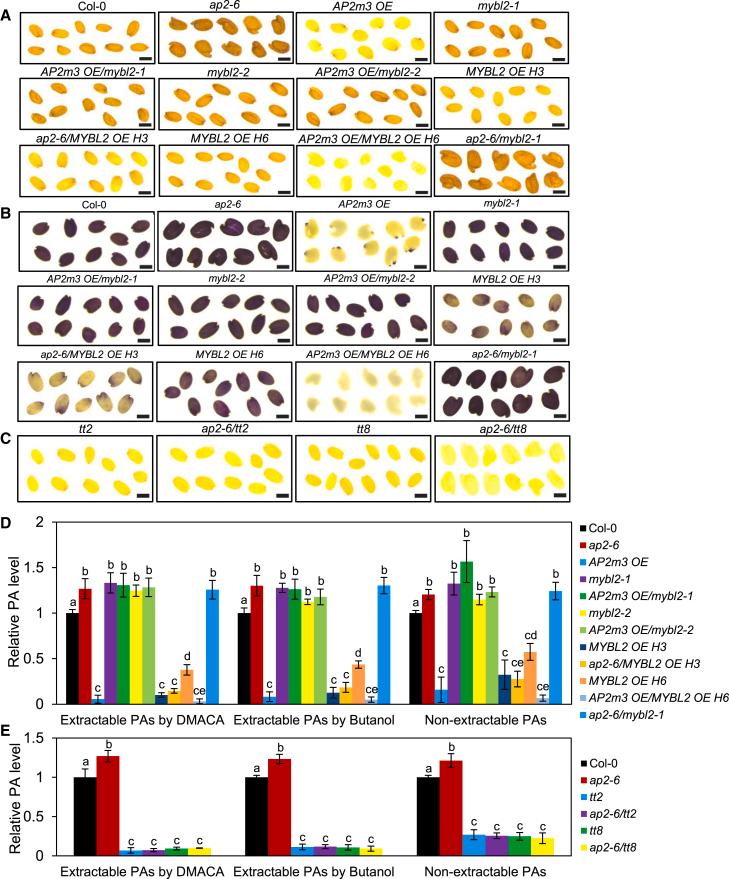
Proanthocyanidins (PAs) are the second most abundant plant phenolic natural products. PA biosynthesis is regulated by the well-documented MYB/bHLH/WD40 (MBW) complex, but how this complex itself is regulated remains ill defined. Here, in situ hybridization and β-glucuronidase staining show that APETALA2 (AP2), a well-defined regulator of flower and seed development, is strongly expressed in the seed coat endothelium, where PAs accumulate. AP2 negatively regulates PA content and expression levels of key PA pathway genes. AP2 activates MYBL2 transcription and interacts with MYBL2, a key suppressor of the PA pathway. AP2 exerts its function by directly binding to the AT-rich motifs near the promoter region of MYBL2. Molecular and biochemical analyses revealed that AP2 forms AP2-MYBL2-TT8/EGL3 complexes, disrupting the MBW complex and thereby repressing expression of ANR, TT12, TT19, and AHA10. Genetic analyses revealed that AP2 functions upstream of MYBL2, TT2, and TT8 in PA regulation. Our work reveals a new role of AP2 as a key regulator of PA biosynthesis in Arabidopsis. Overall, this study sheds new light on the comprehensive regulation network of PA biosynthesis as well as the dual regulatory roles of AP2 in seed development and accumulation of major secondary metabolites in Arabidopsis.
原花青素(PAs)是植物中含量第二丰富的酚类天然产物。PA生物合成由有充分文献记载的MYB/bHLH/WD40(MBW)复合体调控,但该复合体本身如何被调控仍不清楚。在此,原位杂交和β-葡萄糖醛酸酶染色表明,APETALA2(AP2)是一种明确的花和种子发育调控因子,在PA积累的种皮内皮层中强烈表达。AP2负调控PA含量和PA途径关键基因的表达水平。AP2激活MYBL2转录并与PA途径的关键抑制因子MYBL2相互作用。AP2通过直接结合到MYBL2启动子区域附近富含AT的基序发挥其功能。分子和生化分析表明,AP2形成AP2-MYBL2-TT8/EGL3复合体,破坏MBW复合体,从而抑制ANR、TT12、TT19和AHA10的表达。遗传分析表明,AP2在PA调控中作用于MYBL2、TT2和TT8的上游。我们的研究揭示了AP2在拟南芥中作为PA生物合成关键调控因子的新作用。总体而言,这项研究为PA生物合成的综合调控网络以及AP2在拟南芥种子发育和主要次生代谢产物积累中的双重调控作用提供了新的见解。


 Zotero 插件