
无家可归和住房不稳定退伍军人的痴呆风险。
Risk of dementia among veterans experiencing homelessness and housing instability.
机构信息
U.S. Department of Veterans Affairs, Center for Healthcare Organization & Implementation Research (CHOIR), VA Bedford Healthcare System, Bedford, Massachusetts, USA.
Department of Health Policy and Management, Harvard T.H. Chan School of Public Health, Boston, Massachusetts, USA.
出版信息
J Am Geriatr Soc. 2024 Feb;72(2):382-389. doi: 10.1111/jgs.18680. Epub 2023 Dec 6.
BACKGROUND
In the United States, nearly 85,000 Veterans experienced homelessness during 2020, and thousands more are experiencing housing instability, representing a significant proportion of the population. Many Veterans experiencing homelessness are aging and have complex co-occurring medical, psychiatric, and substance use disorders. Homelessness and older age put Veterans at greater risk for age-related disorders, including Alzheimer's disease and related dementias (ADRD).
METHODS
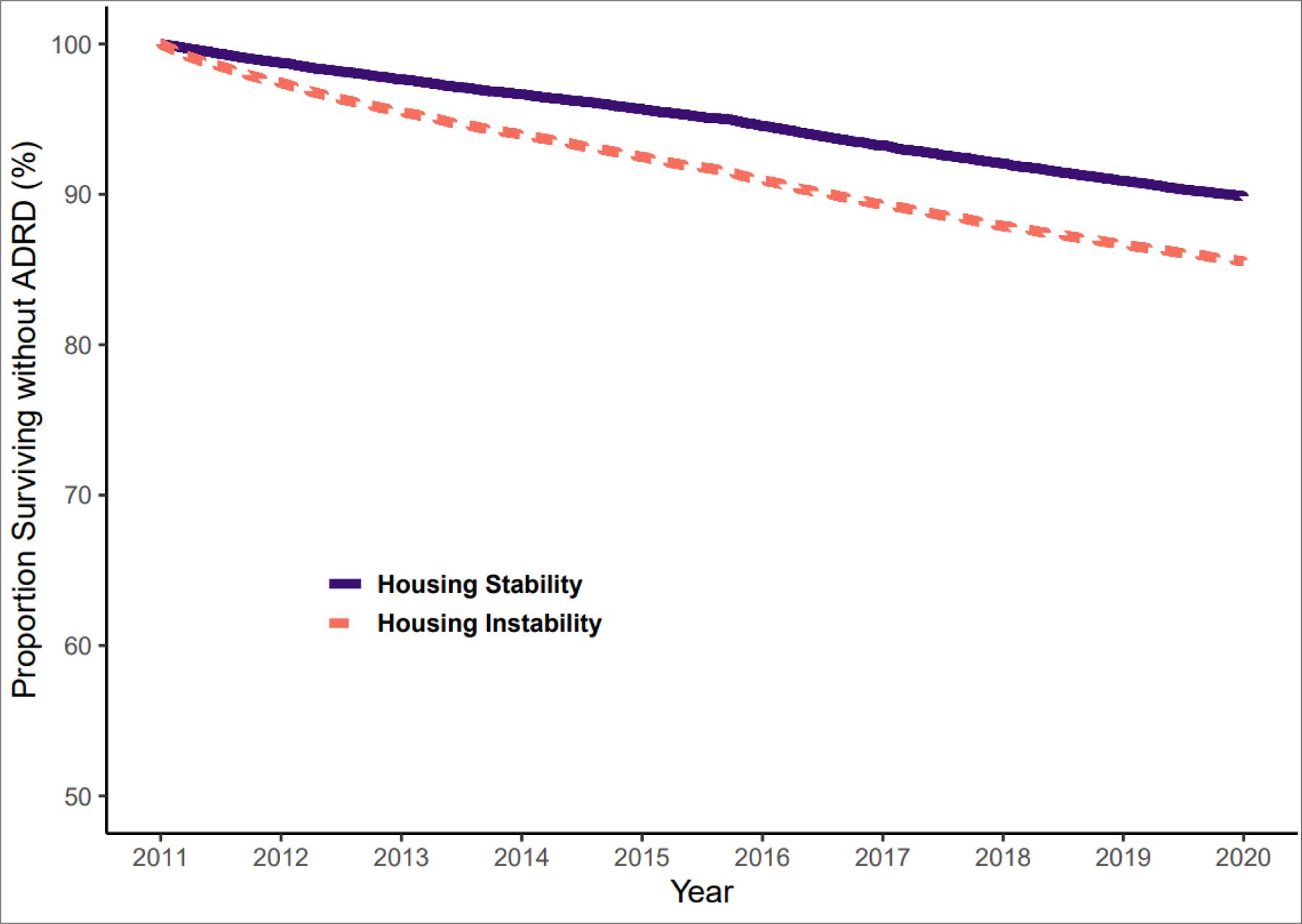
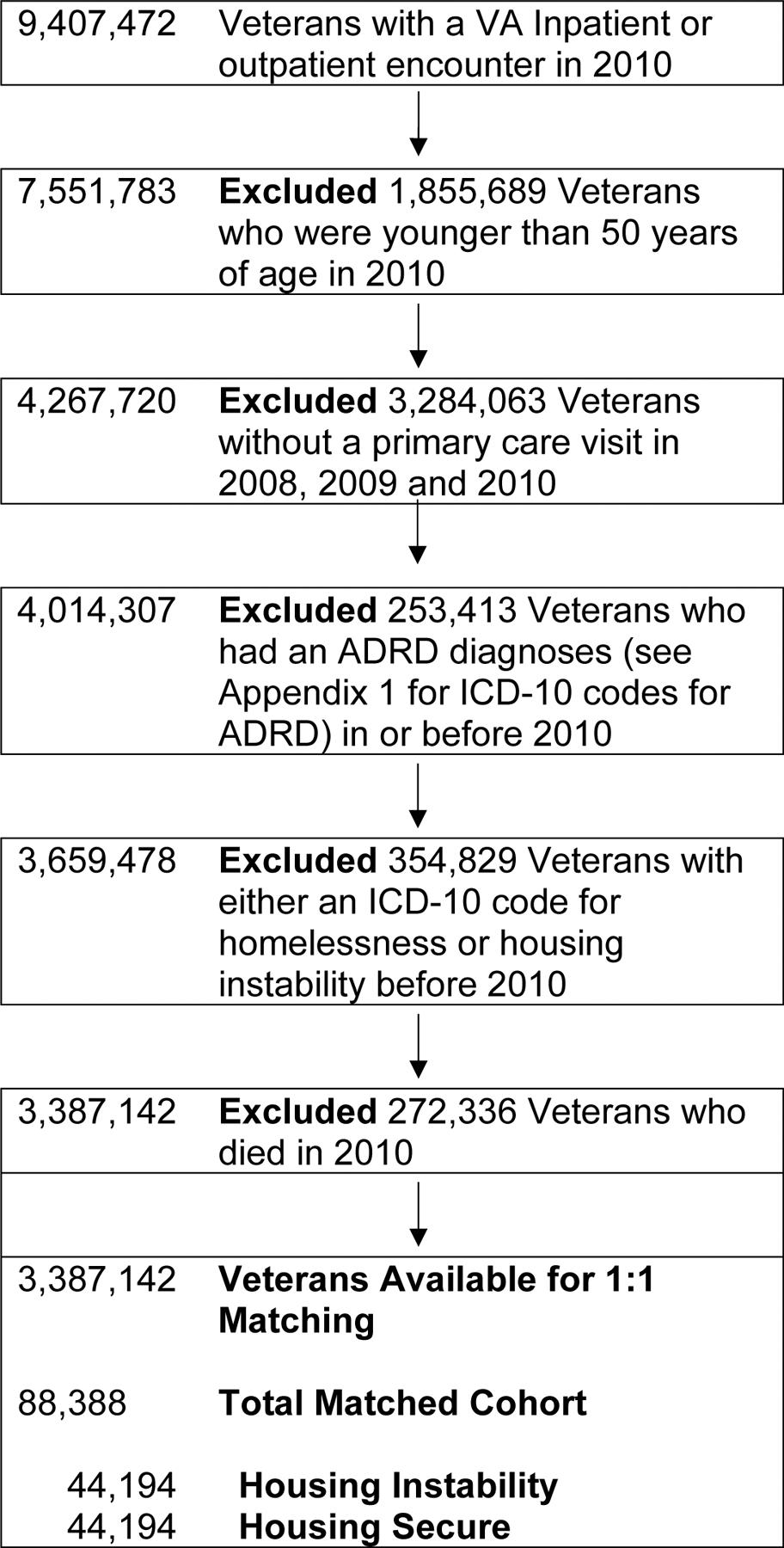
We examined the rate of ADRD diagnosis for Veterans experiencing homelessness and housing instability compared to a matched cohort of stably housed Veterans over a nine-year period using cox proportional hazard models.
RESULTS
In the matched cohort, 95% (n = 88,811) of Veterans were men, and 67% (n = 59,443) were White and were on average 63 years old (SD = 10.8). Veterans with housing instability had a higher hazard of 1.53 (95% confidence interval (CI) 1.50, 1.59) for ADRD compared to Veterans without housing instability.
CONCLUSIONS
Veterans experiencing housing instability have a substantially higher risk of receiving an ADRD diagnosis than a matched cohort of stably housed Veterans. Health systems and providers should consider cognitive screening among people experiencing housing insecurity. Existing permanent supportive housing programs should consider approaches to modify wraparound services to support Veterans experiencing ADRD.
背景
在美国,2020 年期间近 85000 名退伍军人经历了无家可归,还有数千人面临住房不稳定,这代表了相当大的一部分人口。许多经历无家可归的退伍军人正在老龄化,并且患有复杂的共病,包括医学、精神和药物使用障碍。无家可归和年龄增长使退伍军人面临更大的与年龄相关的疾病风险,包括阿尔茨海默病和相关痴呆症(ADRD)。
方法
我们使用 Cox 比例风险模型,在九年期间,对经历无家可归和住房不稳定的退伍军人与匹配的稳定住房退伍军人队列进行比较,以评估 ADRD 的诊断率。
结果
在匹配队列中,95%(n=88811)的退伍军人是男性,67%(n=59443)是白人,平均年龄为 63 岁(标准差=10.8)。与没有住房不稳定的退伍军人相比,住房不稳定的退伍军人患有 ADRD 的风险更高,危险比为 1.53(95%置信区间 1.50,1.59)。
结论
与稳定住房的退伍军人匹配队列相比,经历住房不稳定的退伍军人接受 ADRD 诊断的风险大大增加。医疗保健系统和提供者应考虑对住房不安全的人群进行认知筛查。现有的永久性支持性住房项目应考虑采取措施调整服务范围,以支持患有 ADRD 的退伍军人。
 Zotero 插件