
改善中低收入国家儿童免疫接种覆盖率的干预措施。
Interventions for improving coverage of childhood immunisation in low- and middle-income countries.
机构信息
Department of Community Health, University of Calabar Teaching Hospital, Calabar, Nigeria.
Department of Medical Laboratory Science, Achievers University, Owo, Nigeria.
出版信息
Cochrane Database Syst Rev. 2023 Dec 6;12(12):CD008145. doi: 10.1002/14651858.CD008145.pub4.
BACKGROUND
Immunisation plays a major role in reducing childhood morbidity and mortality. Getting children immunised against potentially fatal and debilitating vaccine-preventable diseases remains a challenge despite the availability of efficacious vaccines, particularly in low- and middle-income countries. With the introduction of new vaccines, this becomes increasingly difficult. There is therefore a current need to synthesise the available evidence on the strategies used to bridge this gap. This is a second update of the Cochrane Review first published in 2011 and updated in 2016, and it focuses on interventions for improving childhood immunisation coverage in low- and middle-income countries.
OBJECTIVES
To evaluate the effectiveness of intervention strategies to boost demand and supply of childhood vaccines, and sustain high childhood immunisation coverage in low- and middle-income countries.
SEARCH METHODS
We searched CENTRAL, MEDLINE, CINAHL, and Global Index Medicus (11 July 2022). We searched Embase, LILACS, and Sociological Abstracts (2 September 2014). We searched WHO ICTRP and ClinicalTrials.gov (11 July 2022). In addition, we screened reference lists of relevant systematic reviews for potentially eligible studies, and carried out a citation search for 14 of the included studies (19 February 2020).
SELECTION CRITERIA
Eligible studies were randomised controlled trials (RCTs), non-randomised RCTs (nRCTs), controlled before-after studies, and interrupted time series conducted in low- and middle-income countries involving children that were under five years of age, caregivers, and healthcare providers.
DATA COLLECTION AND ANALYSIS
We independently screened the search output, reviewed full texts of potentially eligible articles, assessed the risk of bias, and extracted data in duplicate, resolving discrepancies by consensus. We conducted random-effects meta-analyses and used GRADE to assess the certainty of the evidence.
MAIN RESULTS
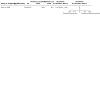
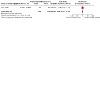
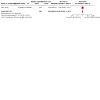
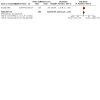
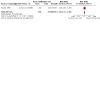
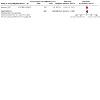
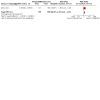
Forty-one studies involving 100,747 participants are included in the review. Twenty studies were cluster-randomised and 15 studies were individually randomised controlled trials. Six studies were quasi-randomised. The studies were conducted in four upper-middle-income countries (China, Georgia, Mexico, Guatemala), 11 lower-middle-income countries (Côte d'Ivoire, Ghana, Honduras, India, Indonesia, Kenya, Nigeria, Nepal, Nicaragua, Pakistan, Zimbabwe), and three lower-income countries (Afghanistan, Mali, Rwanda). The interventions evaluated in the studies were health education (seven studies), patient reminders (13 studies), digital register (two studies), household incentives (three studies), regular immunisation outreach sessions (two studies), home visits (one study), supportive supervision (two studies), integration of immunisation services with intermittent preventive treatment of malaria (one study), payment for performance (two studies), engagement of community leaders (one study), training on interpersonal communication skills (one study), and logistic support to health facilities (one study). We judged nine of the included studies to have low risk of bias; the risk of bias in eight studies was unclear and 24 studies had high risk of bias. We found low-certainty evidence that health education (risk ratio (RR) 1.36, 95% confidence interval (CI) 1.15 to 1.62; 6 studies, 4375 participants) and home-based records (RR 1.36, 95% CI 1.06 to 1.75; 3 studies, 4019 participants) may improve coverage with DTP3/Penta 3 vaccine. Phone calls/short messages may have little or no effect on DTP3/Penta 3 vaccine uptake (RR 1.12, 95% CI 1.00 to 1.25; 6 studies, 3869 participants; low-certainty evidence); wearable reminders probably have little or no effect on DTP3/Penta 3 uptake (RR 1.02, 95% CI 0.97 to 1.07; 2 studies, 1567 participants; moderate-certainty evidence). Use of community leaders in combination with provider intervention probably increases the uptake of DTP3/Penta 3 vaccine (RR 1.37, 95% CI 1.11 to 1.69; 1 study, 2020 participants; moderate-certainty evidence). We are uncertain about the effect of immunisation outreach on DTP3/Penta 3 vaccine uptake in children under two years of age (RR 1.32, 95% CI 1.11 to 1.56; 1 study, 541 participants; very low-certainty evidence). We are also uncertain about the following interventions improving full vaccination of children under two years of age: training of health providers on interpersonal communication skills (RR 5.65, 95% CI 3.62 to 8.83; 1 study, 420 participants; very low-certainty evidence), and home visits (RR 1.29, 95% CI 1.15 to 1.45; 1 study, 419 participants; very low-certainty evidence). The same applies to the effect of training of health providers on interpersonal communication skills on the uptake of DTP3/Penta 3 by one year of age (very low-certainty evidence). The integration of immunisation with other services may, however, improve full vaccination (RR 1.29, 95% CI 1.16 to 1.44; 1 study, 1700 participants; low-certainty evidence).
AUTHORS' CONCLUSIONS: Health education, home-based records, a combination of involvement of community leaders with health provider intervention, and integration of immunisation services may improve vaccine uptake. The certainty of the evidence for the included interventions ranged from moderate to very low. Low certainty of the evidence implies that the true effect of the interventions might be markedly different from the estimated effect. Further, more rigorous RCTs are, therefore, required to generate high-certainty evidence to inform policy and practice.
背景
免疫接种在降低儿童发病率和死亡率方面发挥着重要作用。尽管有有效的疫苗,特别是在中低收入国家,让儿童接种预防潜在致命和致残的疫苗仍然是一项挑战。随着新疫苗的推出,这变得越来越困难。因此,目前需要综合现有证据,了解用于弥合这一差距的策略。这是 2011 年首次发表并于 2016 年更新的 Cochrane 综述的第二次更新,重点关注提高中低收入国家儿童免疫接种覆盖率的干预措施。
目的
评估提高儿童疫苗需求和供应的干预策略的有效性,以维持中低收入国家的高儿童免疫接种覆盖率。
检索方法
我们检索了 CENTRAL、MEDLINE、CINAHL 和全球索引医学(2022 年 7 月 11 日)。我们检索了 Embase、LILACS 和社会科学摘要(2014 年 9 月 2 日)。我们检索了世界卫生组织 ICTRP 和 ClinicalTrials.gov(2022 年 7 月 11 日)。此外,我们对相关系统评价的参考文献进行了筛选,以确定潜在合格的研究,并对 14 项纳入研究进行了引文搜索(2020 年 2 月 19 日)。
纳入标准
合格的研究是随机对照试验(RCTs)、非随机对照 RCT(nRCTs)、对照前后研究和中断时间序列研究,这些研究在中低收入国家进行,涉及五岁以下儿童、照顾者和医疗保健提供者。
数据收集和分析
我们独立筛选了搜索结果,审查了潜在合格文章的全文,评估了偏倚风险,并以重复的方式提取数据,通过共识解决分歧。我们进行了随机效应荟萃分析,并使用 GRADE 评估证据的确定性。
主要结果
本综述纳入了 41 项研究,涉及 100747 名参与者。20 项研究为簇随机,15 项研究为个体随机对照试验。6 项研究为准随机。这些研究在四个中上收入国家(中国、格鲁吉亚、墨西哥、危地马拉)、11 个中下收入国家(科特迪瓦、加纳、洪都拉斯、印度、印度尼西亚、肯尼亚、尼日利亚、尼泊尔、尼加拉瓜、巴基斯坦、津巴布韦)和三个低收入国家(阿富汗、马里、卢旺达)进行。研究中评估的干预措施包括健康教育(7 项研究)、患者提醒(13 项研究)、数字登记(2 项研究)、家庭奖励(3 项研究)、定期免疫接种外展会议(2 项研究)、家访(1 项研究)、监督支持(2 项研究)、将免疫接种服务与间歇性预防治疗疟疾相结合(1 项研究)、按绩效付费(2 项研究)、社区领袖参与(1 项研究)、人际沟通技巧培训(1 项研究)和向卫生设施提供后勤支持(1 项研究)。我们判断 9 项纳入研究的偏倚风险较低;8 项研究的偏倚风险不明确,24 项研究的偏倚风险较高。我们发现,健康教育(风险比(RR)1.36,95%置信区间(CI)1.15 至 1.62;6 项研究,4375 名参与者)和家庭记录(RR 1.36,95%CI 1.06 至 1.75;3 项研究,4019 名参与者)可能提高 DTP3/Penta3 疫苗的覆盖率。电话/短信可能对 DTP3/Penta3 疫苗接种的影响很小或没有(RR 1.12,95%CI 1.00 至 1.25;6 项研究,3869 名参与者;低确定性证据);可穿戴提醒器可能对 DTP3/Penta3 接种的影响很小或没有(RR 1.02,95%CI 0.97 至 1.07;2 项研究,1567 名参与者;中等确定性证据)。在提供者干预中结合社区领导的使用可能会增加 DTP3/Penta3 疫苗的接种率(RR 1.37,95%CI 1.11 至 1.69;1 项研究,2020 名参与者;中等确定性证据)。我们不确定免疫接种外展活动对 2 岁以下儿童 DTP3/Penta3 疫苗接种的影响(RR 1.32,95%CI 1.11 至 1.56;1 项研究,541 名参与者;非常低确定性证据)。我们也不确定以下干预措施对 2 岁以下儿童完全接种疫苗的影响:卫生提供者人际沟通技巧培训(RR 5.65,95%CI 3.62 至 8.83;1 项研究,420 名参与者;非常低确定性证据)和家访(RR 1.29,95%CI 1.15 至 1.45;1 项研究,419 名参与者;非常低确定性证据)。同样,卫生提供者人际沟通技巧培训对 DTP3/Penta3 接种的影响也不确定(非常低确定性证据)。然而,将免疫接种与其他服务相结合可能会提高完全接种疫苗的比例(RR 1.29,95%CI 1.16 至 1.44;1 项研究,1700 名参与者;低确定性证据)。
作者结论
健康教育、家庭记录、社区领导参与与卫生提供者干预相结合,以及免疫服务的整合,可能会提高疫苗接种率。纳入干预措施的证据确定性从中等到非常低不等。低确定性证据意味着干预的实际效果可能与估计效果有很大不同。因此,需要进行更多严格的 RCT 以产生高确定性证据,为政策和实践提供信息。















 Zotero 插件