
经体外膜肺氧合的小儿心脏病患者短期死亡率:系统评价和荟萃分析。
Short-Term Mortality Among Pediatric Patients With Heart Diseases Undergoing Veno-Arterial Extracorporeal Membrane Oxygenation: A Systematic Review and Meta-Analysis.
机构信息
Department of Cardiovascular Medicine Chinese PLA General Hospital & Chinese PLA Medical School Beijing China.
Department of Endocrinology Chinese PLA Central Theater Command General Hospital Wuhan China.
出版信息
J Am Heart Assoc. 2023 Dec 19;12(24):e029571. doi: 10.1161/JAHA.123.029571. Epub 2023 Dec 8.
BACKGROUND
Veno-arterial extracorporeal membrane oxygenation serves as a crucial mechanical circulatory support for pediatric patients with severe heart diseases, but the mortality rate remains high. The objective of this study was to assess the short-term mortality in these patients.
METHODS AND RESULTS
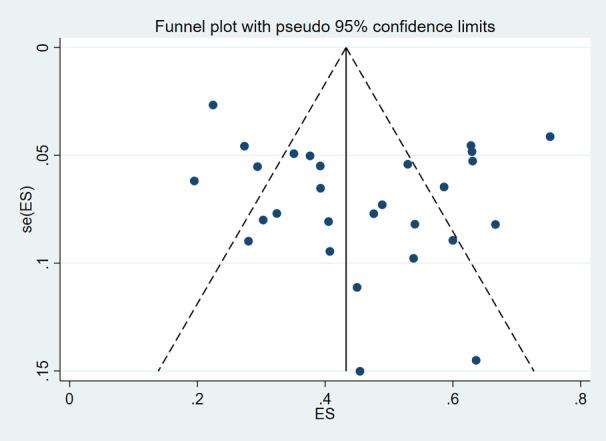
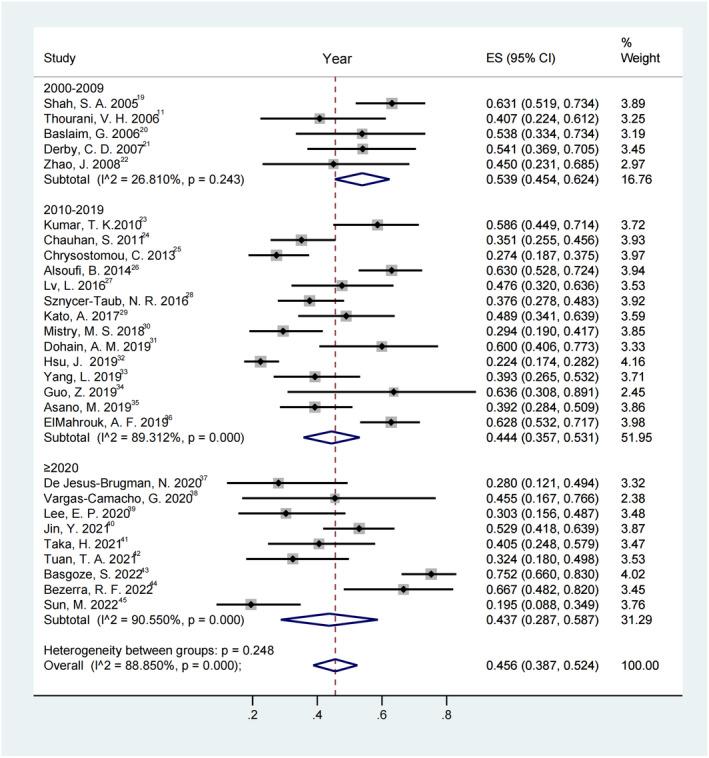
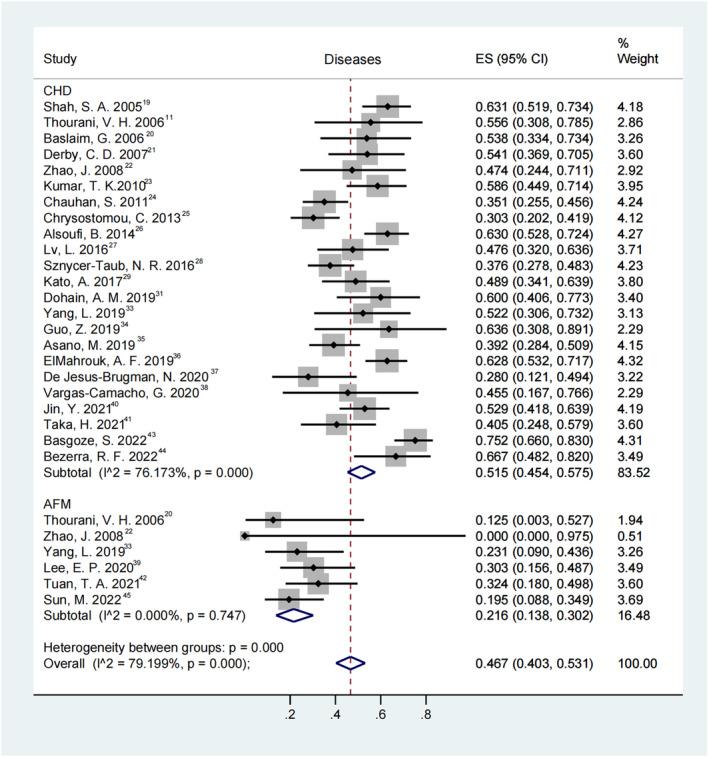
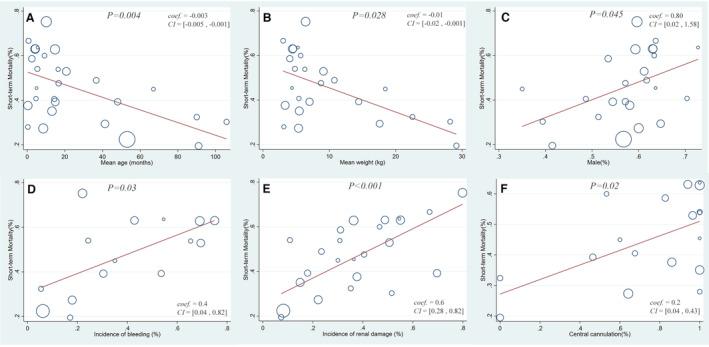
We systematically searched PubMed, Embase, and Cochrane Library for observational studies that evaluated the short-term mortality of pediatric patients undergoing veno-arterial extracorporeal membrane oxygenation. To estimate short-term mortality, we used random-effects meta-analysis. Furthermore, we conducted meta-regression and binomial regression analyses to investigate the risk factors associated with the outcome of interest. We systematically reviewed 28 eligible references encompassing a total of 1736 patients. The pooled analysis demonstrated a short-term mortality (defined as in-hospital or 30-day mortality) of 45.6% (95% CI, 38.7%-52.4%). We found a significant difference (<0.001) in mortality rates between acute fulminant myocarditis and congenital heart disease, with acute fulminant myocarditis exhibiting a lower mortality rate. Our findings revealed a negative correlation between older age and weight and short-term mortality in patients undergoing veno-arterial extracorporeal membrane oxygenation. Male sex, bleeding, renal damage, and central cannulation were associated with an increased risk of short-term mortality.
CONCLUSIONS
The short-term mortality among pediatric patients undergoing veno-arterial extracorporeal membrane oxygenation for severe heart diseases was 45.6%. Patients with acute fulminant myocarditis exhibited more favorable survival rates compared with those with congenital heart disease. Several risk factors, including male sex, bleeding, renal damage, and central cannulation contributed to an increased risk of short-term mortality. Conversely, older age and greater weight appeared to be protective factors.
背景
体外膜肺氧合(VA-ECMO)作为一种重要的机械循环支持手段,用于治疗患有严重心脏病的儿科患者,但死亡率仍然很高。本研究旨在评估这些患者的短期死亡率。
方法
我们系统地检索了 PubMed、Embase 和 Cochrane Library 中的观察性研究,以评估接受 VA-ECMO 的儿科患者的短期死亡率。为了估计短期死亡率,我们使用随机效应荟萃分析。此外,我们还进行了荟萃回归和二项式回归分析,以探讨与研究结果相关的风险因素。我们系统地回顾了 28 篇符合条件的参考文献,共纳入了 1736 例患者。汇总分析显示,短期死亡率(定义为住院期间或 30 天死亡率)为 45.6%(95%CI,38.7%-52.4%)。我们发现急性暴发性心肌炎和先天性心脏病患者的死亡率存在显著差异(<0.001),急性暴发性心肌炎患者的死亡率较低。我们的研究结果还表明,VA-ECMO 患者的年龄和体重与短期死亡率呈负相关。男性、出血、肾损伤和中心置管与短期死亡率增加相关。
结论
接受 VA-ECMO 治疗严重心脏病的儿科患者的短期死亡率为 45.6%。与先天性心脏病患者相比,急性暴发性心肌炎患者的生存率更高。一些风险因素,包括男性、出血、肾损伤和中心置管,与短期死亡率增加相关。相反,年龄较大和体重较大似乎是保护因素。



 Zotero 插件