
优化移植受者结局的方法。
Approaches to optimize outcomes in transplant recipients.
机构信息
H. Lee Moffitt Cancer Center and Research Institute, Tampa, FL.
出版信息
Hematology Am Soc Hematol Educ Program. 2023 Dec 8;2023(1):723-730. doi: 10.1182/hematology.2023000459.
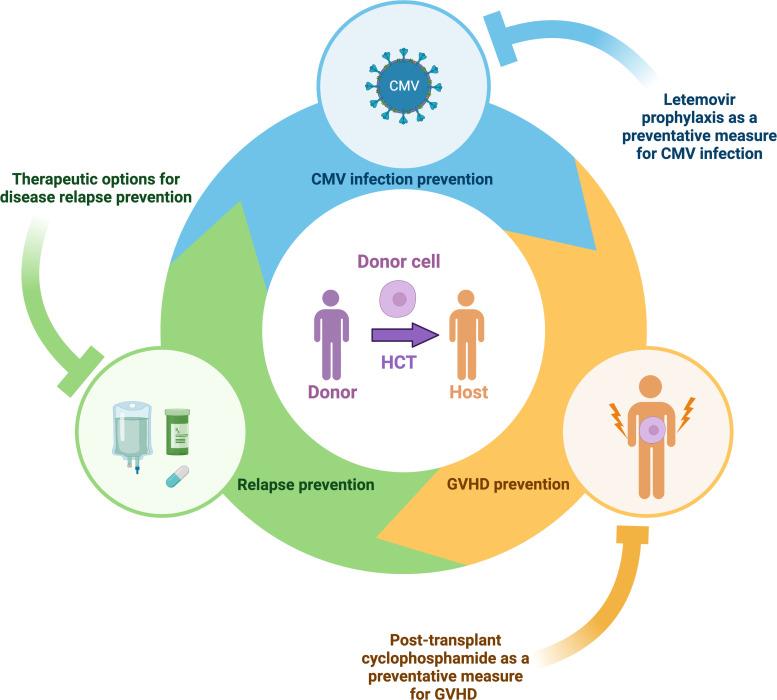
Curative therapy with an allogeneic hematopoietic cell transplant (HCT) can now be offered to a wider patient population due to improvements in donor selection, transplant conditioning regimens, and supportive care measures. However, risk of transplant-related morbidity and mortality remains, and thus appropriate transplant candidate workup pre-HCT for risk stratification and a management plan after HCT is crucial for success of the procedure. These include understanding and identifying risk of underlying malignant disease relapse, graft-versus-host disease, and infectious complications a patient may be predisposed toward, irrespective of allogeneic donor type. Progress in these domains with new therapeutic paradigms allows for development of a treatment plan prior to HCT to mitigate these potential risks tailored to the patient's case. Herein, we present case studies to focus on factors that influence decision-making in HCT and the approaches and strategies used to optimize post-HCT outcomes based on the individual HCT recipient's clinical scenario to improve on these high-risk scenarios.
由于供者选择、移植预处理方案和支持治疗措施的改进,现在可以为更广泛的患者群体提供同种异体造血细胞移植(HCT)的治愈性治疗。然而,移植相关发病率和死亡率的风险仍然存在,因此在 HCT 前进行适当的移植候选者评估以进行风险分层,以及在 HCT 后制定管理计划对于该程序的成功至关重要。这些包括了解和识别患者可能易患的基础恶性疾病复发、移植物抗宿主病和感染并发症的风险,而与同种异体供体类型无关。随着新治疗模式的进展,允许在 HCT 之前制定治疗计划,以减轻针对患者具体情况量身定制的这些潜在风险。在此,我们提出了一些病例研究,重点关注影响 HCT 决策的因素,以及根据个体 HCT 受者的临床情况优化 HCT 后结局的方法和策略,以改善这些高风险情况。
 Zotero 插件