
用于预防心血管疾病的复方制剂疗法及用于管理高血压的联合药物疗法。
Polypill Therapy for Cardiovascular Disease Prevention and Combination Medication Therapy for Hypertension Management.
作者信息
Narita Keisuke, Hoshide Satoshi, Kario Kazuomi
机构信息
Division of Cardiovascular Medicine, Department of Internal Medicine, Jichi Medical University School of Medicine, Shimotsuke 329-0498, Japan.
出版信息
J Clin Med. 2023 Nov 22;12(23):7226. doi: 10.3390/jcm12237226.
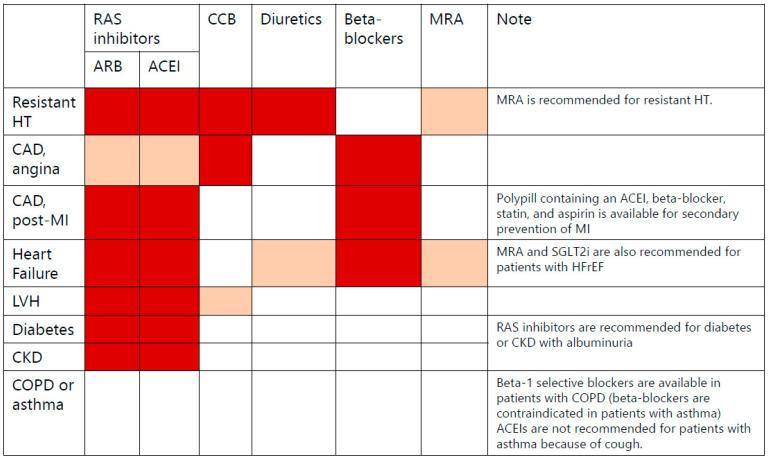
Although various guidelines for cardiovascular disease prevention have been established, the optimal drug therapy is often not implemented due to poor medication adherence and the clinical inertia of healthcare practitioners. Polypill strategies are one solution to this problem. Previous studies have established the usefulness of polypills, i.e., combination tablets including three or more medications, for the prevention of cardiovascular disease. For this purpose, the polypills generally contain an antiplatelet medication, an antihypertensive medication, and a statin. For the specific management of hypertension, combination therapy including more than two classes of antihypertensive medications is recommended by most international guidelines. Combination tablets including two classes of antihypertensive medications, such as renin-angiotensin system (RAS) inhibitors (angiotensin-converting enzyme inhibitors [ACEIs] and angiotensin receptor blockers [ARBs]) and Ca-channel blockers or thiazide diuretics, have been reported to be useful for cardiovascular disease prevention and lowering blood pressure (BP) levels. The use of RAS inhibitors is recommended for a wide range of complications, including diabetes, chronic heart failure, and chronic kidney disease. The combination of an RAS inhibitor and diuretic or Ca-channel blocker is thus recommended for the management of hypertension. Finally, we expect that novel medications such as angiotensin receptor neprilysin inhibitors (ARNIs) and sodium glucose cotransporter 2 inhibitors (SGLT2i), which have a more diverse range of effects in hypertension, heart failure, or diabetes, may be a solution to the problem of polypharmacy. Evidence is accumulating on the benefits of polypill strategies in cardiovascular disease prevention. Combination tablets are also effective for the treatment of hypertension.
尽管已经制定了各种心血管疾病预防指南,但由于药物依从性差和医疗从业者的临床惰性,最佳药物治疗方案往往无法得到实施。复方制剂策略是解决这一问题的一种方法。先前的研究已经证实了复方制剂(即包含三种或更多药物的复方片剂)在预防心血管疾病方面的有效性。为此,复方制剂通常含有一种抗血小板药物、一种抗高血压药物和一种他汀类药物。对于高血压的具体管理,大多数国际指南推荐使用包括两类以上抗高血压药物的联合治疗。据报道,包含两类抗高血压药物的复方片剂,如肾素 - 血管紧张素系统(RAS)抑制剂(血管紧张素转换酶抑制剂[ACEIs]和血管紧张素受体阻滞剂[ARBs])与钙通道阻滞剂或噻嗪类利尿剂,对预防心血管疾病和降低血压水平有效。RAS抑制剂被推荐用于治疗包括糖尿病、慢性心力衰竭和慢性肾脏病在内的多种并发症。因此,推荐将RAS抑制剂与利尿剂或钙通道阻滞剂联合用于高血压的管理。最后,我们期望新型药物,如血管紧张素受体脑啡肽酶抑制剂(ARNIs)和钠 - 葡萄糖协同转运蛋白2抑制剂(SGLT2i),它们在高血压、心力衰竭或糖尿病方面具有更广泛的作用,可能是解决多重用药问题的一种方法。关于复方制剂策略在心血管疾病预防中的益处的证据正在不断积累。复方片剂对高血压治疗也有效。


 Zotero 插件