
整合血清药物化学与网络药理学以揭示延胡索治疗阿尔茨海默病的活性成分及作用机制。
Integrating serum pharmacochemistry and network pharmacology to reveal the active constituents and mechanism of Corydalis Rhizoma in treating Alzheimer's disease.
作者信息
Lyu Yan, Wang Yu, Guo Jianyou, Wang Yuqing, Lu Yifan, Hao Zhuangzhuang, Jiang Tingyue, Fan Wenxin, Li Yihua, Shi Jinli
机构信息
School of Chinese Materia Medica, Beijing University of Chinese Medicine, Beijing, China.
CAS Key Laboratory of Mental Health, Institute of Psychology, Chinese Academy of Sciences, Beijing, China.
出版信息
Front Aging Neurosci. 2023 Nov 22;15:1285549. doi: 10.3389/fnagi.2023.1285549. eCollection 2023.
BACKGROUND
Alzheimer's disease (AD) is a multifactorial neurodegenerative condition. The search for multi-target traditional Chinese medicines or ingredients for treating AD has attracted much attention. Corydalis rhizome (CR) is a traditional Chinese medicine. Its main components are alkaloids, which have therapeutic effects that can potentially be used for treating AD. However, no systematic study has been conducted to explore the anti-AD efficacy of CR, as well as its active compounds and mechanisms of action.
OBJECTIVE
The present study aimed to clarify CR's active constituents and its pharmacological mechanisms in treating AD.
METHODS
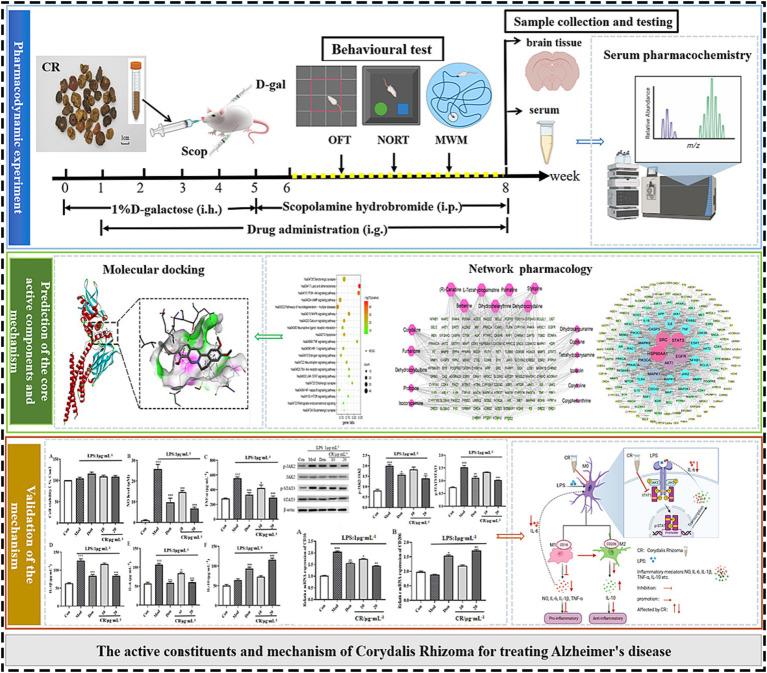
A D-galactose & scopolamine hydrobromide-induced AD mouse model was used and CR was administered orally. The prototypical alkaloid components were identified in the serum. The core components, key targets, and possible mechanisms of action of these alkaloids were revealed through network pharmacology. Molecular docking of the key target was performed. Finally, the mechanism was validated by lipopolysaccharide (LPS)-induced activation of BV2 microglia.
RESULTS
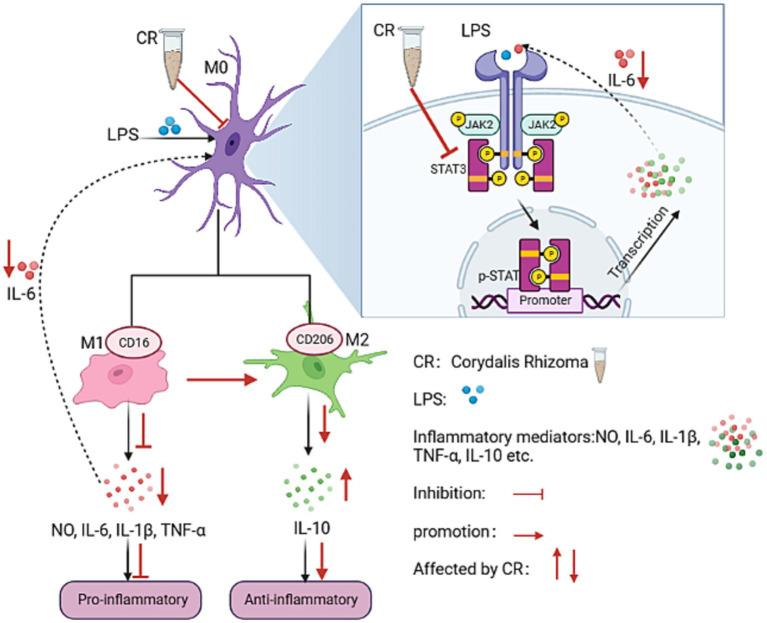
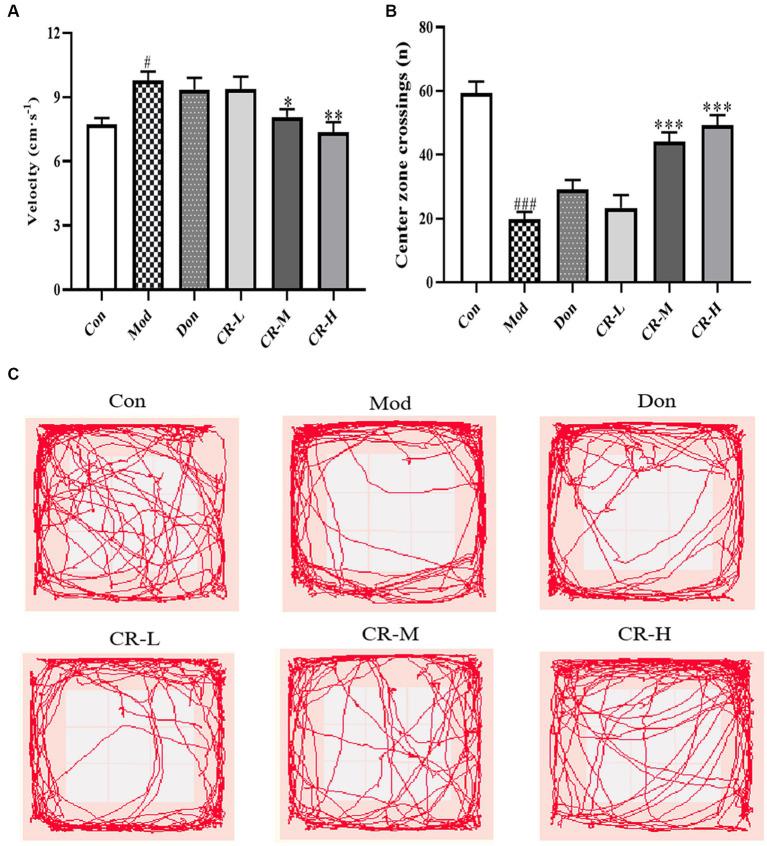
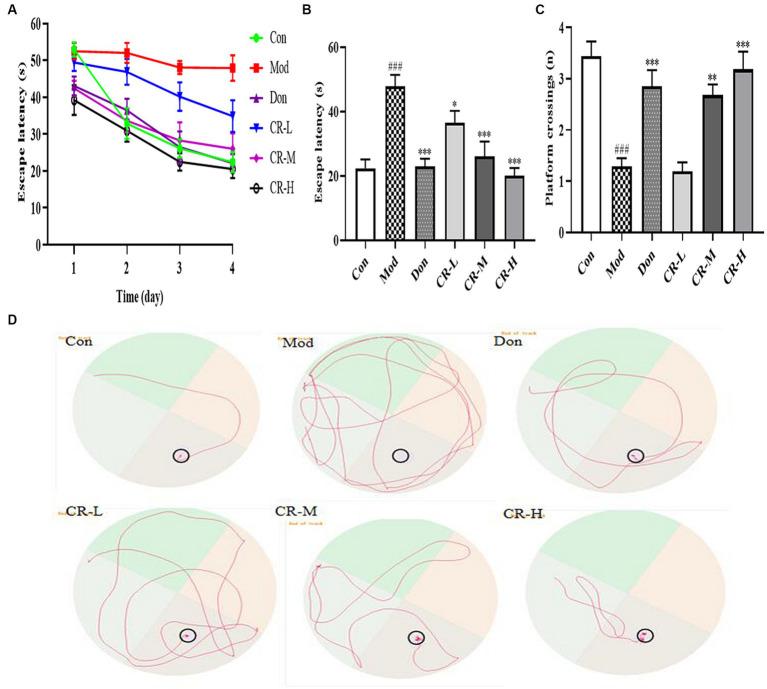
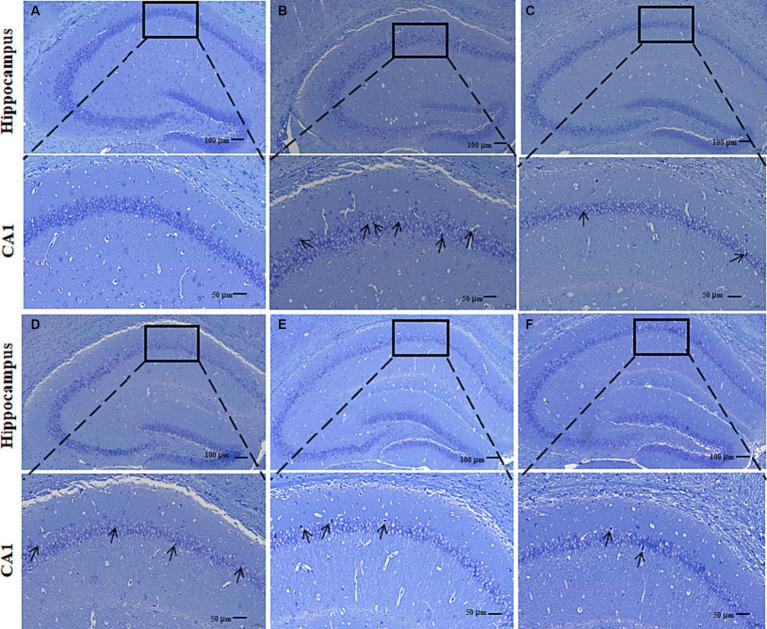
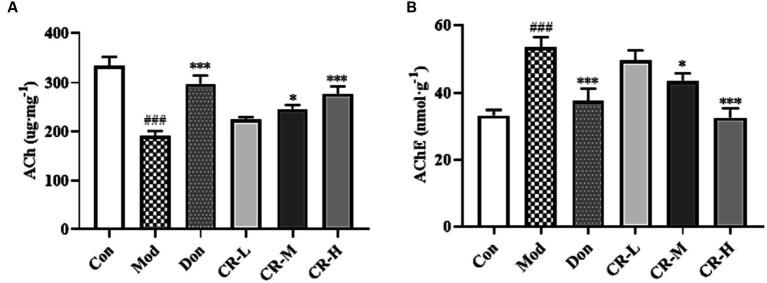
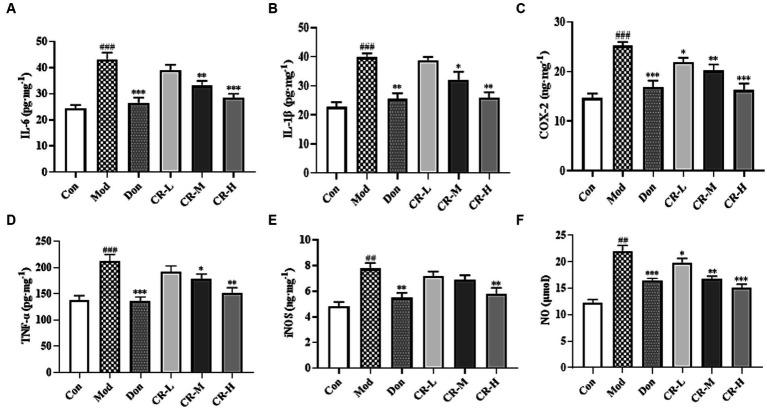
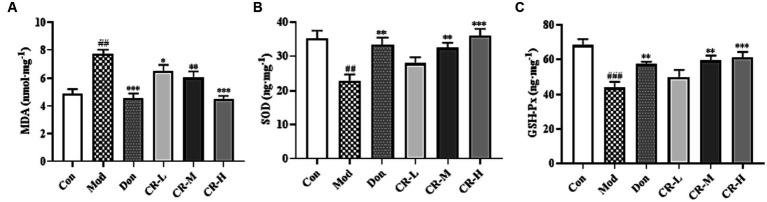
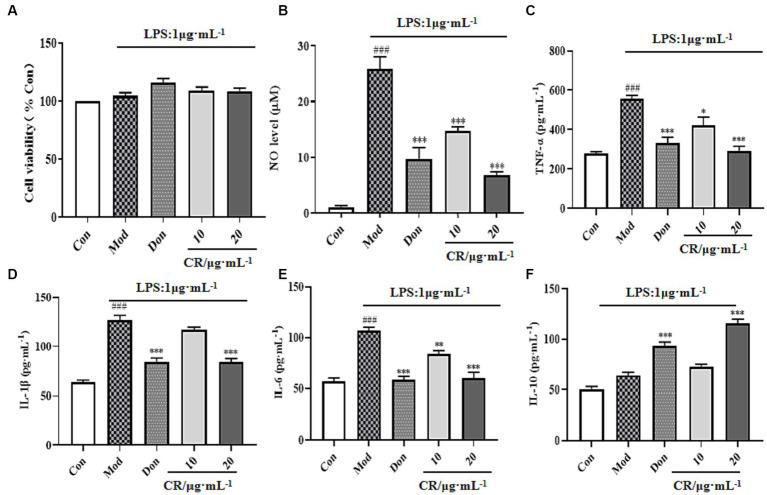
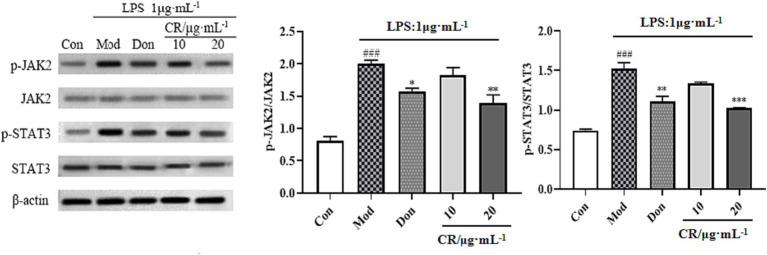
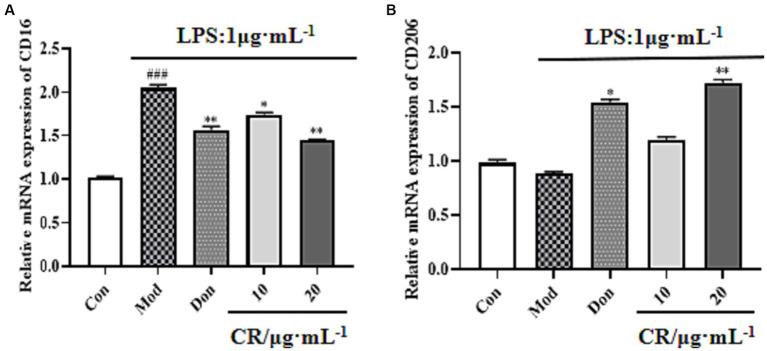
The results showed that CR improved anxiety-like behavior, spatial and non-spatial recognition, and memory capacity in AD mice. It also achieved synergistic AD treatment by modulating neurotransmitter levels, anti-neuroinflammation, and anti-oxidative stress. The core components that enhance CR's efficacy in treating AD are protoberberine-type alkaloids. The CR may induce the polarization of LPS-activated BV2 microglia from phenotype M1 to M2. This is partially achieved by modulating the IL-6/JAK2/STAT3 signaling pathway, which could be the mechanism by which CR treats AD through anti-inflammation.
CONCLUSION
The present study provided a theoretical and experimental basis for the clinical application of CR in treating AD. It also provides information that aids the secondary development, and precise clinical use of CR.
背景
阿尔茨海默病(AD)是一种多因素导致的神经退行性疾病。寻找用于治疗AD的多靶点中药或成分备受关注。延胡索是一种中药。其主要成分是生物碱,具有潜在可用于治疗AD的治疗作用。然而,尚未进行系统研究来探索延胡索治疗AD的疗效及其活性成分和作用机制。
目的
本研究旨在阐明延胡索治疗AD的活性成分及其药理机制。
方法
采用D-半乳糖和氢溴酸东莨菪碱诱导的AD小鼠模型,口服给予延胡索。鉴定血清中的原型生物碱成分。通过网络药理学揭示这些生物碱的核心成分、关键靶点和可能的作用机制。对关键靶点进行分子对接。最后,通过脂多糖(LPS)诱导BV2小胶质细胞活化来验证机制。
结果
结果表明,延胡索改善了AD小鼠的焦虑样行为、空间和非空间识别以及记忆能力。它还通过调节神经递质水平、抗神经炎症和抗氧化应激实现了对AD的协同治疗。增强延胡索治疗AD疗效的核心成分是原小檗碱型生物碱。延胡索可能诱导LPS激活的BV2小胶质细胞从M1表型向M2表型极化。这部分是通过调节IL-6/JAK2/STAT3信号通路实现的,这可能是延胡索通过抗炎治疗AD的机制。
结论
本研究为延胡索治疗AD的临床应用提供了理论和实验依据。它还为延胡索的二次开发和精准临床应用提供了信息。



 Zotero 插件