
血清酸性和富含半胱氨酸样蛋白1作为急性幕上脑出血后临床预后预测的生化指标:一项前瞻性队列研究
Serum Secreted Protein Acidic and Rich in Cysteine-Like 1 as a Biochemical Predictor for Prognosticating Clinical Outcomes After Acute Supratentorial Intracerebral Hemorrhage: A Prospective Cohort Study.
作者信息
Huang Jianjun, Shao Fangping, Chen Bin, Zheng Guanrong, Shen Jia, Qiu Shenzhong
机构信息
Department of Neurosurgery, The First People's Hospital of Fuyang District of Hangzhou City, Hangzhou, People's Republic of China.
Emergency Department, The First People's Hospital of Fuyang District of Hangzhou City, Hangzhou, People's Republic of China.
出版信息
Neuropsychiatr Dis Treat. 2023 Dec 5;19:2709-2728. doi: 10.2147/NDT.S444671. eCollection 2023.
BACKGROUND
Secreted protein acidic and rich in cysteine-like 1 (SPARCL1) regulates synaptic stability and is up-regulated during axonal regeneration. Here, serum SPARCL1 was determined for estimating severity and prognosticating early neurological deterioration (END) and functional outcomes of acute intracerebral hemorrhage (ICH).
METHODS
In this prospective observational cohort study of 156 patients with supratentorial ICH, blood samples of 53 were acquired not only at admission but also ad days 1, 3, 5, 7 and 10. Another group of 53 healthy controls were recruited. The modified Rankin Scale (mRS) scores of 3-6 at poststroke six months were regarded as poor prognosis.
RESULTS
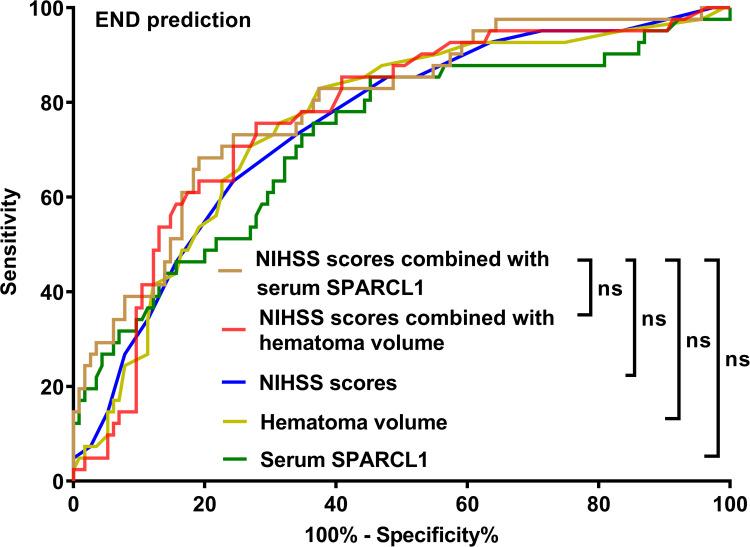
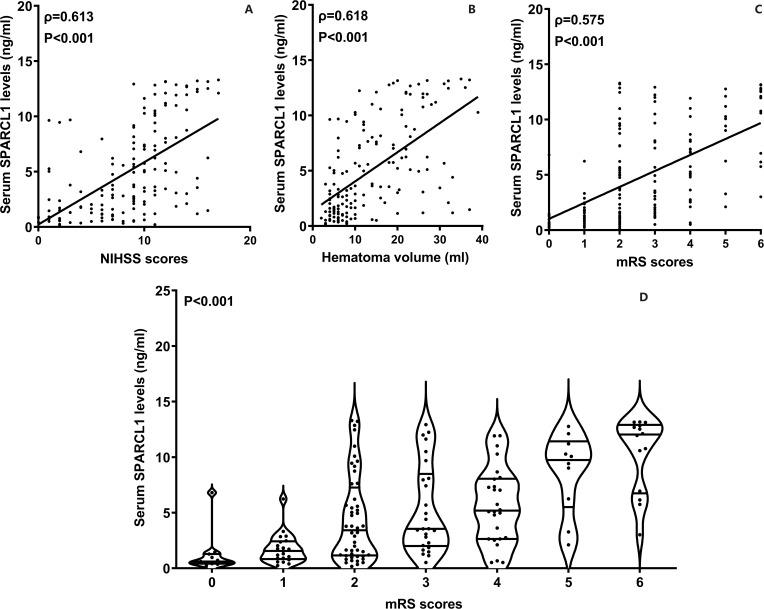
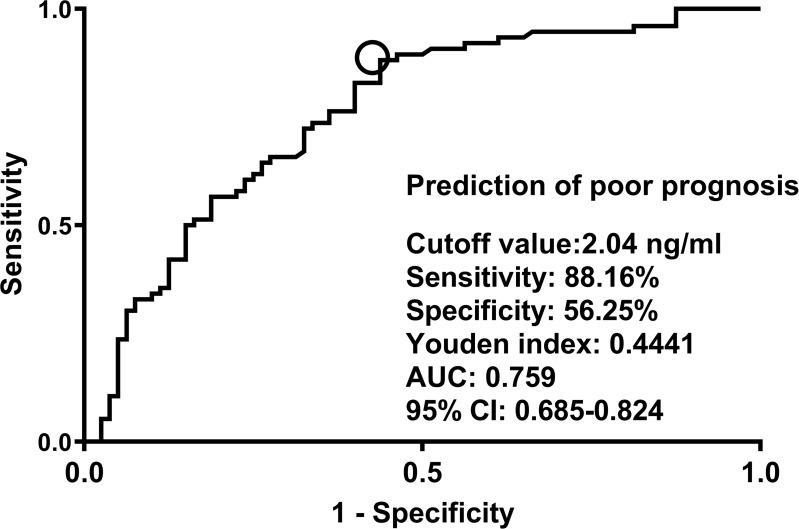
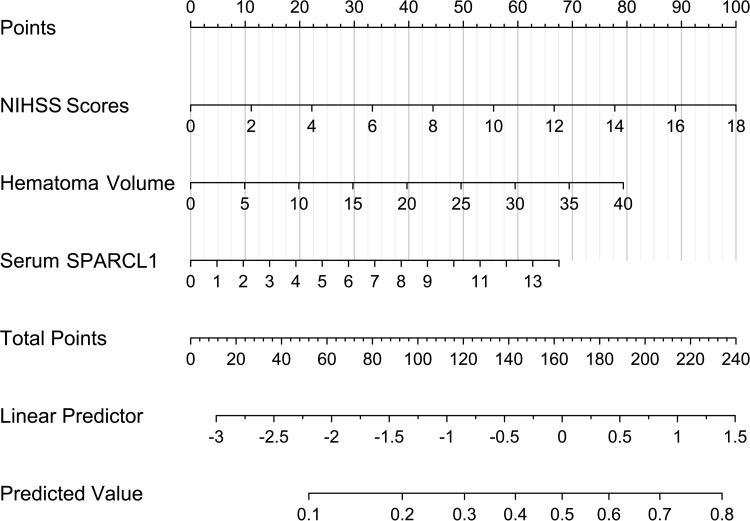
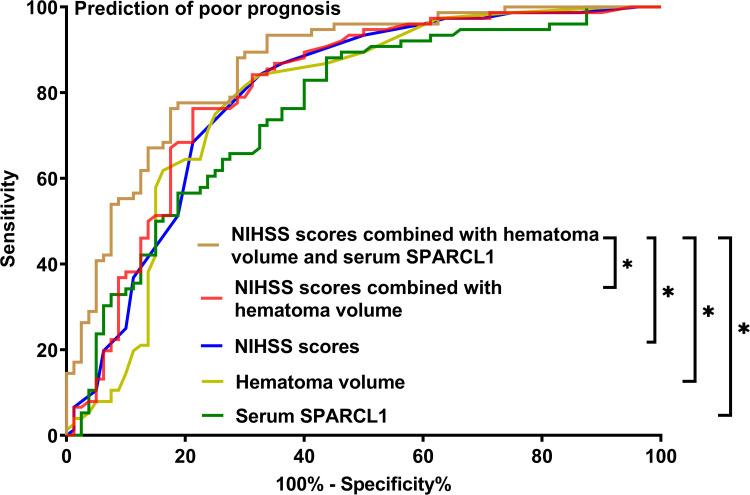
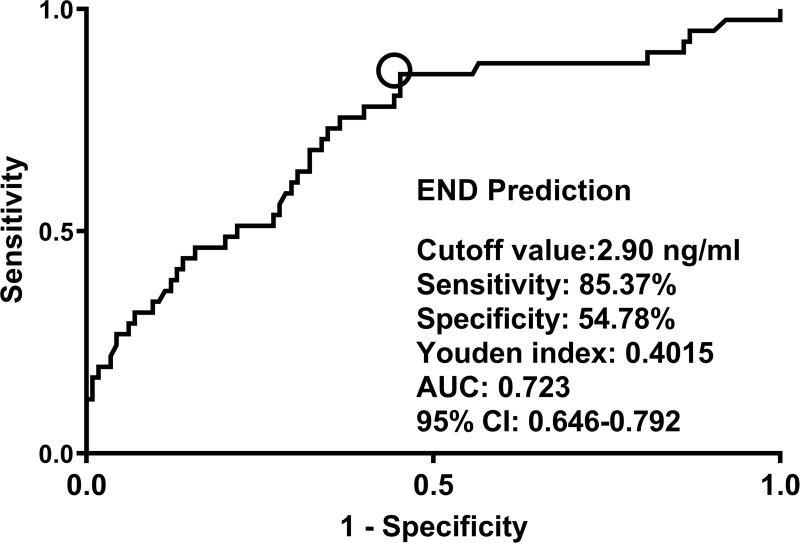
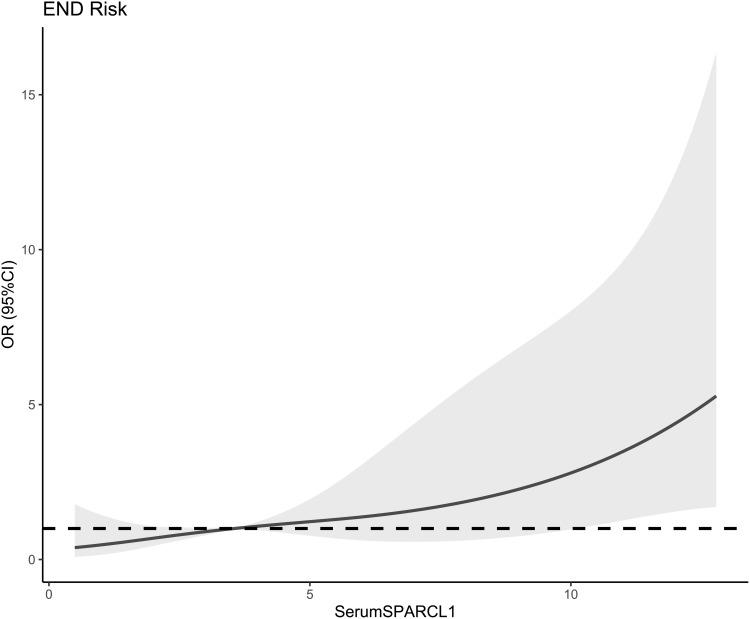
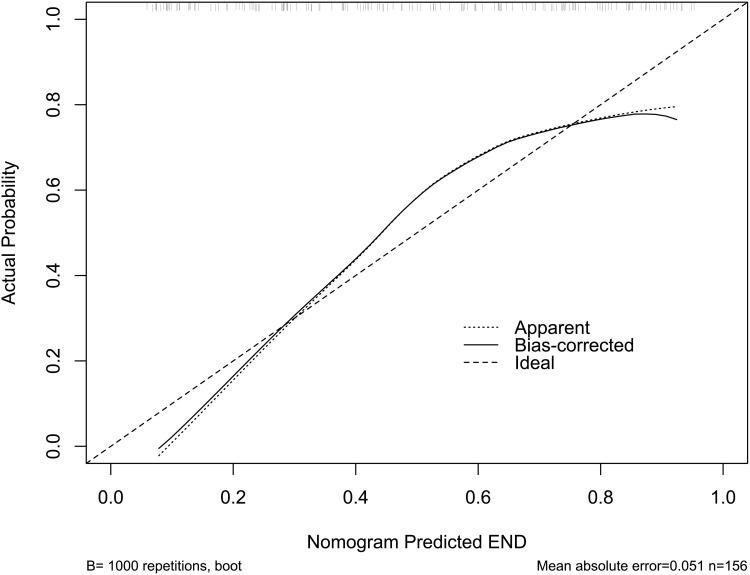
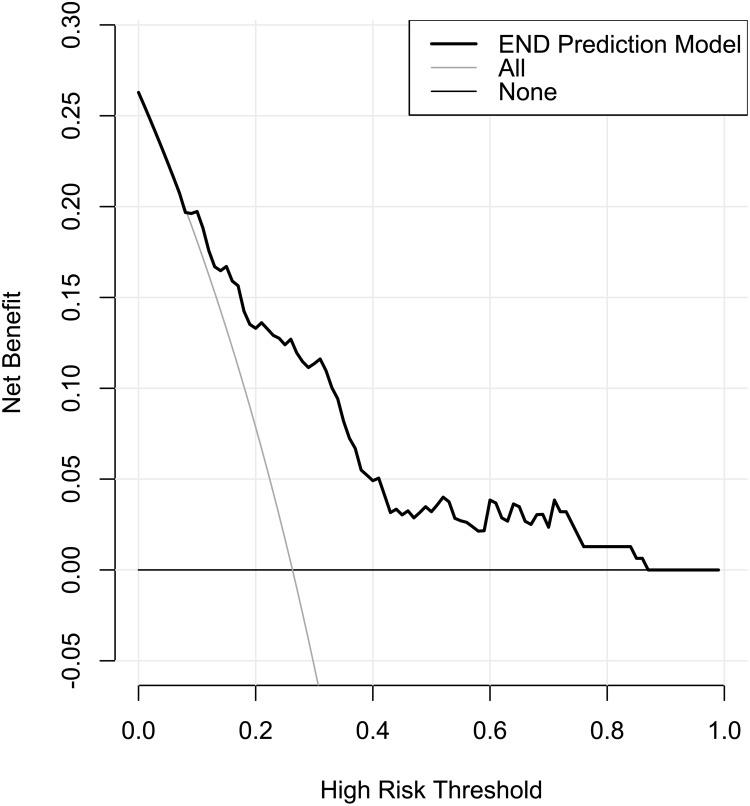
As opposed to controls, serum SPARCL1 levels were markedly elevated during the early ten days after ICH, with the highest levels at days 1 and 3. Admission serum SPARCL1 levels were independently correlated with National Institutes of Health Stroke Scale scores and hematoma volume, were significantly increased in the order of six-month mRS scores from 0 to 6 and were independently correlated with six-month mRS scores. Serum SPARCL1 levels were linearly related to risks of poor six-month prognosis and END under restricted cubic spline, had significant efficiency under receiver operating characteristic (ROC) curve and were independently associated with END and poor prognosis. Subgroup analysis confirmed that no interactions existed for associations of serum SPARCL1 levels with other variables, such as age, gender and some specific vascular risk factors. END and poor prognosis prediction models integrating serum SPARCL1 were displayed using the two nomograms. The poor prognosis prediction model, but END prediction model not, performed well under calibration curve, decision curve and ROC curve.
CONCLUSION
A substantial elevation of serum SPARCL1 levels during the early period after ICH is independently related to illness severity and poor neurological outcomes, thus signifying that serum SPARCL1 may appear as a prognostic biomarker of ICH.
背景
分泌性富含半胱氨酸的酸性蛋白样1(SPARCL1)调节突触稳定性,且在轴突再生过程中上调。在此,测定血清SPARCL1以评估急性脑出血(ICH)的严重程度、预测早期神经功能恶化(END)及功能预后。
方法
在这项对156例幕上ICH患者的前瞻性观察队列研究中,53例患者不仅在入院时采集血样,还在第1、3、5、7和10天采集。另外招募了53名健康对照者。卒中后6个月改良Rankin量表(mRS)评分为3 - 6分被视为预后不良。
结果
与对照组相比,ICH后早期10天内血清SPARCL1水平显著升高,在第1天和第3天达到最高水平。入院时血清SPARCL1水平与美国国立卫生研究院卒中量表评分及血肿体积独立相关,按6个月mRS评分从0到6的顺序显著升高,且与6个月mRS评分独立相关。在受限立方样条分析下,血清SPARCL1水平与6个月预后不良及END风险呈线性相关,在受试者工作特征(ROC)曲线下具有显著效能,且与END及预后不良独立相关。亚组分析证实血清SPARCL1水平与年龄、性别及一些特定血管危险因素等其他变量之间不存在交互作用。使用两个列线图展示了整合血清SPARCL1的END和预后不良预测模型。预后不良预测模型在校准曲线、决策曲线和ROC曲线下表现良好,但END预测模型表现不佳。
结论
ICH后早期血清SPARCL1水平大幅升高与疾病严重程度及不良神经预后独立相关,这表明血清SPARCL1可能是ICH的一种预后生物标志物。





 Zotero 插件