
类脂肪酶 PNPLA2 参与了红内期发育过程中磷酸甘油酯的线粒体降解。
The patatin-like phospholipase PNPLA2 is involved in the mitochondrial degradation of phosphatidylglycerol during blood stage development.
机构信息
Apicolipid Team, Institute for Avanced Biosciences, Centre National pour la Recherche Scientifique (CNRS) UMR5309, Institut National de la Santé et de la Recherche Médicale, Université Grenoble Alpes, Grenoble, France.
Division of Cellular and Applied Infection Biology, Institute of Zoology, RWTH Aachen University, Aachen, Germany.
出版信息
Front Cell Infect Microbiol. 2023 Nov 20;13:997245. doi: 10.3389/fcimb.2023.997245. eCollection 2023.
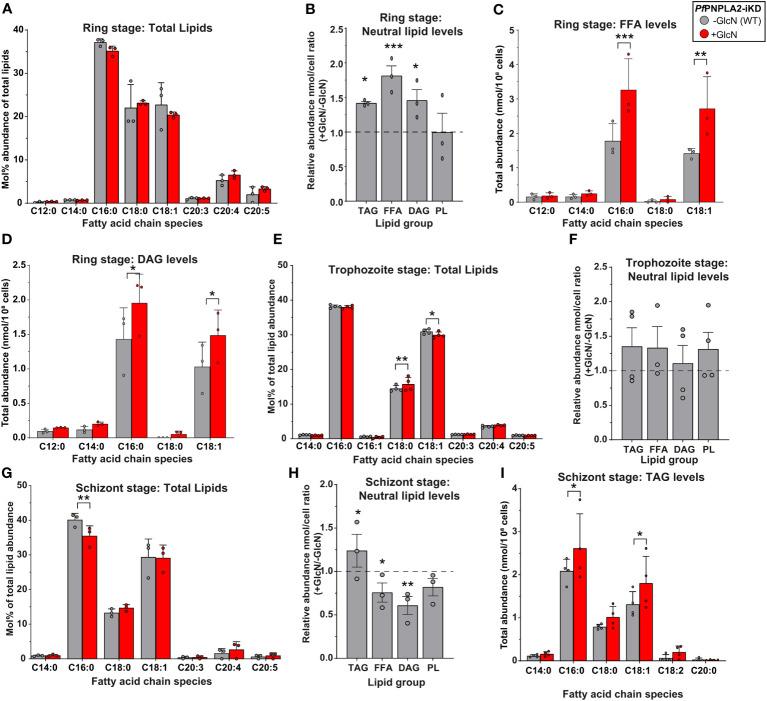
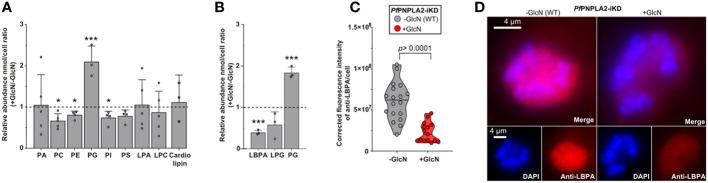
is an Apicomplexa responsible for human malaria, a major disease causing more than ½ million deaths every year, against which there is no fully efficient vaccine. The current rapid emergence of drug resistances emphasizes the need to identify novel drug targets. Increasing evidences show that lipid synthesis and trafficking are essential for parasite survival and pathogenesis, and that these pathways represent potential points of attack. Large amounts of phospholipids are needed for the generation of membrane compartments for newly divided parasites in the host cell. Parasite membrane homeostasis is achieved by an essential combination of parasite lipid synthesis/recycling and massive host lipid scavenging. Latest data suggest that the mobilization and channeling of lipid resources is key for asexual parasite survival within the host red blood cell, but the molecular actors allowing lipid acquisition are poorly characterized. Enzymes remodeling lipids such as phospholipases are likely involved in these mechanisms. possesses an unusually large set of phospholipases, whose functions are largely unknown. Here we focused on the putative patatin-like phospholipase PNPLA2, for which we generated an glmS-inducible knockdown line and investigated its role during blood stages malaria. Disruption of the mitochondrial PNPLA2 in the asexual blood stages affected mitochondrial morphology and further induced a significant defect in parasite replication and survival, in particular under low host lipid availability. Lipidomic analyses revealed that PNPLA2 specifically degrades the parasite membrane lipid phosphatidylglycerol to generate lysobisphosphatidic acid. PNPLA2 knockdown further resulted in an increased host lipid scavenging accumulating in the form of storage lipids and free fatty acids. These results suggest that PNPLA2 is involved in the recycling of parasite phosphatidylglycerol to sustain optimal intraerythrocytic development when the host resources are scarce. This work strengthens our understanding of the complex lipid homeostasis pathways to acquire lipids and allow asexual parasite survival.
疟原虫是一种引起疟疾的顶复门生物,每年导致超过 50 万人死亡,目前还没有完全有效的疫苗。目前药物耐药性的迅速出现强调了需要确定新的药物靶点。越来越多的证据表明,脂质合成和运输对于寄生虫的存活和发病机制至关重要,这些途径代表了潜在的攻击点。大量的磷脂对于在宿主细胞中新分裂的寄生虫的膜隔室的产生是必需的。寄生虫膜的动态平衡是通过寄生虫脂质合成/回收和大量宿主脂质摄取的必需组合来实现的。最新数据表明,在宿主红细胞内,脂资源的动员和定向对于无性寄生虫的存活是关键的,但允许脂质获取的分子作用因子的特征描述很差。重塑脂质的酶,如磷脂酶,可能参与这些机制。 拥有一套异常庞大的磷脂酶,其功能在很大程度上是未知的。在这里,我们重点研究了假定的 patatin 样磷脂酶 PNPLA2,为此我们生成了一个 glmS 诱导的敲低系,并研究了其在疟原虫血期的作用。在无性血期,线粒体 PNPLA2 的破坏影响了线粒体的形态,进一步导致寄生虫复制和存活的显著缺陷,特别是在低宿主脂质可用性的情况下。脂质组学分析表明,PNPLA2 特异性降解寄生虫膜脂质磷脂酰甘油以产生溶血磷脂酰基酸。PNPLA2 的敲低进一步导致宿主脂质摄取增加,以储存脂质和游离脂肪酸的形式积累。这些结果表明,PNPLA2 参与了寄生虫磷脂酰甘油的再循环,以维持在宿主资源匮乏时最佳的红细胞内发育。这项工作加强了我们对获取脂质和允许无性寄生虫存活的复杂脂质动态平衡途径的理解。


 Zotero 插件