
将青蒿素重新用于新靶点的适用性。
Applicability of Redirecting Artemisinins for New Targets.
作者信息
Golenser Jacob, Hunt Nicholas H, Birman Ida, Jaffe Charles L, Zech Johanna, Mäder Karsten, Gold Daniel
机构信息
Department of Microbiology and Molecular Genetics Kuvin Center for the Study of Infectious and Tropical Diseases The Hebrew University - Hadassah Medical Center Jerusalem Israel.
School of Medical Sciences University of Sydney Sydney 2050 Australia.
出版信息
Glob Chall. 2023 Oct 27;7(12):2300030. doi: 10.1002/gch2.202300030. eCollection 2023 Dec.
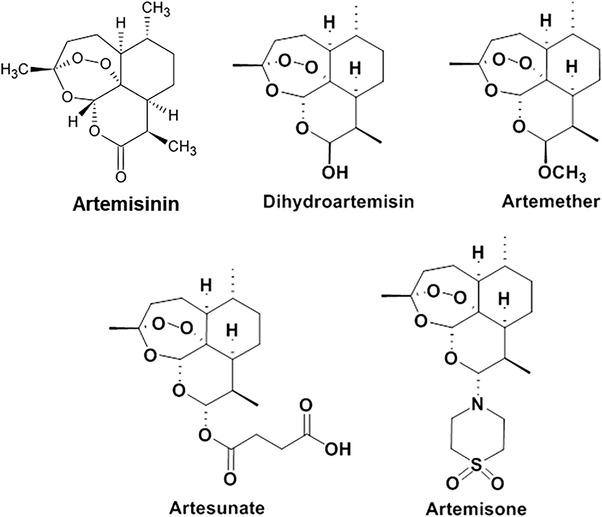
Employing new therapeutic indications for drugs that are already approved for human use has obvious advantages, including reduced costs and timelines, because some routine steps of drug development and regulation are not required. This work concentrates on the redirection of artemisinins (ARTS) that already are approved for clinical use, or investigated, for malaria treatment. Several mechanisms of action are suggested for ARTS, among which only a few have been successfully examined in vivo, mainly the induction of oxidant stress and anti-inflammatory effects. Despite these seemingly contradictory effects, ARTS are proposed for repurposing in treatment of inflammatory disorders and diverse types of diseases caused by viral, bacterial, fungal, and parasitic infections. When pathogens are treated the expected outcome is diminution of the causative agents and/or their inflammatory damage. In general, repurposing ARTS is successful in only a very few cases, specifically when a valid mechanism can be targeted using an additional therapeutic agent and appropriate drug delivery. Investigation of repurposing should include optimization of drug combinations followed by examination in relevant cell lines, organoids, and animal models, before moving to clinical trials.
将已获批准用于人类的药物用于新的治疗适应症具有明显优势,包括成本和时间的降低,因为药物研发和监管的一些常规步骤不再需要。这项工作专注于已被批准用于临床治疗疟疾或正在进行相关研究的青蒿素(ARTS)的重新定向应用。青蒿素具有多种作用机制,其中只有少数几种已在体内得到成功验证,主要是诱导氧化应激和抗炎作用。尽管存在这些看似矛盾的作用,但青蒿素仍被提议重新用于治疗炎症性疾病以及由病毒、细菌、真菌和寄生虫感染引起的各种类型疾病。治疗病原体时,预期结果是致病因子和/或其炎症损伤的减少。一般来说,青蒿素的重新利用仅在极少数情况下取得成功,特别是当可以使用额外的治疗剂和适当的药物递送靶向有效机制时。在进入临床试验之前,重新利用的研究应包括优化药物组合,然后在相关细胞系、类器官和动物模型中进行检验。


 Zotero 插件