
埃塞俄比亚晚期宫颈癌发病的决定因素:系统评价和荟萃分析。
Determinants of late-stage cervical cancer presentation in Ethiopia: a systematic review and meta-analysis.
机构信息
Department of Public Health, College of Medicine and Health Science, Wolkite University, Wolkite, Ethiopia.
Department of Midwifery, College of Medicine and Health Science, Wolkite University, Wolkite, Ethiopia.
出版信息
BMC Cancer. 2023 Dec 14;23(1):1228. doi: 10.1186/s12885-023-11728-y.
INTRODUCTION
Behind breast, colorectal, and lung cancers, cervical cancer is the fourth most common cancer affecting females. Despite, it is a preventable form of cancer both the incidence and mortality figures reflect it as a major reproductive health problem. Late-stage cervical cancer diagnosis is associated with complicated clinical presentation which can result in short survival time and increased mortality. Several factors contribute to the late-stage presentation of cervical cancer patients. In Ethiopia nationally summarized evidence on the level and the factors contributing to late-stage cervical cancer diagnosis is scarce. Therefore, this systematic review and meta-analysis aimed to assess the pooled prevalence of late-stage cervical cancer diagnosis and its determinants in Ethiopia.
METHOD
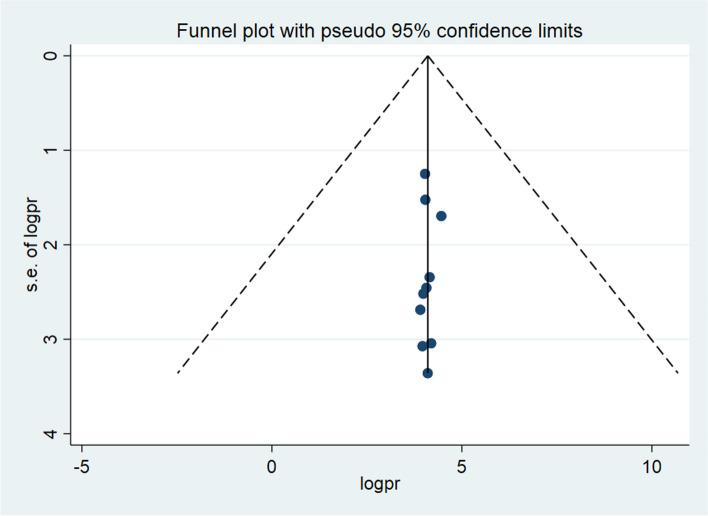
A systematic review and meta-analysis were conducted using PRISMA guidelines. Comprehensive literature was searched in PubMed, Embase, Google Scholar, and African Online Journal to retrieve eligible articles. A weighted inverse variance random effect model was used to estimate pooled prevalence. Cochrane Q-test and I statistics were computed to assess heterogeneity among studies. Funnel plot and Egger's regression test were done to assess publication bias.
RESULT
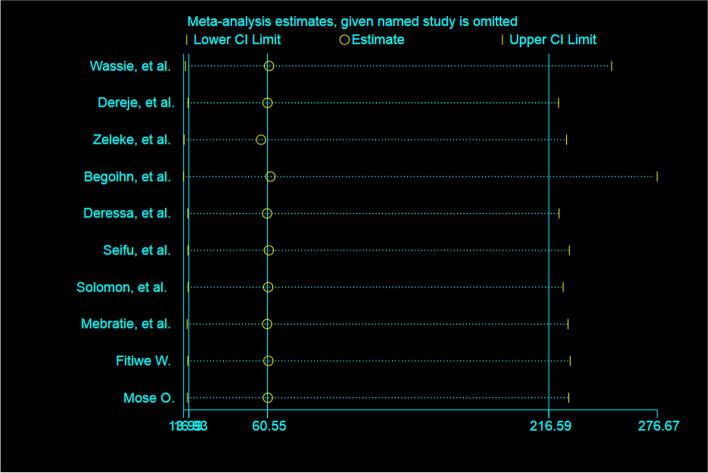
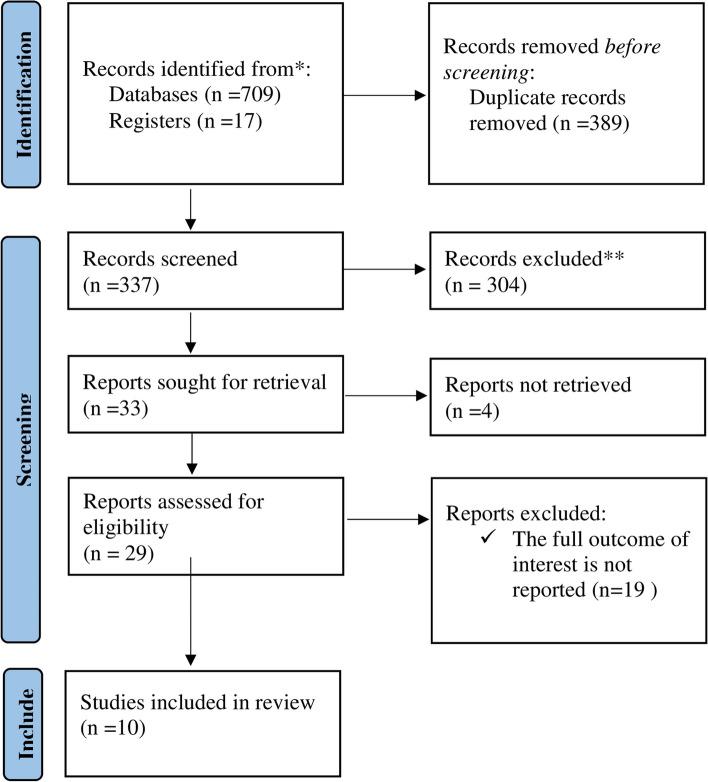
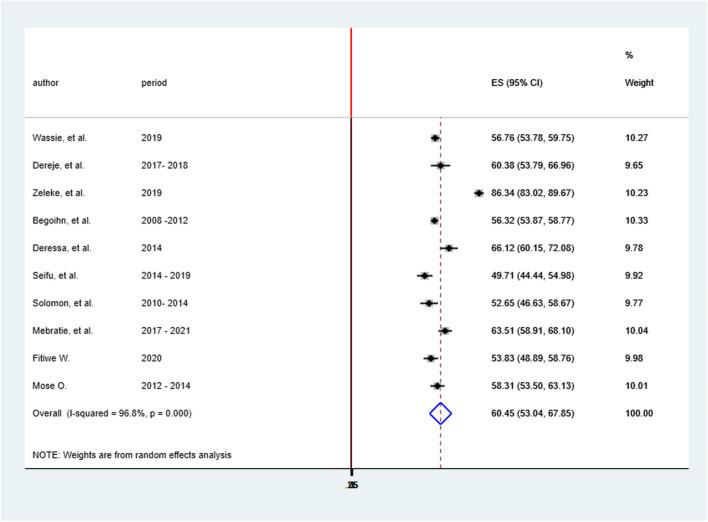
Overall, 726 articles were retrieved and finally 10 articles were included in this review. The pooled prevalence of late-stage cervical cancer diagnosis in Ethiopia was 60.45% (95%CI; 53.04%-67.85%). Poor awareness about cervical cancer and its treatment (AOR = 1.55, 95% CI: (1.03 - 2.33, longer delay to seek care (AOR = 1.02, 95% CI: (1.01 - 1.03)) and rural residence (AOR = 2.07, 95% CI:( 1.56 - 2.75)) were significantly associated to late-stage diagnosis.
CONCLUSION
In Ethiopia, six in every ten cervical cancer cases are diagnosed at the late stage of the disease. Poor awareness about cervical cancer and its treatment, long patient delay to seek care, and rural residence were positively associated with late-stage diagnosis. Therefore intervention efforts should be made to improve public awareness about cervical cancer, minimize patient delay to seek care, and expand screening services specifically in the rural residing segment of the population to detect the disease early and improve survival.
简介
乳腺癌、结直肠癌和肺癌之后,宫颈癌是女性中第四大常见癌症。尽管宫颈癌是一种可预防的癌症,但发病率和死亡率表明它是一个主要的生殖健康问题。宫颈癌晚期诊断与复杂的临床表现相关,这可能导致生存时间缩短和死亡率增加。导致宫颈癌患者晚期表现的因素有几个。在埃塞俄比亚,全国范围内关于宫颈癌晚期诊断水平和相关因素的综合证据很少。因此,本系统评价和荟萃分析旨在评估埃塞俄比亚宫颈癌晚期诊断的汇总患病率及其决定因素。
方法
使用 PRISMA 指南进行系统评价和荟萃分析。在 PubMed、Embase、Google Scholar 和 African Online Journal 中全面检索文献,以检索合格文章。使用加权倒数方差随机效应模型估计汇总患病率。计算 Cochrane Q 检验和 I 统计量以评估研究之间的异质性。使用漏斗图和 Egger 回归检验评估发表偏倚。
结果
总共检索到 726 篇文章,最终有 10 篇文章纳入本综述。埃塞俄比亚宫颈癌晚期诊断的汇总患病率为 60.45%(95%CI;53.04%-67.85%)。对宫颈癌及其治疗的认识差(AOR=1.55,95%CI:(1.03-2.33),寻求医疗护理的延迟时间较长(AOR=1.02,95%CI:(1.01-1.03))和农村居民(AOR=2.07,95%CI:(1.56-2.75))与晚期诊断显著相关。
结论
在埃塞俄比亚,每 10 例宫颈癌病例中就有 6 例诊断为疾病晚期。对宫颈癌及其治疗的认识差、患者寻求医疗护理的时间长、以及农村居民与晚期诊断呈正相关。因此,应努力提高公众对宫颈癌的认识,尽量减少患者寻求医疗护理的延迟,并扩大筛查服务,特别是在农村居民中,以早期发现疾病并提高生存率。
 Zotero 插件