
榄仁树和九里香对变形链球菌的群体感应抑制作用
Anti-quorum Sensing of Terminalia catappa and Murraya koenigii Against Streptococcus mutans.
作者信息
Ramsundar Kavitha, Jain Ravindra Kumar, Pitchaipillai Sankar G
机构信息
Orthodontics and Dentofacial Orthopaedics, Saveetha Dental College and Hospitals, Saveetha Institute of Medical and Technical Sciences (SIMATS) Saveetha University, Chennai, IND.
Dentistry, Saveetha Dental College and Hospitals, Saveetha Institute of Medical and Technical Sciences (SIMATS) Saveetha University, Chennai, IND.
出版信息
Cureus. 2023 Nov 13;15(11):e48765. doi: 10.7759/cureus.48765. eCollection 2023 Nov.
Introduction Dental biofilm constitutes micro-organisms existing in an intercellular matrix containing organic and inorganic materials derived from saliva, gingival crevicular fluid, and bacterial products. Dental plaque biofilm inhibition by certain herbs and medicinal plants has been used as a treatment modality for the prevention of white spot lesions in orthodontic subjects. The aim of this study was to evaluate the anti-quorum sensing and anti-biofilm activity of and against Materials and methods Samples of dental plaque were taken from patients receiving orthodontic care. The colonies of the were isolated and biochemical characterization was done. Leaf extracts of and were used in the study. Methanolic extracts were subjected to evaluation of minimum inhibitory concentration (MIC) using the broth microdilution (two-fold) method and anti-biofilm activity using the crystal violet staining method. Results The MIC of methanol leaf extracts of against was noted at 0.62 mg/ml and at 1.25 mg/ml. At the lowest concentration of 0.03 mg and 0.01 mg methanol extract of had remarkably inhibited biofilm formation of 57.6% and 43.6% against , respectively. leaf extracts did not show any anti-biofilm activity when the organisms were grown in the presence of . Conclusion Both and had antibacterial effects against and remarkably inhibited biofilm formation by .
引言 牙菌斑生物膜由存在于细胞间基质中的微生物组成,该基质包含源自唾液、龈沟液和细菌产物的有机和无机物质。某些草药和药用植物对牙菌斑生物膜的抑制作用已被用作预防正畸患者白斑病变的一种治疗方式。本研究的目的是评估[植物名称1]和[植物名称2]对[细菌名称]的群体感应抑制和抗生物膜活性。
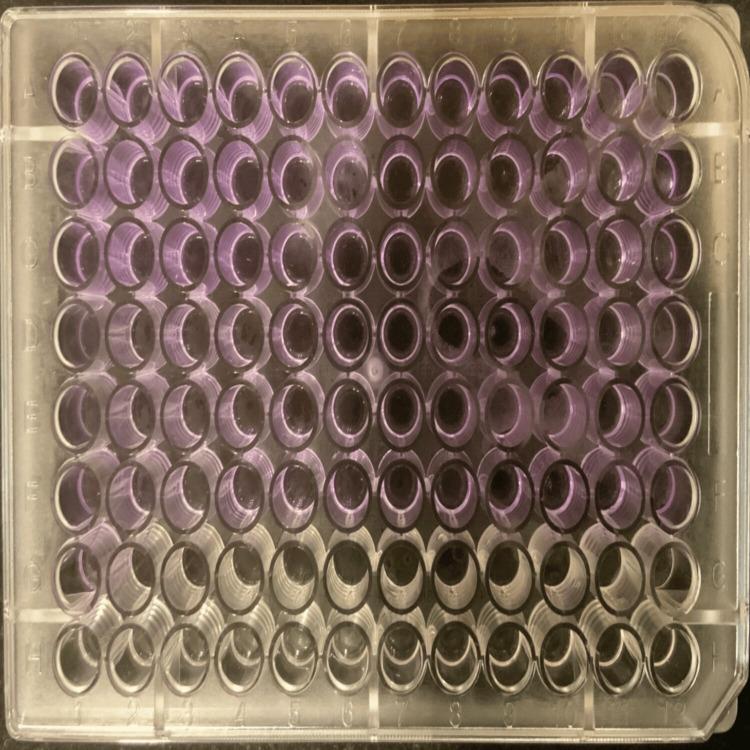
材料与方法 从接受正畸治疗的患者中采集牙菌斑样本。分离[细菌名称]的菌落并进行生化鉴定。本研究使用了[植物名称1]和[植物名称2]的叶提取物。采用肉汤微量稀释(两倍稀释)法评估甲醇提取物的最低抑菌浓度(MIC),并采用结晶紫染色法评估抗生物膜活性。
结果 [植物名称1]甲醇叶提取物对[细菌名称]的MIC为0.62mg/ml,[植物名称2]为1.25mg/ml。在最低浓度0.03mg和0.01mg时,[植物名称1]甲醇提取物分别对[细菌名称]的生物膜形成有显著抑制作用,抑制率分别为57.6%和43.6%。当在[某种物质名称]存在的情况下培养这些微生物时,[植物名称2]叶提取物未显示出任何抗生物膜活性。
结论 [植物名称1]和[植物名称2]对[细菌名称]均有抗菌作用,且[植物名称1]显著抑制了[细菌名称]的生物膜形成。

 Zotero 插件