
作为一个新出现的不断扩张的微生物栖息地的全球塑料圈的生态与风险。
Ecology and risks of the global plastisphere as a newly expanding microbial habitat.
作者信息
Li Changchao, Gillings Michael R, Zhang Chao, Chen Qinglin, Zhu Dong, Wang Jie, Zhao Kankan, Xu Qicheng, Leung Polly Hangmei, Li Xiangdong, Liu Jian, Jin Ling
机构信息
Department of Civil and Environmental Engineering, The Hong Kong Polytechnic University, Kowloon, Hong Kong, China.
Environment Research Institute, Shandong University, Qingdao 266237, China.
出版信息
Innovation (Camb). 2023 Nov 22;5(1):100543. doi: 10.1016/j.xinn.2023.100543. eCollection 2024 Jan 8.
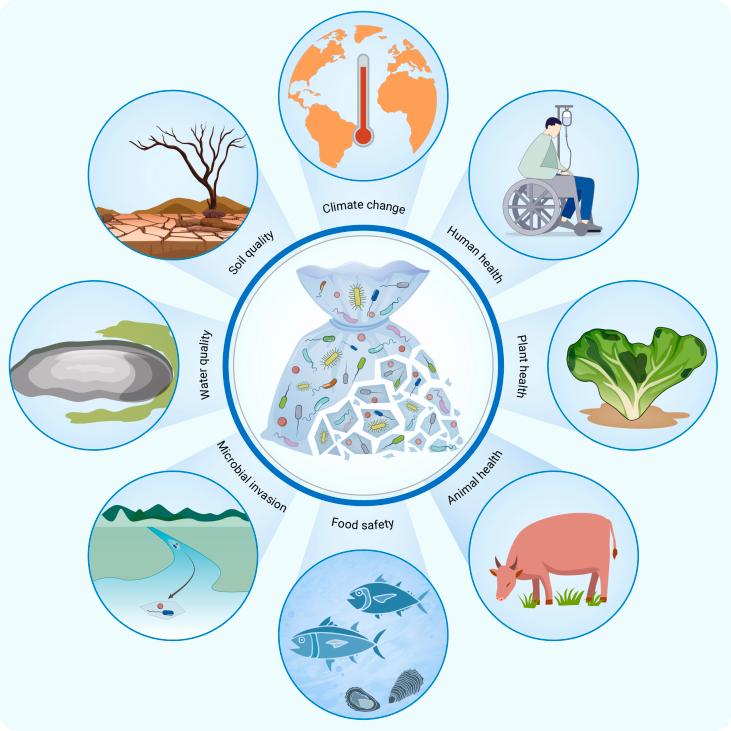
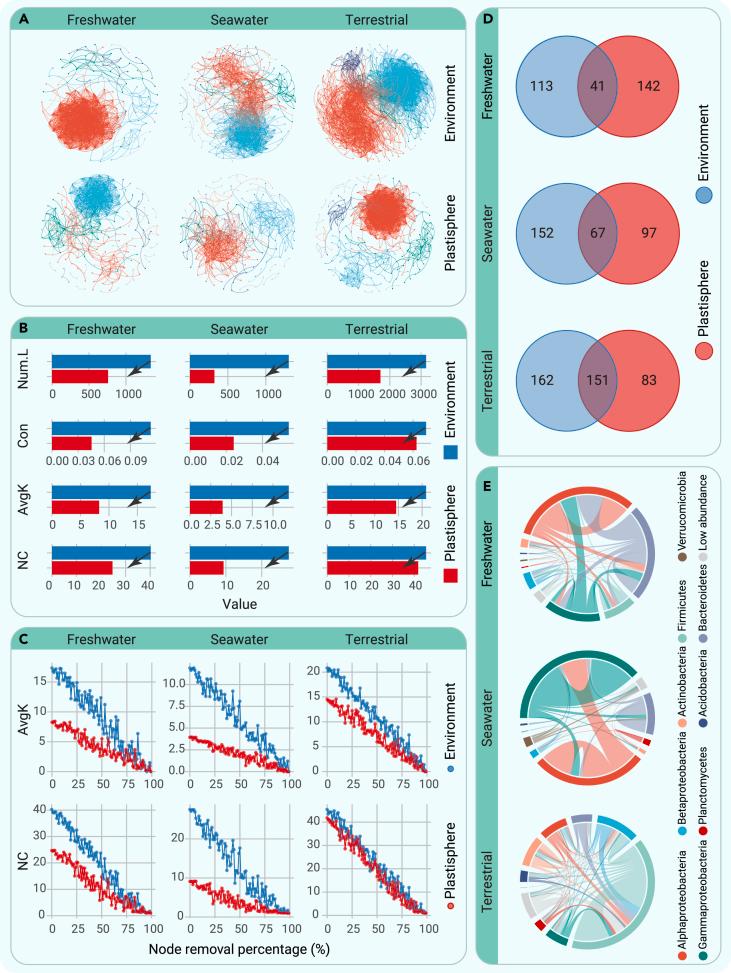
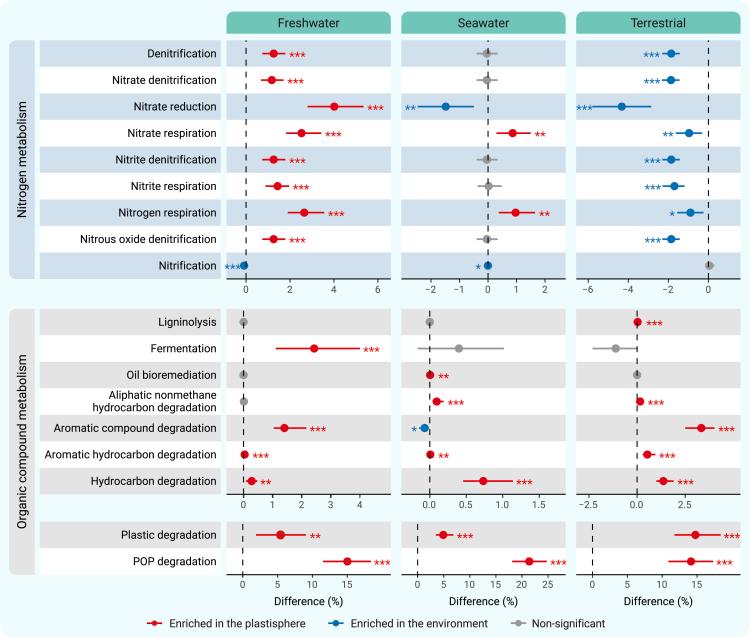
Plastic offers a new niche for microorganisms, the plastisphere. The ever-increasing emission of plastic waste makes it critical to understand the microbial ecology of the plastisphere and associated effects. Here, we present a global fingerprint of the plastisphere, analyzing samples collected from freshwater, seawater, and terrestrial ecosystems. The plastisphere assembles a distinct microbial community that has a clearly higher heterogeneity and a more deterministically dominated assembly compared to natural habitats. New coexistence patterns-loose and fragile networks with mostly specialist linkages among microorganisms that are rarely found in natural habitats-are seen in the plastisphere. Plastisphere microbiomes generally have a great potential to metabolize organic compounds, which could accelerate carbon turnover. Microorganisms involved in the nitrogen cycle are also altered in the plastisphere, especially in freshwater plastispheres, where a high abundance of denitrifiers may increase the release of nitrite (aquatic toxicant) and nitrous oxide (greenhouse gas). Enrichment of animal, plant, and human pathogens means that the plastisphere could become an increasingly mobile reservoir of harmful microorganisms. Our findings highlight that if the trajectory of plastic emissions is not reversed, the expanding plastisphere could pose critical planetary health challenges.
塑料为微生物提供了一个新的生态位——塑料圈。塑料垃圾排放量的不断增加使得了解塑料圈的微生物生态学及其相关影响至关重要。在此,我们展示了塑料圈的全球特征,分析了从淡水、海水和陆地生态系统中采集的样本。与自然栖息地相比,塑料圈聚集了一个独特的微生物群落,其具有明显更高的异质性和更由确定性主导的群落组装。在塑料圈中发现了新的共存模式——松散且脆弱的网络,其中微生物之间大多是专性联系,这在自然栖息地中很少见。塑料圈微生物群落通常具有代谢有机化合物的巨大潜力,这可能加速碳周转。参与氮循环的微生物在塑料圈中也会发生变化,特别是在淡水塑料圈中,那里大量的反硝化细菌可能会增加亚硝酸盐(水生毒物)和一氧化二氮(温室气体)的释放。动物、植物和人类病原体的富集意味着塑料圈可能会成为有害微生物日益流动的储存库。我们的研究结果强调,如果不扭转塑料排放的趋势,不断扩大的塑料圈可能会给地球健康带来严峻挑战。



 Zotero 插件