
新冠后状况风险在智力和发育障碍患者中:一项涉及 36308 名患者的回顾性队列研究。
Post-COVID-19 condition risk in patients with intellectual and developmental disabilities: a retrospective cohort study involving 36,308 patients.
机构信息
Department of Psychiatry, Chi Mei Medical Center, No 901, Chunghwa Road, Yongkang District, Tainan City 710, Taiwan.
Department of Internal Medicine, Chi Mei Medical Center, Tainan, Taiwan.
出版信息
BMC Med. 2023 Dec 20;21(1):505. doi: 10.1186/s12916-023-03216-8.
BACKGROUND
To date, no studies have investigated the prevalence of post-COVID-19 conditions in patients with Intellectual and Developmental Disabilities (IDD). Addressing this research gap is crucial, as understanding post-COVID-19 conditions in IDD patients can improve care planning, and it is essential not to overlook this vulnerable population in COVID-19 studies. This study was aimed at investigating the prevalence of post-COVID-19 conditions in patients with IDD and compare their risk with that of the general population.
METHODS
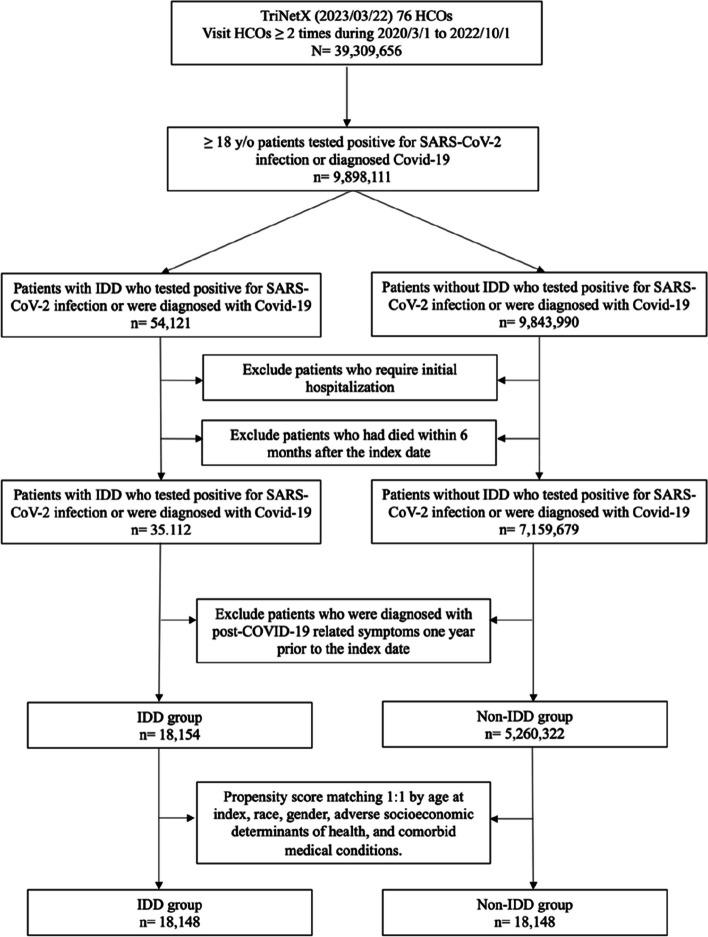
Using the TriNetX network, we identified patients with and without an IDD who had COVID-19. Subsequently, we compared the risk of developing any post-COVID-19 condition between these two groups, during the 90-180-day follow-up after SARS-CoV-2 infection.
RESULTS
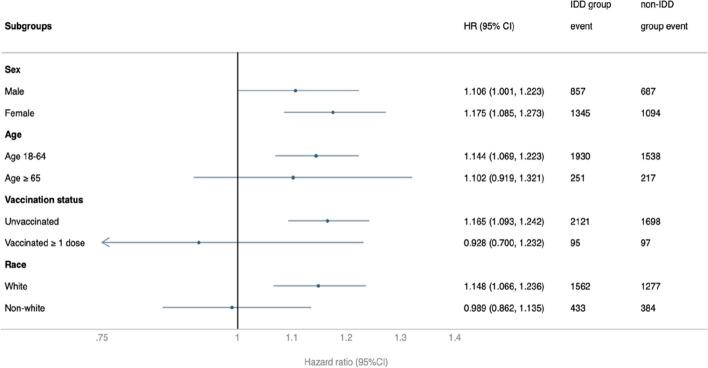
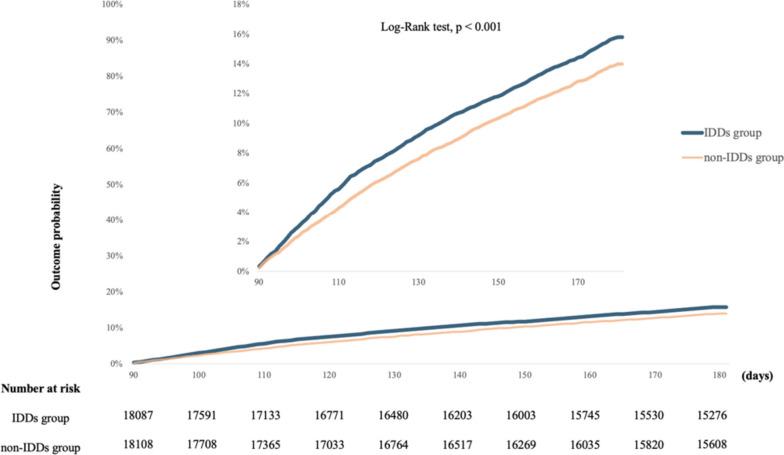
During the follow-up, patients with an IDD exhibited a significantly higher prevalence of post-COVID-19 conditions compared to the general population (hazard ratio [HR], 1.120; 95% confidence interval [CI]: 1.053-1.191). Specifically, COVID-19 survivors with IDD had a significantly increased risk of experiencing abnormal breathing (HR, 1.216; 95% CI: 1.077-1.373), abdominal symptoms (HR, 1.259; 95% CI: 1.128-1.406), fatigue (HR, 1.397; 95% CI: 1.216-1.606), anxiety/depression (HR, 1.157; 95% CI: 1.050-1.274), cognitive symptoms (HR, 1.828; 95% CI: 1.529-2.186), myalgia (HR, 1.325; 95% CI: 1.077-1.631), sleep disturbances (HR, 1.481; 95% CI: 1.148-1.910), and cough (HR, 1.315; 95% CI: 1.146-1.508) compared to the non-IDD group.
CONCLUSIONS
Patients with IDD might be associated with a higher risk of post-COVID-19 conditions following SARS-CoV-2 infection compared to the general population.
背景
迄今为止,尚无研究调查 COVID-19 后疾病在智力和发育障碍(ID)患者中的流行情况。解决这一研究空白至关重要,因为了解 ID 患者的 COVID-19 后疾病情况可以改善护理计划,并且在 COVID-19 研究中切勿忽视这一弱势群体。本研究旨在调查 ID 患者 COVID-19 后的疾病流行情况,并比较其与普通人群的风险。
方法
我们使用 TriNetX 网络,确定了患有和不患有 ID 的 COVID-19 患者。随后,我们比较了这两组在 SARS-CoV-2 感染后 90-180 天的随访期间发生任何 COVID-19 后疾病的风险。
结果
在随访期间,与普通人群相比,ID 患者 COVID-19 后疾病的流行率明显更高(风险比[HR],1.120;95%置信区间[CI]:1.053-1.191)。具体而言,患有 ID 的 COVID-19 幸存者出现异常呼吸(HR,1.216;95%CI:1.077-1.373)、腹部症状(HR,1.259;95%CI:1.128-1.406)、疲劳(HR,1.397;95%CI:1.216-1.606)、焦虑/抑郁(HR,1.157;95%CI:1.050-1.274)、认知症状(HR,1.828;95%CI:1.529-2.186)、肌痛(HR,1.325;95%CI:1.077-1.631)、睡眠障碍(HR,1.481;95%CI:1.148-1.910)和咳嗽(HR,1.315;95%CI:1.146-1.508)的风险显著增加。
结论
与普通人群相比,SARS-CoV-2 感染后,ID 患者可能与 COVID-19 后疾病的风险增加相关。
 Zotero 插件