
一项基于人群的研究,旨在探讨从大流行开始到日本京都府京都市奥密克戎疫情高峰期间,SARS-CoV-2 诊断方式的趋势。
A population-based study of the trend in SARS-CoV-2 diagnostic modalities from the beginning of the pandemic to the Omicron surge in Kyoto City, Kyoto, Japan.
机构信息
MetroAtlanta Ambulance Service, Emory Healthcare Network, Atlanta, GA, USA.
Hubert Department of Global Health, Rollins School of Public Health, Emory University, Atlanta, GA, USA.
出版信息
BMC Public Health. 2023 Dec 21;23(1):2551. doi: 10.1186/s12889-023-17498-3.
BACKGROUND
The coronavirus disease 2019 (COVID-19) presents critical diagnostic challenges for managing the pandemic. We investigated the 30-month changes in COVID-19 testing modalities and functional testing sites from the early period of the pandemic to the most recent Omicron surge in 2022 in Kyoto City, Japan.
METHODS
This is a retrospective-observational study using a local anonymized population database that included patients' demographic and clinical information, testing methods and facilities from January 2020 to June 2022, a total of 30 months. We computed the distribution of symptomatic presentation, testing methods, and testing facilities among cases. Differences over time were tested using chi-square tests of independence.
RESULTS
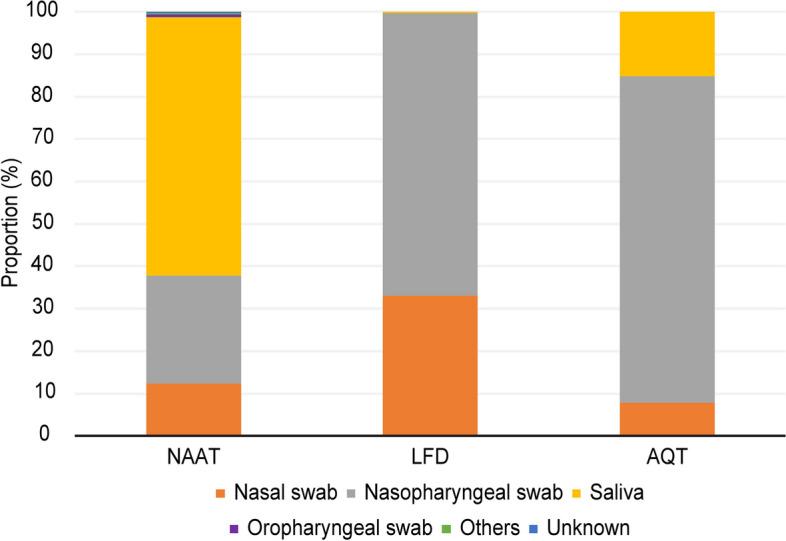
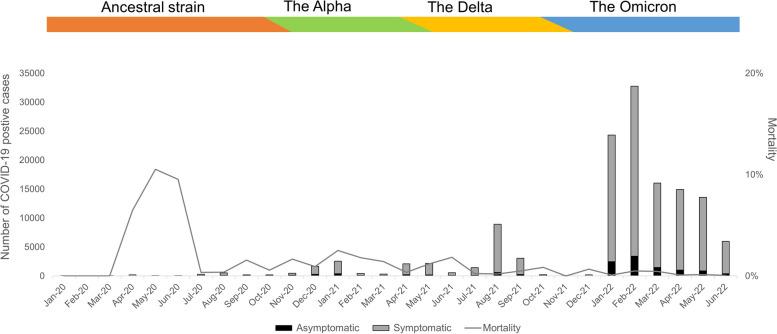
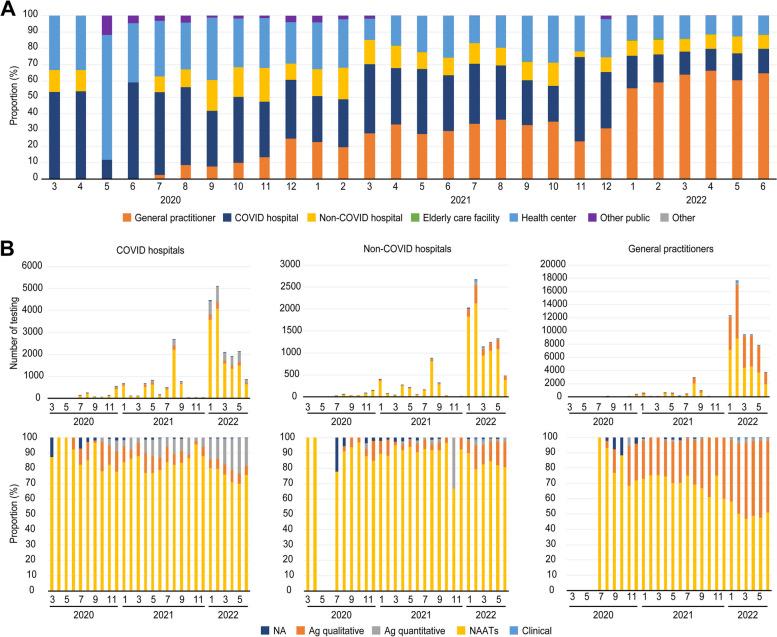
During the study period, 133,115 confirmed COVID-19 cases were reported, of which 90.9% were symptomatic. Although nucleic acid amplification testing occupied 68.9% of all testing, the ratio of lateral flow devices (LFDs) rapidly increased in 2022. As the pandemic continued, the testing capability was shifted from COVID-19 designated facilities to general practitioners, who became the leading testing providers (57.3% of 99,945 tests in 2022).
CONCLUSIONS
There was a dynamic shift in testing modality during the first 30 months of the pandemic in Kyoto City. General practitioners increased their role substantially as the use of LFDs spread dramatically in 2022. By comprehending and documenting the evolution of testing methods and testing locations, it is anticipated that this will contribute to the establishment of an even more efficient testing infrastructure for the next pandemic.
背景
2019 年冠状病毒病(COVID-19)对大流行期间的管理提出了重大诊断挑战。我们研究了日本京都从大流行早期到 2022 年最近的奥密克戎疫情期间 COVID-19 检测方式和功能检测地点的 30 个月变化。
方法
这是一项使用当地匿名人群数据库的回顾性观察研究,该数据库包括 2020 年 1 月至 2022 年 6 月共 30 个月的患者人口统计学和临床信息、检测方法和设施。我们计算了病例中症状表现、检测方法和检测设施的分布。使用独立性卡方检验测试随时间的差异。
结果
在研究期间,报告了 133,115 例确诊 COVID-19 病例,其中 90.9%为有症状病例。尽管核酸扩增检测占所有检测的 68.9%,但 2022 年侧向流动设备(LFD)的比例迅速增加。随着大流行的持续,检测能力从 COVID-19 指定设施转移到了全科医生,他们成为了主要的检测提供者(2022 年 99,945 次检测中有 57.3%是由全科医生进行的)。
结论
在京都大流行的头 30 个月期间,检测方式发生了动态变化。随着 2022 年 LFD 的广泛使用,全科医生的作用大幅增加。通过理解和记录检测方法和检测地点的演变,预计这将有助于为下一次大流行建立更有效的检测基础设施。
 Zotero 插件