
通过配体到金属的电荷转移和自由基配体转移实现的光催化、模块化烯烃双官能化反应。
Photocatalytic, modular difunctionalization of alkenes enabled by ligand-to-metal charge transfer and radical ligand transfer.
作者信息
Bian Kang-Jie, Nemoto David, Chen Xiao-Wei, Kao Shih-Chieh, Hooson James, West Julian G
机构信息
Department of Chemistry, Rice University 6100 Main St MS 602 Houston TX 77005 USA
出版信息
Chem Sci. 2023 Nov 24;15(1):124-133. doi: 10.1039/d3sc05231a. eCollection 2023 Dec 20.
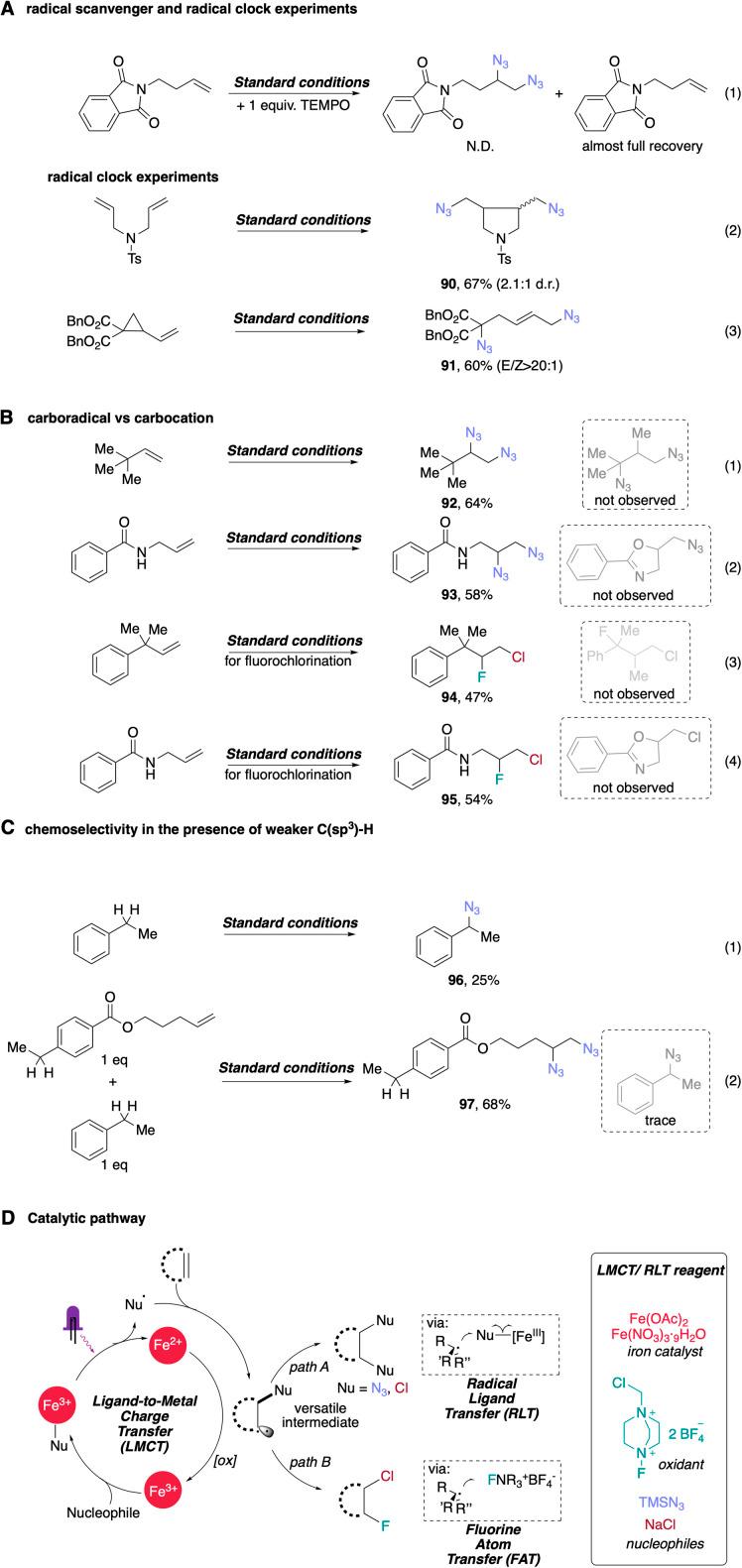
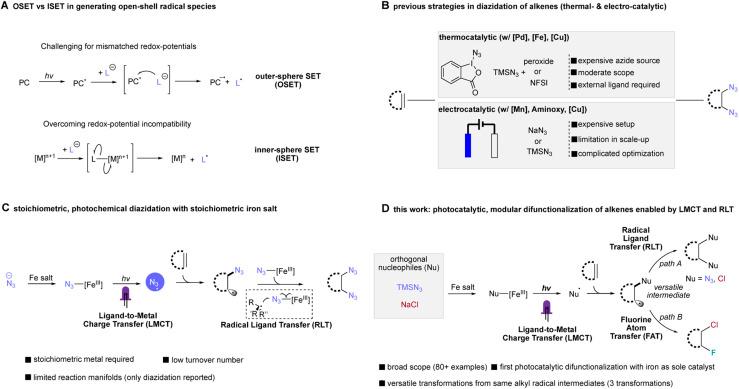
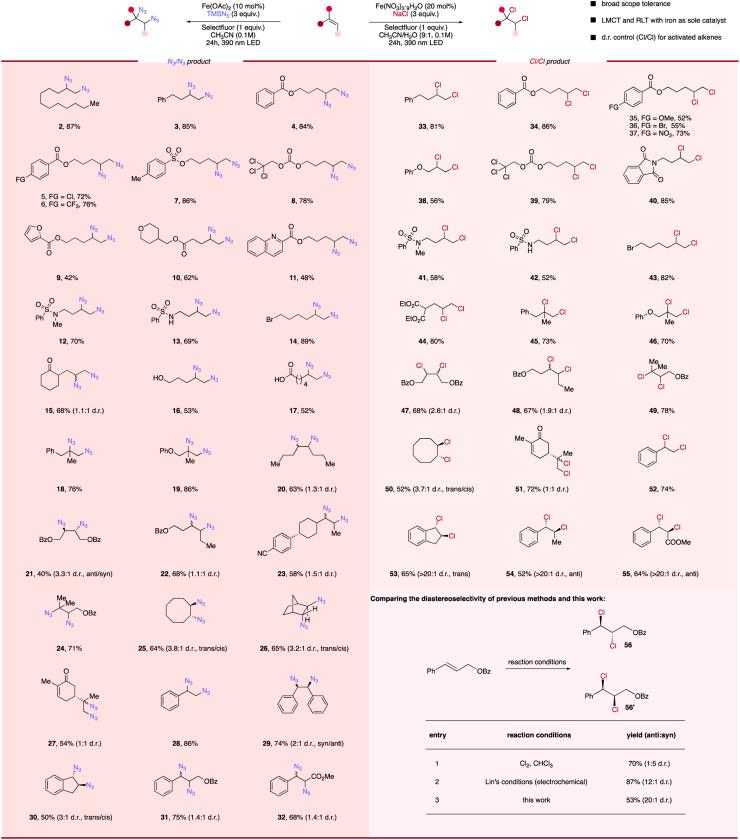
Ligand-to-metal charge transfer (LMCT) is a mechanistic strategy that provides a powerful tool to access diverse open-shell species using earth abundant elements and has seen tremendous growth in recent years. However, among many reaction manifolds driven by LMCT reactivity, a general and catalytic protocol for modular difunctionalization of alkenes remains unknown. Leveraging the synergistic cooperation of iron-catalyzed ligand-to-metal charge transfer and radical ligand transfer (RLT), here we report a photocatalytic, modular difunctionalization of alkenes using inexpensive iron salts catalytically to function as both radical initiator and terminator. Additionally, strategic use of a fluorine atom transfer reagent allows for general fluorochlorination of alkenes, providing the first example of interhalogen compound formation using earth abundant element photocatalysis. Broad scope, mild conditions and versatility in converting orthogonal nucleophiles (TMSN and NaCl) directly into corresponding open-shell radical species are demonstrated in this study, providing a robust means towards accessing vicinal diazides and homo-/hetero-dihalides motifs catalytically. These functionalities are important precursors/intermediates in medicinal and material chemistry. Preliminary mechanistic studies support the radical nature of these transformations, disclosing the tandem LMCT/RLT as a powerful reaction manifold in catalytic olefin difunctionalization.
配体到金属的电荷转移(LMCT)是一种机理策略,它提供了一个强大的工具,可利用地球上储量丰富的元素来获得各种开壳层物种,并且近年来得到了极大的发展。然而,在由LMCT反应性驱动的众多反应体系中,烯烃模块化双官能化的通用催化方案仍然未知。利用铁催化的配体到金属的电荷转移与自由基配体转移(RLT)的协同作用,我们在此报告了一种光催化的烯烃模块化双官能化反应,使用廉价的铁盐作为自由基引发剂和终止剂进行催化。此外,战略性地使用氟原子转移试剂可实现烯烃的通用氟氯化反应,这是使用地球上储量丰富的元素光催化形成卤素间化合物的首个实例。本研究展示了该反应具有广泛的底物范围、温和的条件以及将正交亲核试剂(TMSN和NaCl)直接转化为相应开壳层自由基物种的多功能性,为催化获得邻位二叠氮化物和同/杂二卤化物基序提供了一种可靠的方法。这些官能团是药物化学和材料化学中的重要前体/中间体。初步机理研究支持了这些转化的自由基性质,揭示了串联的LMCT/RLT是催化烯烃双官能化中一种强大的反应体系。


 Zotero 插件