
基于化学计量分析和谱效关系比较鉴定穿山龙与绵萆薢中黄嘌呤氧化酶抑制剂的化学组成
Chemical Comparison and Identification of Xanthine Oxidase Inhibitors of Dioscoreae Hypoglaucae Rhizoma and Dioscoreae Spongiosae Rhizoma by Chemometric Analysis and Spectrum-Effect Relationship.
机构信息
Traditional Chinese Medicine Processing Technology Innovation Center of Hebei Province, Hebei University of Chinese Medicine, Shijiazhuang 050200, China.
International Joint Research Center on Resource Utilization and Quality Evaluation of Traditional Chinese Medicine of Hebei Province, Hebei University of Chinese Medicine, Shijiazhuang 050200, China.
出版信息
Molecules. 2023 Dec 15;28(24):8116. doi: 10.3390/molecules28248116.
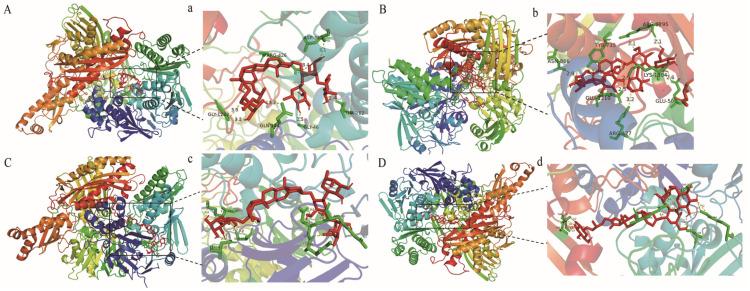
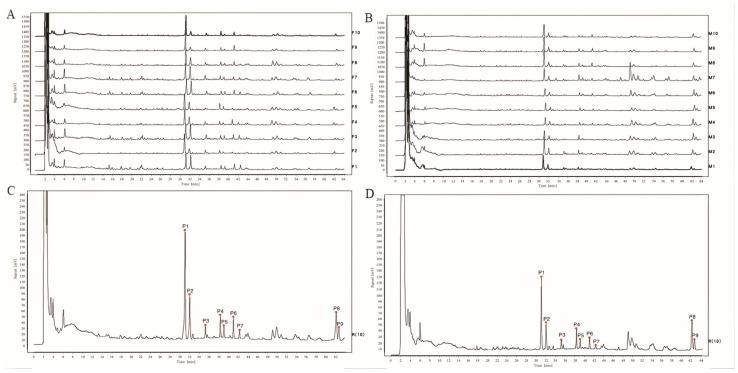
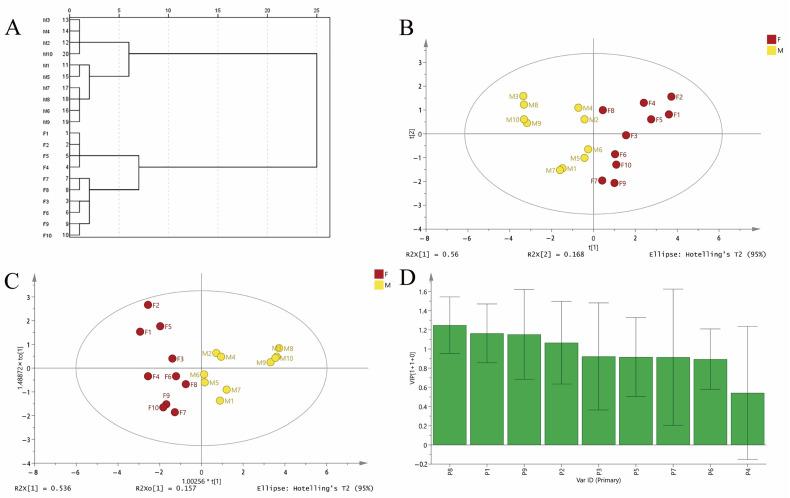
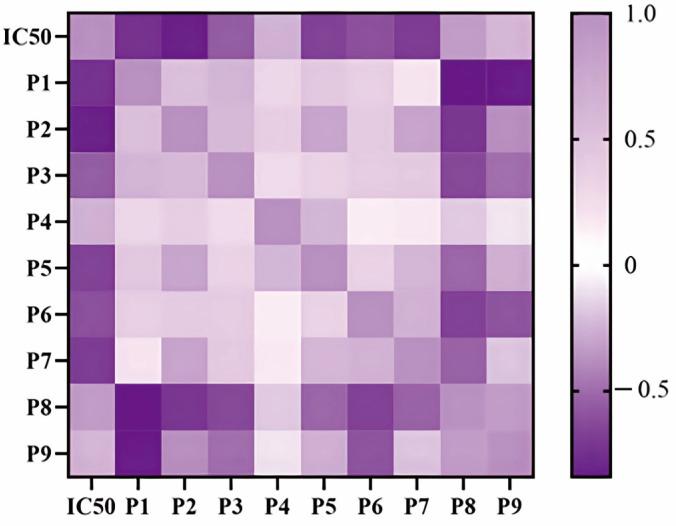
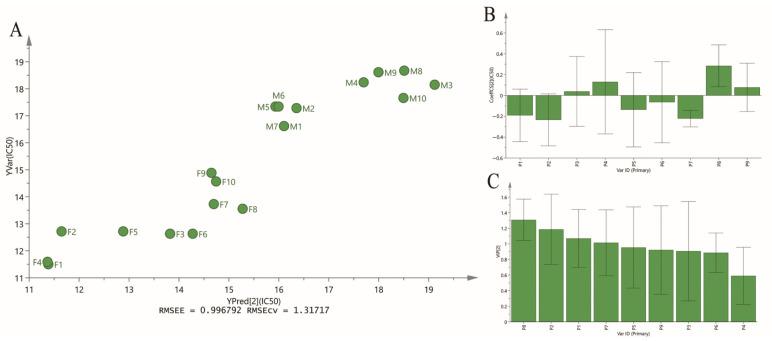
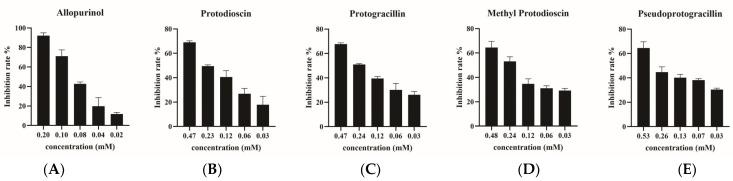
Dioscoreae hypoglaucae Rhizoma (DH) and Dioscoreae spongiosae Rhizoma (DS) are two similar Chinese herbal medicines derived from the Dioscorea family. DH and DS have been used as medicines in China and other Asian countries for a long time, but study on their phytochemicals and bioactive composition is limited. This present study aimed to compare the chemical compositions of DH and DS, and explore the anti-xanthine oxidase components based on chemometric analysis and spectrum-effect relationship. Firstly, an HPLC method was used to establish the chemical fingerprints of DH and DS samples, and nine common peaks were selected. Then, hierarchical clustering analysis, principal component analysis and orthogonal partial least squares discriminant analysis were employed to compare and discriminate DH and DS samples based on the fingerprints data, and four steroidal saponins compounds (protodioscin, protogracillin, dioscin, gracillin) could be chemical markers responsible for the differences between DH and DS. Meanwhile, the anti-xanthine oxidase activities of these two herbal medicines were evaluated by xanthine oxidase inhibitory assay in vitro. Pearson correlation analysis and partial least squares regression analysis were subsequently used to investigate the spectrum-effect relationship between chemical fingerprints and xanthine oxidase inhibitory activities. The results showed that four steroidal saponins, including protodioscin, protogracillin, methyl protodioscin and pseudoprogracillin could be potential anti-xanthine oxidase compounds in DH and DS. Furthermore, the xanthine oxidase inhibitory activities of the four selected inhibitors were validated by anti-xanthine oxidase inhibitory assessment and molecular docking experiments. The present work provided evidence for understanding of the chemical differences and the discovery of the anti-xanthine oxidase constituent of DH and DS, which could be useful for quality evaluation and bioactive components screening of these two herbal medicines.
怀山药(DH)和穿山龙(DS)是两种来源于薯蓣科的相似中药材。DH 和 DS 在中国和其他亚洲国家长期以来一直被用作药物,但对其植物化学物质和生物活性成分的研究有限。本研究旨在比较 DH 和 DS 的化学成分,并基于化学计量分析和谱效关系探索抗黄嘌呤氧化酶成分。首先,采用高效液相色谱法建立 DH 和 DS 样品的化学指纹图谱,选择 9 个共有峰。然后,基于指纹图谱数据,采用层次聚类分析、主成分分析和正交偏最小二乘判别分析比较和区分 DH 和 DS 样品,并确定四种甾体皂苷类化合物(薯蓣皂苷元、原薯蓣皂苷、薯蓣皂苷、纤细薯蓣皂苷)为导致 DH 和 DS 差异的化学标志物。同时,通过黄嘌呤氧化酶抑制试验体外评价这两种草药的抗黄嘌呤氧化酶活性。随后,采用 Pearson 相关分析和偏最小二乘回归分析研究化学指纹图谱与黄嘌呤氧化酶抑制活性之间的谱效关系。结果表明,薯蓣皂苷元、原薯蓣皂苷、甲基原薯蓣皂苷和伪原薯蓣皂苷这四种甾体皂苷类化合物可能是 DH 和 DS 中的潜在抗黄嘌呤氧化酶化合物。此外,通过抗黄嘌呤氧化酶抑制评估和分子对接实验验证了四种选定抑制剂的黄嘌呤氧化酶抑制活性。本研究为理解 DH 和 DS 的化学差异以及发现其抗黄嘌呤氧化酶成分提供了证据,这对于这两种草药的质量评价和生物活性成分筛选可能具有重要意义。


 Zotero 插件