
数字健康传感数据机器学习中的迁移学习方法综述
Survey of Transfer Learning Approaches in the Machine Learning of Digital Health Sensing Data.
作者信息
Chato Lina, Regentova Emma
机构信息
Department of Electrical and Computer Engineering, University of Nevada, Las Vegas, NV 89154, USA.
出版信息
J Pers Med. 2023 Dec 12;13(12):1703. doi: 10.3390/jpm13121703.
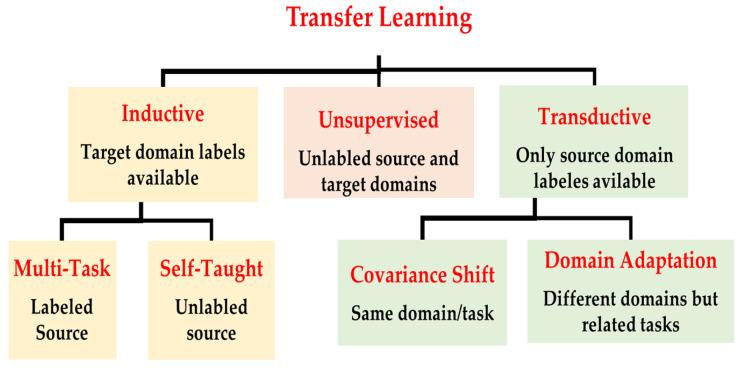
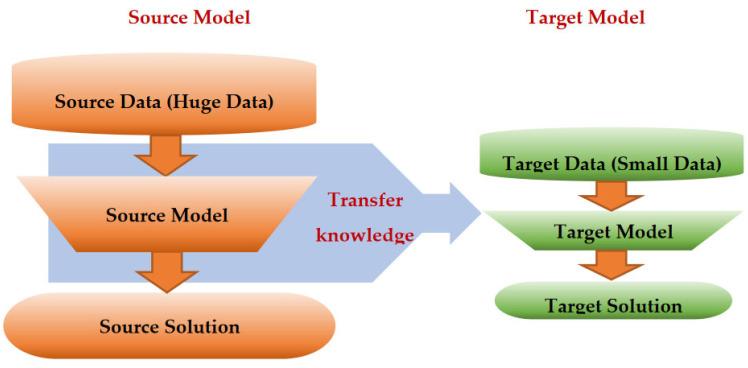
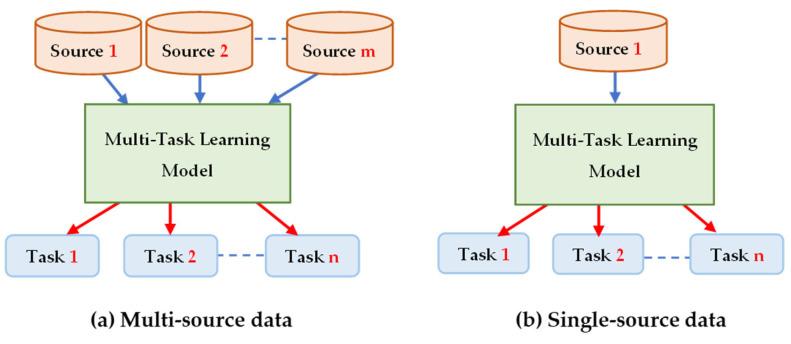
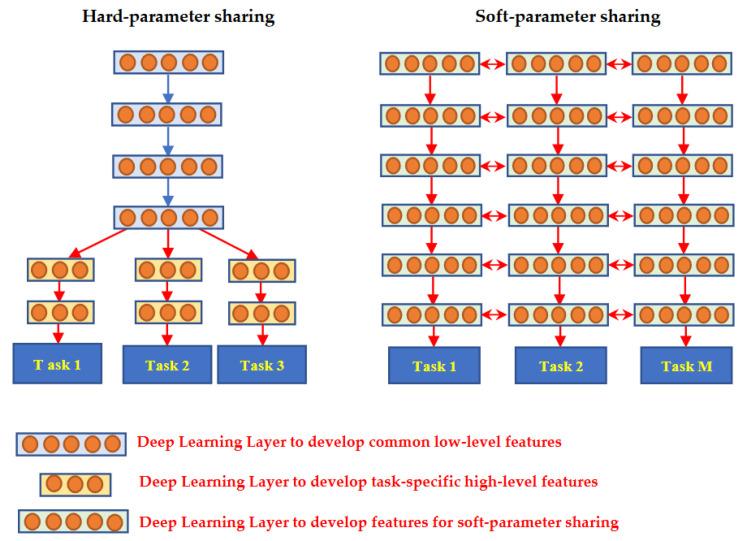
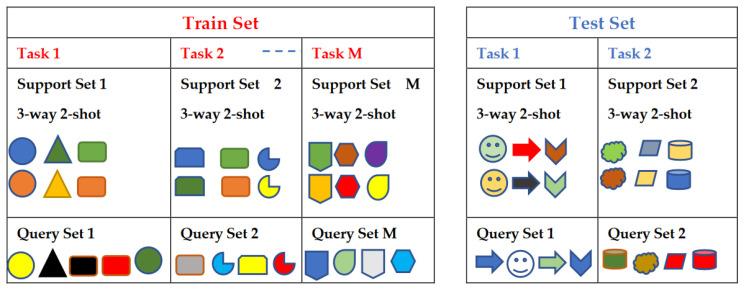
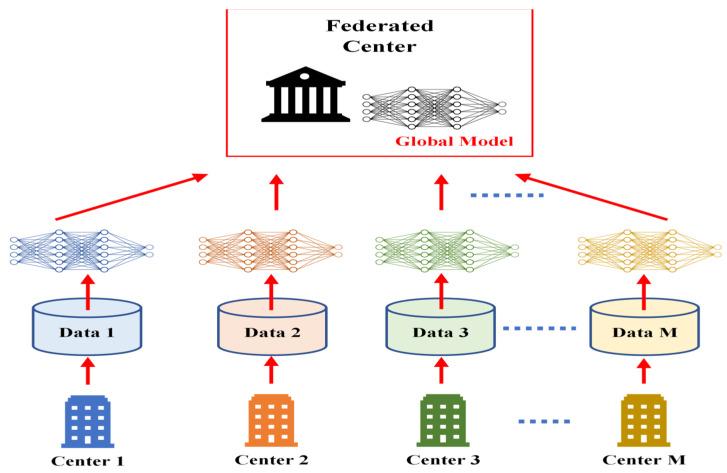
Machine learning and digital health sensing data have led to numerous research achievements aimed at improving digital health technology. However, using machine learning in digital health poses challenges related to data availability, such as incomplete, unstructured, and fragmented data, as well as issues related to data privacy, security, and data format standardization. Furthermore, there is a risk of bias and discrimination in machine learning models. Thus, developing an accurate prediction model from scratch can be an expensive and complicated task that often requires extensive experiments and complex computations. Transfer learning methods have emerged as a feasible solution to address these issues by transferring knowledge from a previously trained task to develop high-performance prediction models for a new task. This survey paper provides a comprehensive study of the effectiveness of transfer learning for digital health applications to enhance the accuracy and efficiency of diagnoses and prognoses, as well as to improve healthcare services. The first part of this survey paper presents and discusses the most common digital health sensing technologies as valuable data resources for machine learning applications, including transfer learning. The second part discusses the meaning of transfer learning, clarifying the categories and types of knowledge transfer. It also explains transfer learning methods and strategies, and their role in addressing the challenges in developing accurate machine learning models, specifically on digital health sensing data. These methods include feature extraction, fine-tuning, domain adaptation, multitask learning, federated learning, and few-/single-/zero-shot learning. This survey paper highlights the key features of each transfer learning method and strategy, and discusses the limitations and challenges of using transfer learning for digital health applications. Overall, this paper is a comprehensive survey of transfer learning methods on digital health sensing data which aims to inspire researchers to gain knowledge of transfer learning approaches and their applications in digital health, enhance the current transfer learning approaches in digital health, develop new transfer learning strategies to overcome the current limitations, and apply them to a variety of digital health technologies.
机器学习和数字健康传感数据已经带来了许多旨在改进数字健康技术的研究成果。然而,在数字健康中使用机器学习存在与数据可用性相关的挑战,例如数据不完整、非结构化和碎片化,以及与数据隐私、安全和数据格式标准化相关的问题。此外,机器学习模型存在偏差和歧视的风险。因此,从头开发一个准确的预测模型可能是一项昂贵且复杂的任务,通常需要进行大量实验和复杂计算。迁移学习方法已成为一种可行的解决方案,通过从先前训练的任务中转移知识来为新任务开发高性能预测模型,从而解决这些问题。本综述论文全面研究了迁移学习在数字健康应用中的有效性,以提高诊断和预后的准确性和效率,以及改善医疗服务。本综述论文的第一部分介绍并讨论了最常见的数字健康传感技术,这些技术是机器学习应用(包括迁移学习)的宝贵数据资源。第二部分讨论了迁移学习 的含义,阐明了知识转移的类别和类型。它还解释了迁移学习方法和策略,以及它们在应对开发准确机器学习模型(特别是针对数字健康传感数据)中的挑战方面的作用。这些方法包括特征提取、微调、域适应、多任务学习、联邦学习以及少样本/单样本/零样本学习。本综述论文突出了每种迁移学习方法和策略的关键特征,并讨论了在数字健康应用中使用迁移学习的局限性和挑战。总体而言,本文是对数字健康传感数据上的迁移学习方法的全面综述,旨在激励研究人员了解迁移学习方法及其在数字健康中的应用,改进数字健康领域当前的迁移学习方法,开发新的迁移学习策略以克服当前的局限性,并将它们应用于各种数字健康技术。






 Zotero 插件