
三种基于VX809的杂合衍生物作为F508del囊性纤维化跨膜传导调节蛋白校正剂作用机制的计算机模拟和体外评估
In Silico and In Vitro Evaluation of the Mechanism of Action of Three VX809-Based Hybrid Derivatives as Correctors of the F508del CFTR Protein.
作者信息
Baroni Debora, Scarano Naomi, Ludovico Alessandra, Brandas Chiara, Parodi Alice, Lunaccio Dario, Fossa Paola, Moran Oscar, Cichero Elena, Millo Enrico
机构信息
Istituto di Biofisica, Consiglio Nazionale delle Ricerche (CNR), Via De Marini, 6, 16149 Genova, Italy.
Department of Pharmacy, Section of Medicinal Chemistry, School of Medical and Pharmaceutical Sciences, University of Genova, Viale Benedetto XV, 3, 16132 Genoa, Italy.
出版信息
Pharmaceuticals (Basel). 2023 Dec 8;16(12):1702. doi: 10.3390/ph16121702.
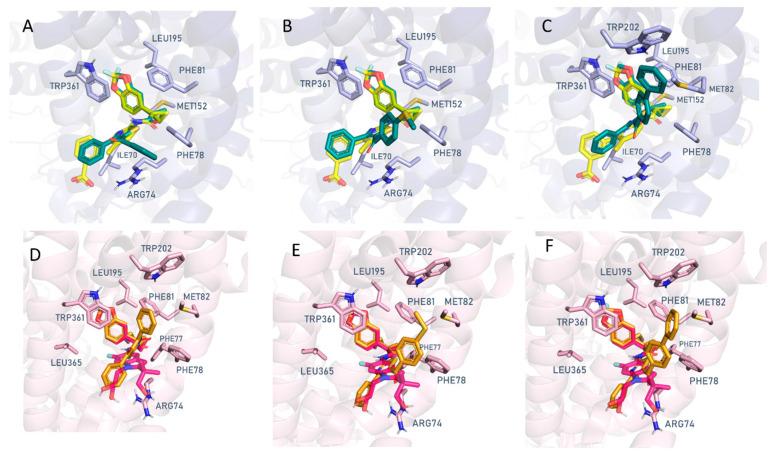
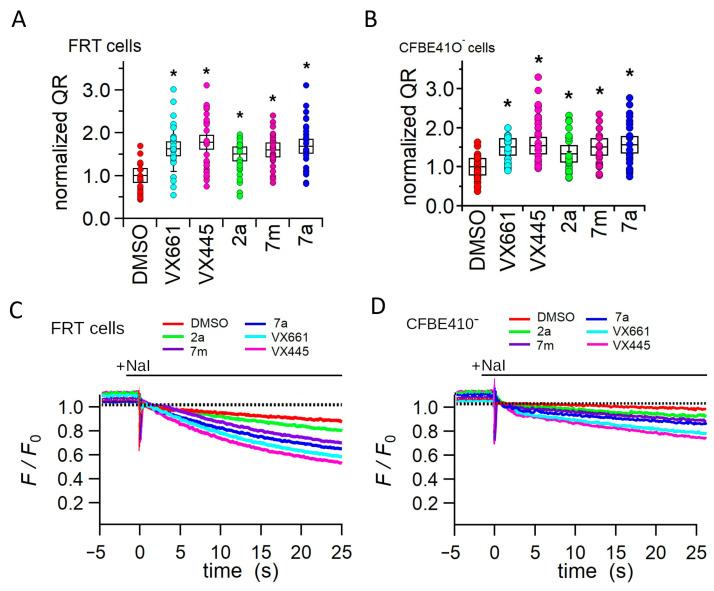
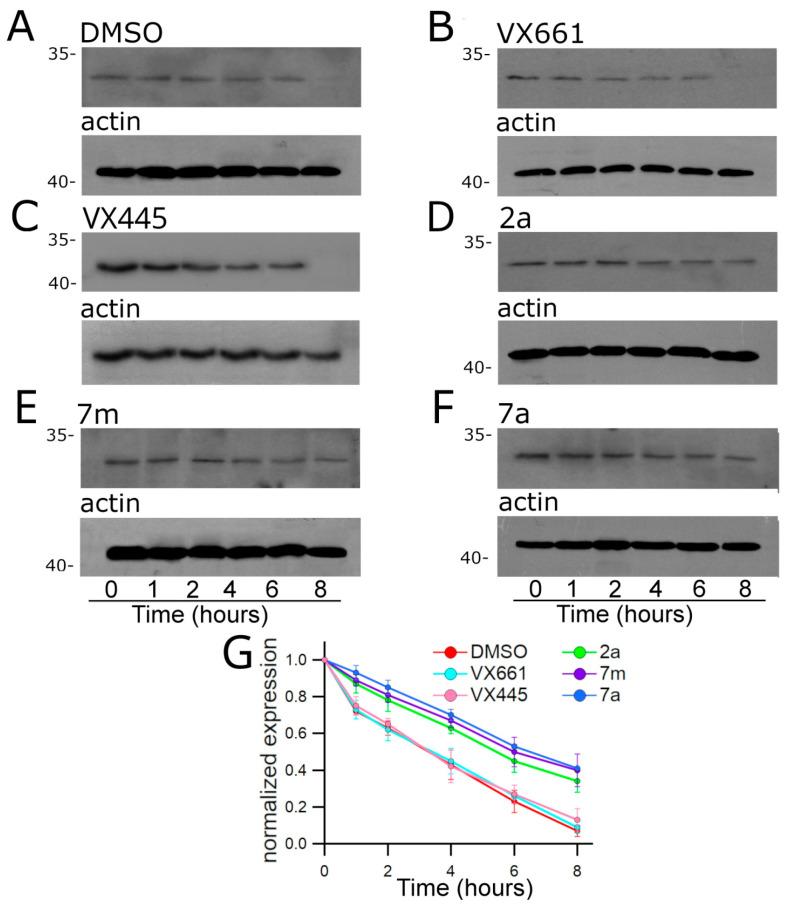
Cystic fibrosis (CF), the most common autosomal recessive fatal genetic disease in the Caucasian population, is caused by mutations in the gene encoding the cystic fibrosis transmembrane conductance regulator (CFTR), an anion channel that regulates salt and water transport across a variety of secretory epithelia. Deletion of phenylalanine at position 508, F508del, the most common CF-causing mutation, destabilises the CFTR protein, causing folding and trafficking defects that lead to a dramatic reduction in its functional expression. Small molecules called correctors have been developed to rescue processing-defective F508del CFTR. We have combined in silico and in vitro approaches to investigate the mechanism of action and potential as CFTR correctors of three hybrid derivatives (, , and ) obtained by merging the amino-arylthiazole core with the benzodioxole carboxamide moiety characterising the corrector lumacaftor. Molecular modelling analyses suggested that the three hybrids interact with a putative region located at the MSD1/NBD1 interface. Biochemical analyses confirmed these results, showing that the three molecules affect the expression and stability of the F508del NBD1. Finally, the YFP assay was used to evaluate the influence of the three hybrid derivatives on F508del CFTR function, assessing that their effect is additive to that of the correctors and . Our study shows that the development and testing of optimised compounds targeting different structural and functional defects of mutant CFTR is the best strategy to provide more effective correctors that could be used alone or in combination as a valuable therapeutic option to treat an even larger cohort of people affected by CF.
囊性纤维化(CF)是白种人群中最常见的常染色体隐性致命遗传病,由编码囊性纤维化跨膜传导调节因子(CFTR)的基因突变引起。CFTR是一种阴离子通道,可调节多种分泌上皮细胞的盐和水运输。苯丙氨酸508位缺失(F508del)是最常见的导致CF的突变,它会使CFTR蛋白不稳定,导致折叠和运输缺陷,从而使其功能表达大幅降低。已开发出称为校正剂的小分子来挽救加工缺陷型F508del CFTR。我们结合了计算机模拟和体外实验方法,研究了通过将氨基芳基噻唑核心与校正剂鲁马卡托特有的苯并二恶唑甲酰胺部分合并而获得的三种杂合衍生物(、和)作为CFTR校正剂的作用机制和潜力。分子建模分析表明,这三种杂合物与位于MSD1/NBD1界面的一个假定区域相互作用。生化分析证实了这些结果,表明这三种分子会影响F508del NBD1的表达和稳定性。最后,使用YFP测定法评估这三种杂合衍生物对F508del CFTR功能的影响,评估结果表明它们的作用与校正剂和的作用具有加和性。我们的研究表明,开发和测试针对突变CFTR不同结构和功能缺陷的优化化合物是提供更有效校正剂的最佳策略,这些校正剂可单独使用或联合使用,作为治疗更多CF患者的有价值的治疗选择。





 Zotero 插件