
额叶皮质神经血管耦合受损及功能连接增加预示与年龄相关的认知功能障碍。
Impaired Neurovascular Coupling and Increased Functional Connectivity in the Frontal Cortex Predict Age-Related Cognitive Dysfunction.
作者信息
Mukli Peter, Pinto Camila B, Owens Cameron D, Csipo Tamas, Lipecz Agnes, Szarvas Zsofia, Peterfi Anna, Langley Ana Clara da Costa Pinaffi, Hoffmeister Jordan, Racz Frigyes Samuel, Perry Jonathan W, Tarantini Stefano, Nyúl-Tóth Ádám, Sorond Farzaneh A, Yang Yuan, James Judith A, Kirkpatrick Angelia C, Prodan Calin I, Toth Peter, Galindo Juliette, Gardner Andrew W, Sonntag William E, Csiszar Anna, Ungvari Zoltan, Yabluchanskiy Andriy
机构信息
Oklahoma Center for Geroscience and Healthy Brain Aging, University of Oklahoma Health Sciences Center, 1122 NE 13th Street, Oklahoma City, OK, 73117, USA.
Vascular Cognitive Impairment and Neurodegeneration Program, Department of Neurosurgery, University of Oklahoma Health Sciences Center, Oklahoma City, OK, 73117, USA.
出版信息
Adv Sci (Weinh). 2024 Mar;11(10):e2303516. doi: 10.1002/advs.202303516. Epub 2023 Dec 28.
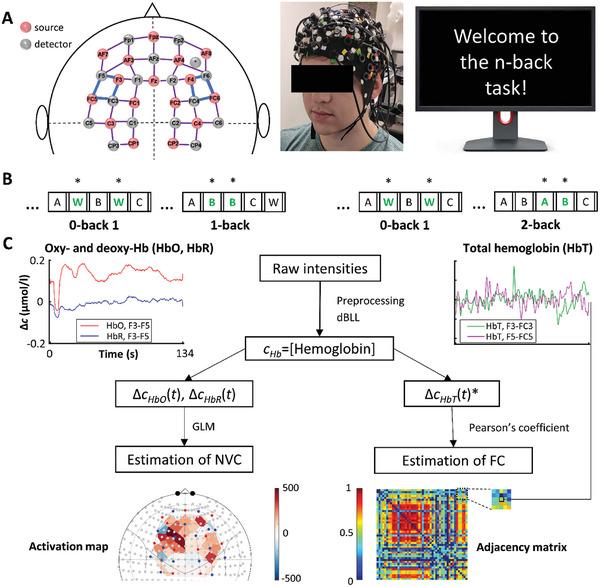
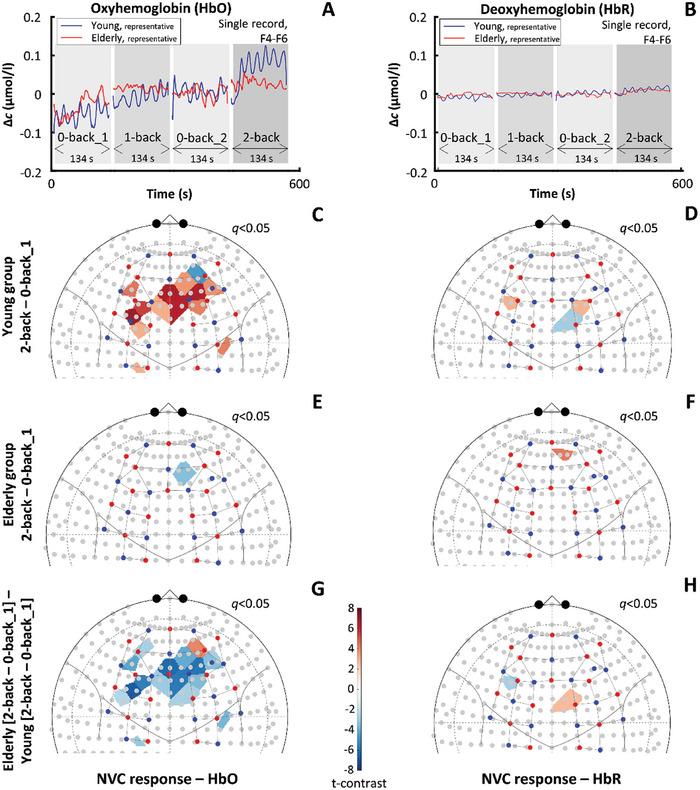
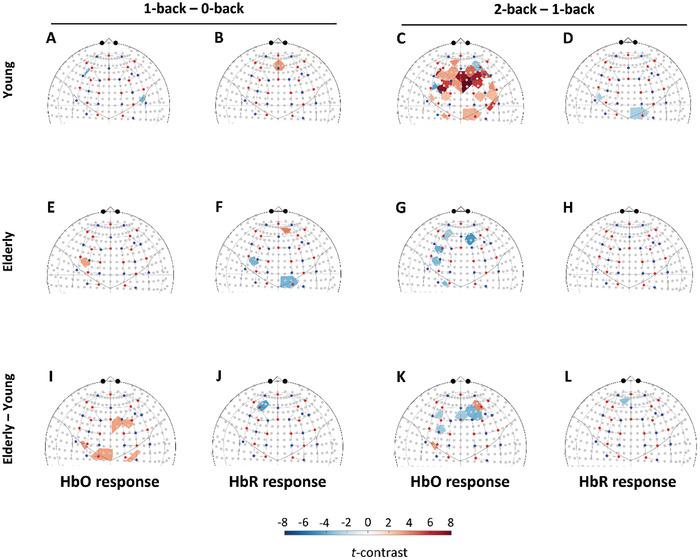
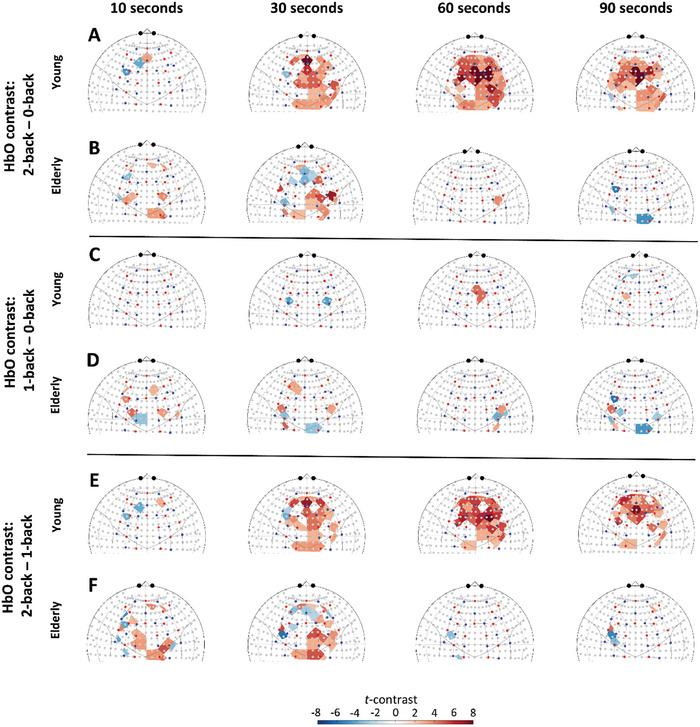
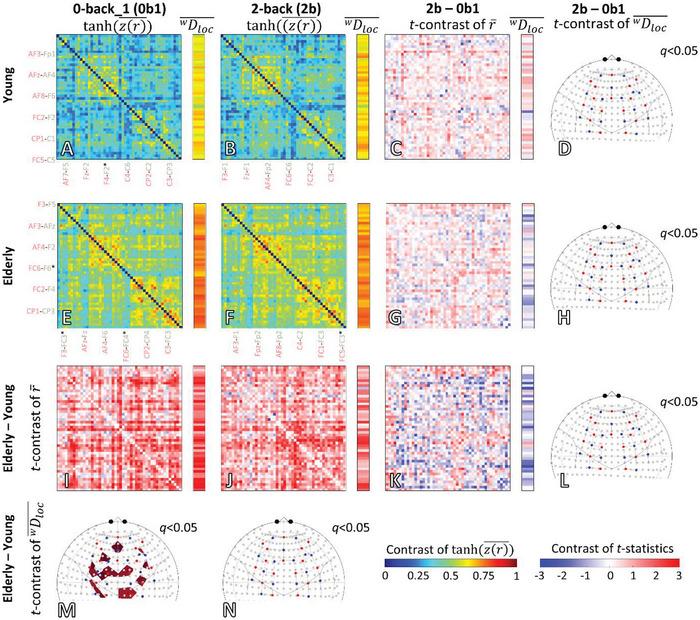
Impaired cerebrovascular function contributes to the genesis of age-related cognitive decline. In this study, the hypothesis is tested that impairments in neurovascular coupling (NVC) responses and brain network function predict cognitive dysfunction in older adults. Cerebromicrovascular and working memory function of healthy young (n = 21, 33.2±7.0 years) and aged (n = 30, 75.9±6.9 years) participants are assessed. To determine NVC responses and functional connectivity (FC) during a working memory (n-back) paradigm, oxy- and deoxyhemoglobin concentration changes from the frontal cortex using functional near-infrared spectroscopy are recorded. NVC responses are significantly impaired during the 2-back task in aged participants, while the frontal networks are characterized by higher local and global connection strength, and dynamic FC (p < 0.05). Both impaired NVC and increased FC correlate with age-related decline in accuracy during the 2-back task. These findings suggest that task-related brain states in older adults require stronger functional connections to compensate for the attenuated NVC responses associated with working memory load.
脑血管功能受损会导致与年龄相关的认知能力下降。在本研究中,对神经血管耦合(NVC)反应和脑网络功能受损预示老年人认知功能障碍这一假设进行了检验。评估了健康青年(n = 21,33.2±7.0岁)和老年(n = 30,75.9±6.9岁)参与者的脑微血管和工作记忆功能。为了确定工作记忆(n-back)范式期间的NVC反应和功能连接性(FC),使用功能近红外光谱记录额叶皮质的氧合血红蛋白和脱氧血红蛋白浓度变化。老年参与者在2-back任务期间NVC反应显著受损,而额叶网络的特征是具有更高的局部和全局连接强度以及动态FC(p < 0.05)。NVC受损和FC增加均与2-back任务期间与年龄相关的准确性下降相关。这些发现表明,老年人与任务相关的脑状态需要更强的功能连接来补偿与工作记忆负荷相关的NVC反应减弱。


 Zotero 插件