
膳食多酚对头颈部癌氧化应激的作用:新进展与未来方向
Dietary Polyphenols against Oxidative Stress in Head and Neck Cancer: What's New, What's Next.
作者信息
Ballini Andrea, Zhurakivska Khrystyna, Troiano Giuseppe, Lo Muzio Lorenzo, Caponio Vito Carlo Alberto, Spirito Francesca, Porro Rosa, Rella Martina, Cantore Stefania, Arrigoni Roberto, Dioguardi Mario
机构信息
Department of Clinical and Experimental Medicine, University of Foggia, Foggia, Italy.
Department of Informatics, University of Bari "Aldo Moro", Bari, Italy.
出版信息
J Cancer. 2024 Jan 1;15(2):293-308. doi: 10.7150/jca.90545. eCollection 2024.
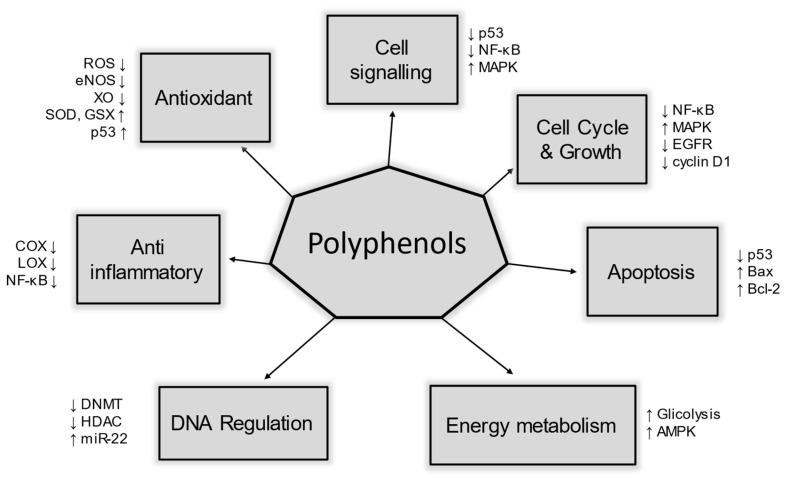
Head and neck cancers (HNC) are a worldwide health problem, accounting for over 5% of all types of cancers. Their varied nature makes it sometimes difficult to find clear explanations for the molecular mechanisms that underline their onset and development. While chemio- and radiotherapy are clearly not to be dismissed, we cannot undervalue the effect that polyphenols - especially dietary polyphenols - can have in helping us to cope with this medical emergency. By influencing several different proteins involved in numerous different metabolic pathways, polyphenols can have a broad spectrum of biological action and can hopefully act synergistically to tackle down head and neck cancer. Moreover, being natural molecules, polyphenols does not present any side effects and can even enhance drugs efficacy, making our clinical therapy against head and neck cancer more and more effective. Certainly, oxidative stress plays an important role, altering several molecular pathways, lowering the body's defenses, and ultimately helping to create a microenvironment conducive to the appearance and development of the tumor. In this regard, the regular and constant intake of foods rich in polyphenols can help counteract the onset of oxidative stress, improving the health of the general population. In this review, we highlight the role of polyphenols in managing oxidative stress, with such positive effects that they can be considered new tools to use in our anti-head and neck cancer strategy.
头颈癌是一个全球性的健康问题,占所有癌症类型的5%以上。其性质多样,有时难以明确解释其发病和发展的分子机制。虽然化疗和放疗显然不可忽视,但我们不能低估多酚类物质,尤其是膳食多酚类物质,在帮助我们应对这一医疗紧急情况方面的作用。通过影响参与众多不同代谢途径的几种不同蛋白质,多酚类物质可以具有广泛的生物活性,并有望协同作用来攻克头颈癌。此外,作为天然分子,多酚类物质没有任何副作用,甚至可以提高药物疗效,使我们针对头颈癌的临床治疗越来越有效。当然,氧化应激起着重要作用,它改变了多种分子途径,降低了身体的防御能力,并最终有助于创造一个有利于肿瘤出现和发展的微环境。在这方面,经常和持续摄入富含多酚类物质的食物有助于对抗氧化应激的发生,改善普通人群的健康状况。在本综述中,我们强调了多酚类物质在应对氧化应激方面的作用,其积极效果使其可被视为我们抗头颈癌策略中使用的新工具。


 Zotero 插件