
新型 1-苯并[]咪唑基 PqsR 抑制剂的设计、合成与评价:作为感染辅助治疗的潜在药物。
Design, Synthesis, and Evaluation of New 1-Benzo[]imidazole Based PqsR Inhibitors as Adjuvant Therapy for Infections.
机构信息
School of Life Sciences, University of Nottingham Biodiscovery Institute, University of Nottingham, Nottingham NG7 2RD, U.K.
The National Biofilms Innovation Centre, University of Nottingham Biodiscovery Institute, University of Nottingham, Nottingham NG7 2RD, U.K.
出版信息
J Med Chem. 2024 Jan 25;67(2):1008-1023. doi: 10.1021/acs.jmedchem.3c00973. Epub 2024 Jan 3.
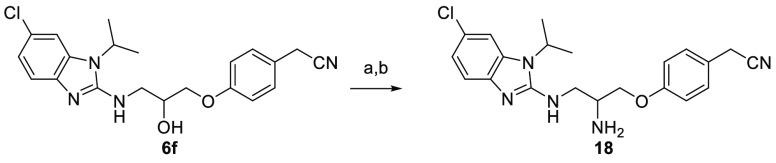
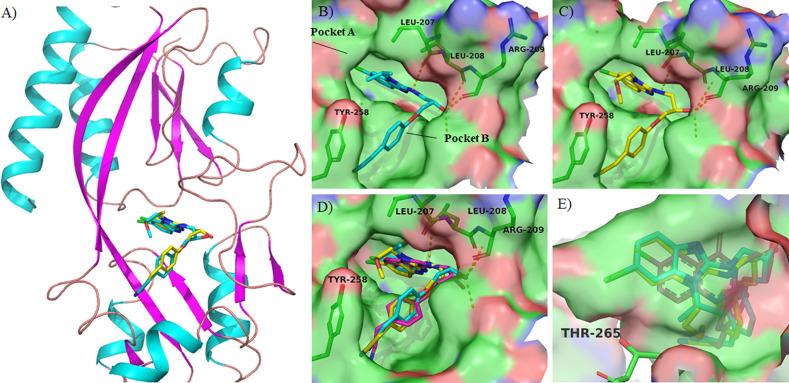
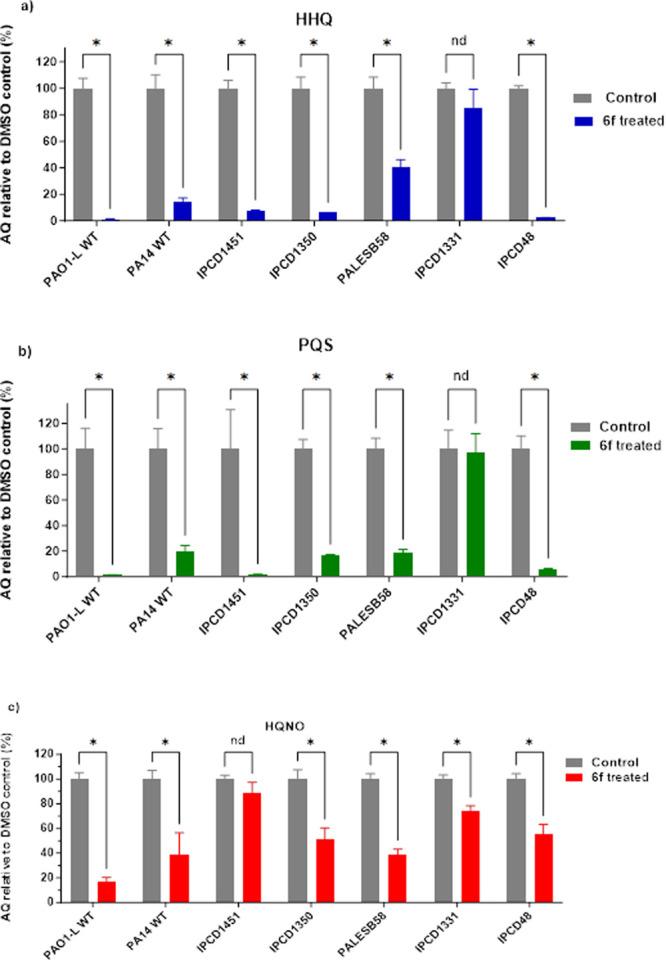
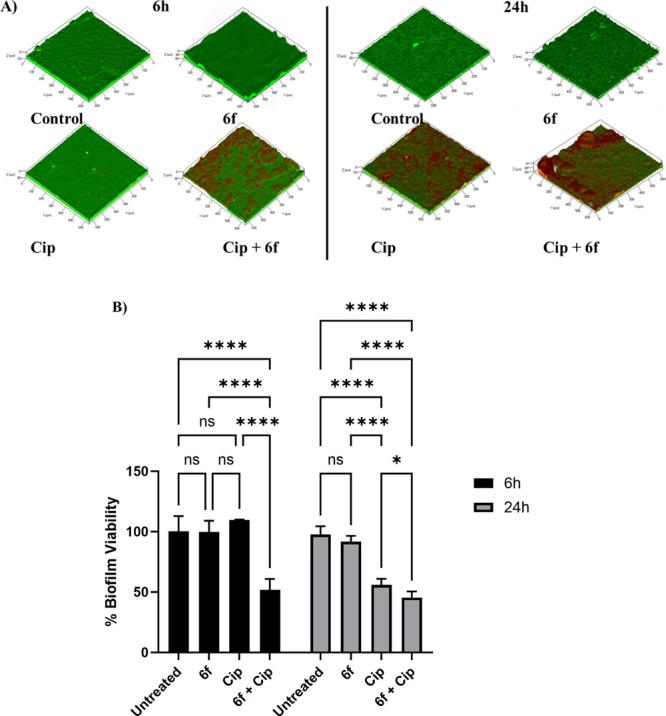
is one of the top priority pathogens that requires immediate attention according to the World Health Organisation (WHO). Due to the alarming shortage of novel antimicrobials, targeting quorum sensing (QS), a bacterial cell to cell signaling system controlling virulence, has emerged as a promising approach as an antibiotic adjuvant therapy. Interference with the system, one of three QS systems in , results in reduction of bacterial virulence gene expression and biofilm maturation. Herein, we report a hit to lead process to fine-tune the potency of our previously reported inhibitor (IC 3.2 μM in PAO1-L), which led to the discovery of 2-(4-(3-((6-chloro-1-isopropyl-1-benzo[]imidazol-2-yl)amino)-2-hydroxypropoxy)phenyl)acetonitrile () as a potent PqsR antagonist. Compound inhibited the PqsR-controlled P- transcriptional reporter fusion in at low submicromolar concentrations. Moreover, showed improved efficacy against CF isolates with significant inhibition of pyocyanin, 2-alkyl-4(1)-quinolones production.
是世界卫生组织(WHO)要求立即关注的首要病原体之一。由于新型抗菌药物的严重短缺,针对群体感应(QS)的研究已经成为一种有前途的抗生素辅助治疗方法,QS 是一种细菌细胞间信号系统,控制着毒力。干扰系统,即中的三种 QS 系统之一,可降低细菌毒力基因的表达和生物膜的成熟。在此,我们报告了一个从命中到优化我们之前报道的抑制剂(在 PAO1-L 中 IC 为 3.2 μM)的效力的过程,这导致了发现 2-(4-(3-((6-氯-1-异丙基-1-苯并[]咪唑-2-基)氨基)-2-羟基丙氧基)苯基)乙腈 () 作为一种有效的 PqsR 拮抗剂。化合物在低亚微摩尔浓度下抑制 PqsR 控制的 P-转录报告融合物。此外,化合物对 CF 分离株表现出更好的疗效,显著抑制了绿脓菌素和 2-烷基-4(1)-喹诺酮的产生。





 Zotero 插件