
局部消融疗法及其对胰腺癌抗肿瘤免疫反应的影响——综述
Local ablative therapies and the effect on antitumor immune responses in pancreatic cancer - A review.
作者信息
Erdem Suna, Narayanan Jayanth Shankara, Worni Mathias, Bolli Martin, White Rebekah R
机构信息
Moores Cancer Center, University of California San Diego, CA, USA.
Clarunis, Department of Visceral Surgery, University Centre for Gastrointestinal and Liver Diseases, St. Clara Hospital and University Hospital Basel, Basel, Switzerland.
出版信息
Heliyon. 2023 Dec 12;10(1):e23551. doi: 10.1016/j.heliyon.2023.e23551. eCollection 2024 Jan 15.
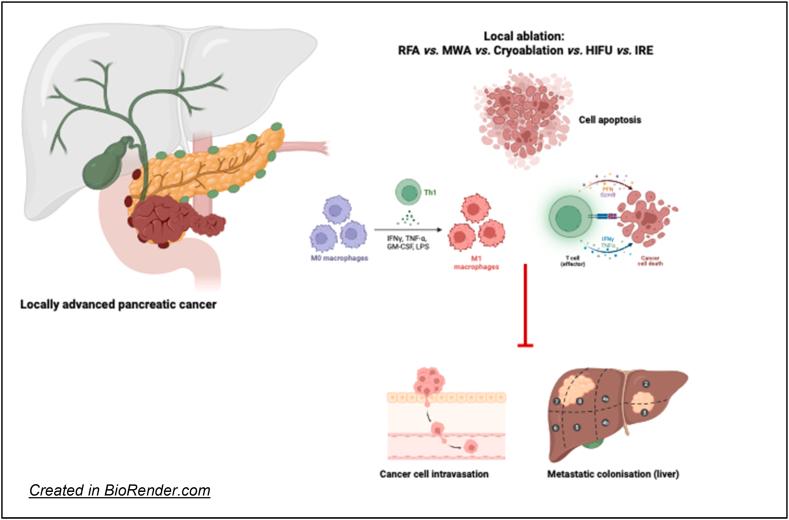
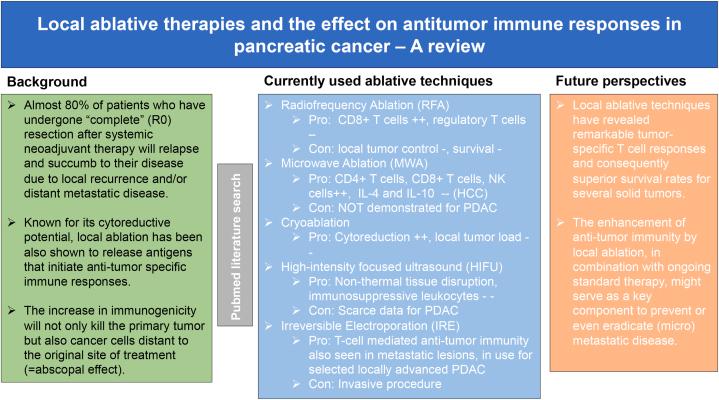
Pancreatic ductal adenocarcinoma (PDAC) is a devastating disease, projected to rank as the second most prevalent cause of cancer-related mortality by 2030. Despite significant progress in advances in surgical techniques and chemotherapy protocols, the overall survival (OS) remains to be less than 10 % for all stages combined. In recent years, local ablative techniques have been introduced and utilized as additional therapeutic approaches for locally advanced pancreatic cancer (LAPC), with promising results with respect to local tumor control and OS. In addition to successful cytoreduction, there is emerging evidence that local ablation induces antitumor immune activity that could prevent or even treat distant metastatic tumors. The enhancement of antitumor immune responses could potentially make ablative therapy a therapeutic option for the treatment of metastatic PDAC. In this review, we summarize current ablative techniques used in the management of LAPC and their impact on systemic immune responses.
胰腺导管腺癌(PDAC)是一种极具破坏性的疾病,预计到2030年将成为癌症相关死亡的第二大常见原因。尽管在手术技术和化疗方案方面取得了重大进展,但所有阶段综合起来的总体生存率(OS)仍低于10%。近年来,局部消融技术已被引入并用作局部晚期胰腺癌(LAPC)的额外治疗方法,在局部肿瘤控制和OS方面取得了令人鼓舞的结果。除了成功的肿瘤细胞减灭外,越来越多的证据表明局部消融可诱导抗肿瘤免疫活性,从而预防甚至治疗远处转移性肿瘤。抗肿瘤免疫反应的增强可能使消融治疗成为转移性PDAC治疗的一种选择。在本综述中,我们总结了目前用于LAPC管理的消融技术及其对全身免疫反应的影响。
 Zotero 插件