
聚集:当折叠的蛋白质聚集在一起时。
Agglomeration: when folded proteins clump together.
作者信息
Romero-Romero M L, Garcia-Seisdedos H
机构信息
Max Planck Institute of Molecular Cell Biology and Genetics, Dresden, Germany.
Center for Systems Biology, Dresden, Germany.
出版信息
Biophys Rev. 2023 Dec 15;15(6):1987-2003. doi: 10.1007/s12551-023-01172-4. eCollection 2023 Dec.
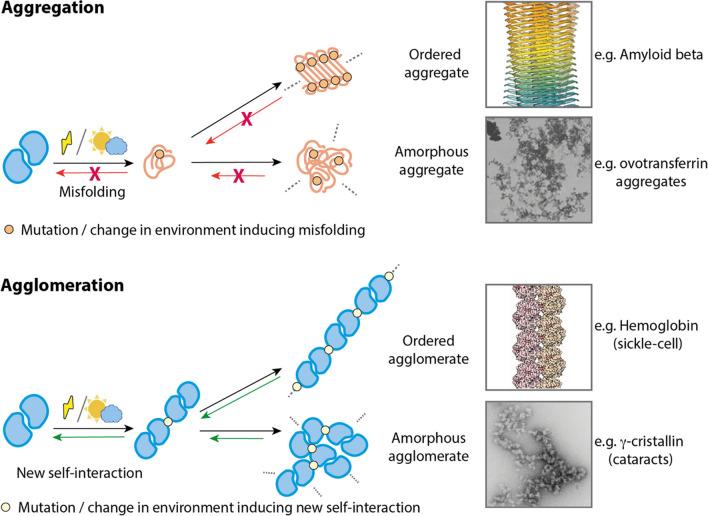
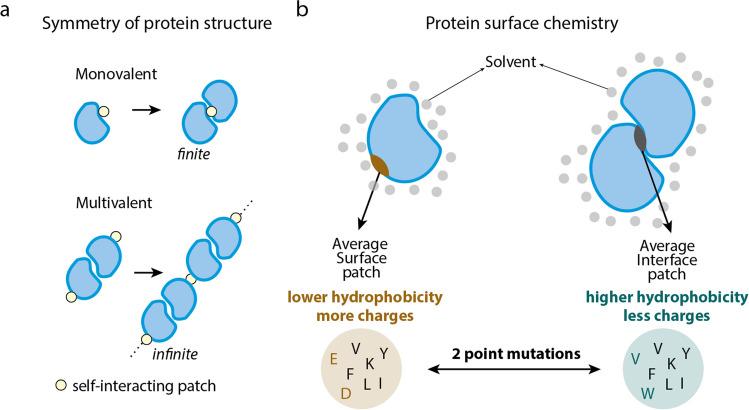
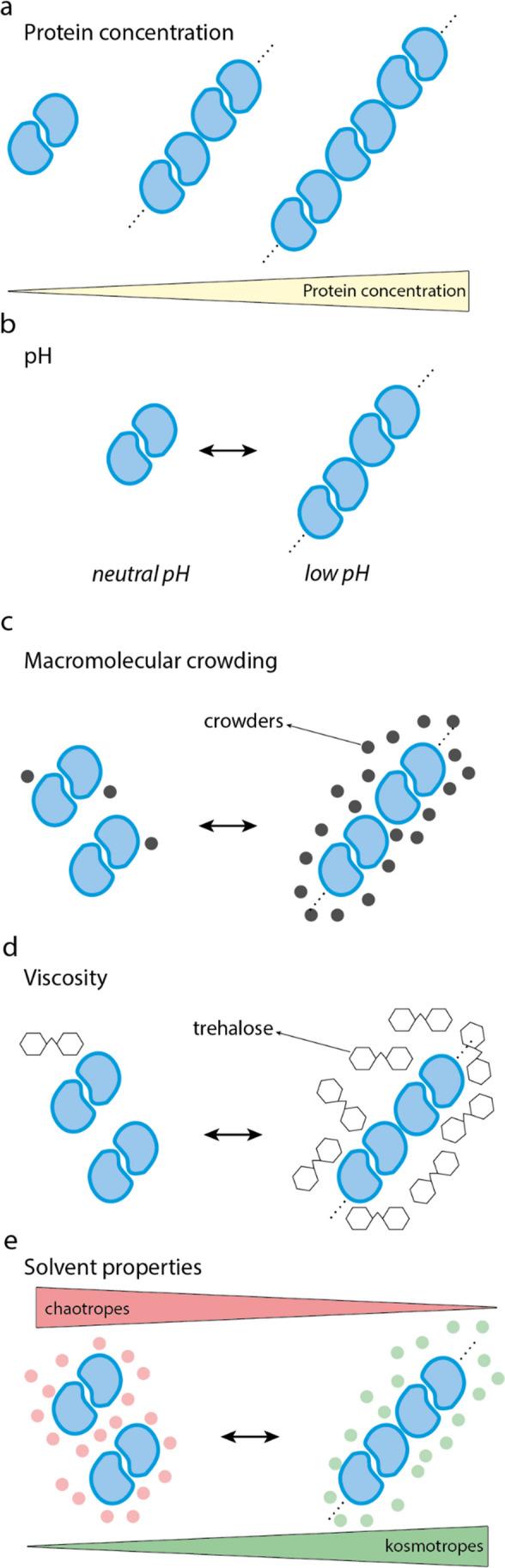
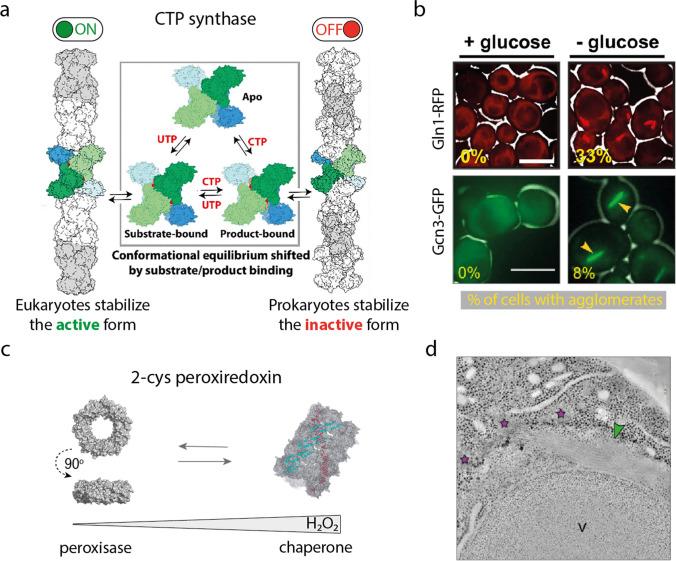
Protein self-association is a widespread phenomenon that results in the formation of multimeric protein structures with critical roles in cellular processes. Protein self-association can lead to finite protein complexes or open-ended, and potentially, infinite structures. This review explores the concept of protein agglomeration, a process that results from the infinite self-assembly of folded proteins. We highlight its differences from other better-described processes with similar macroscopic features, such as aggregation and liquid-liquid phase separation. We review the sequence, structural, and biophysical factors influencing protein agglomeration. Lastly, we briefly discuss the implications of agglomeration in evolution, disease, and aging. Overall, this review highlights the need to study protein agglomeration for a better understanding of cellular processes.
蛋白质自缔合是一种广泛存在的现象,它导致形成在细胞过程中起关键作用的多聚体蛋白质结构。蛋白质自缔合可导致形成有限的蛋白质复合物或开放式的、甚至可能是无限的结构。本综述探讨了蛋白质团聚的概念,这是一个由折叠蛋白的无限自组装产生的过程。我们强调了它与其他具有相似宏观特征、描述更详尽的过程(如聚集和液-液相分离)之间的差异。我们回顾了影响蛋白质团聚的序列、结构和生物物理因素。最后,我们简要讨论了团聚在进化、疾病和衰老中的意义。总体而言,本综述强调了研究蛋白质团聚以更好理解细胞过程的必要性。

 Zotero 插件