
与呼吸道黏液相比,含唾液的飞沫中的季节性流感病毒在中等湿度下更快衰减。
Seasonal influenza viruses decay more rapidly at intermediate humidity in droplets containing saliva compared to respiratory mucus.
机构信息
Department of Microbiology and Molecular Genetics, The University of Pittsburgh, Pittsburgh, Pennsylvania, USA.
Department of Civil and Environmental Engineering, Duke University, Durham, North Carolina, USA.
出版信息
Appl Environ Microbiol. 2024 Feb 21;90(2):e0201023. doi: 10.1128/aem.02010-23. Epub 2024 Jan 9.
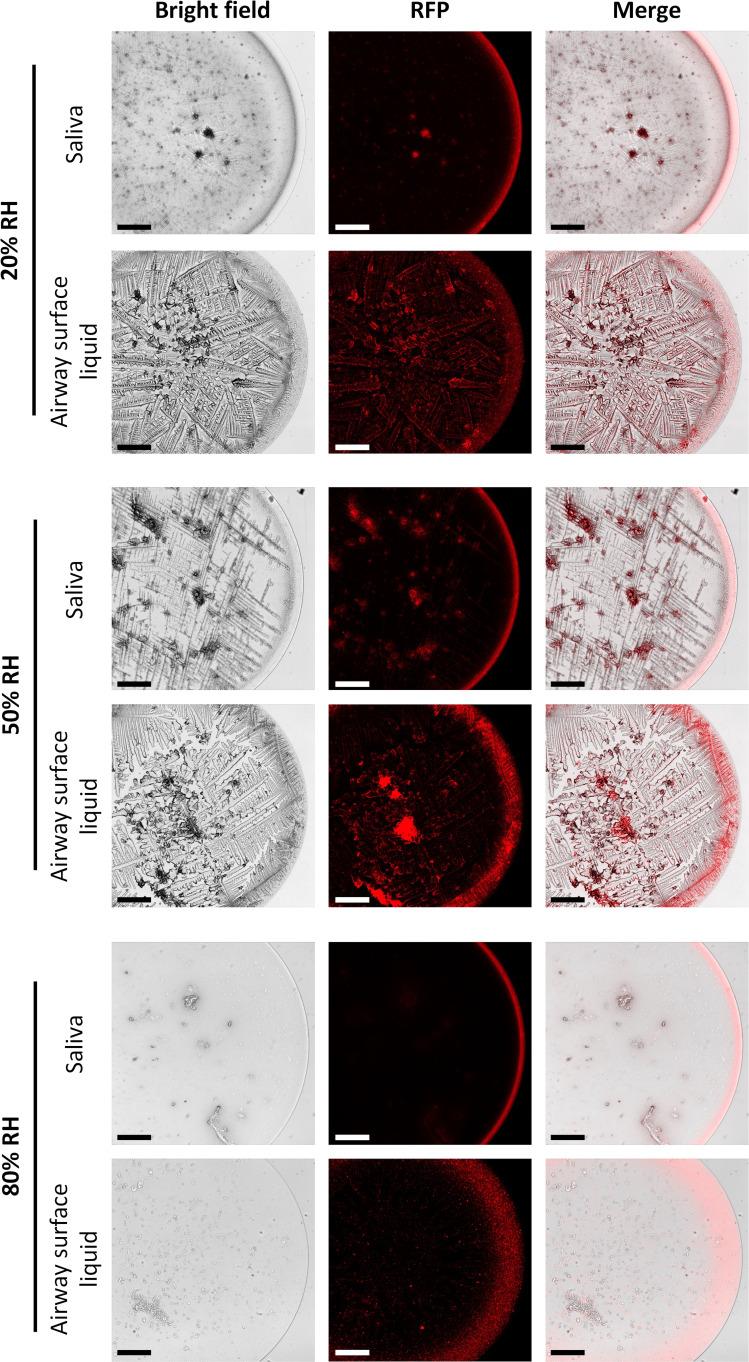
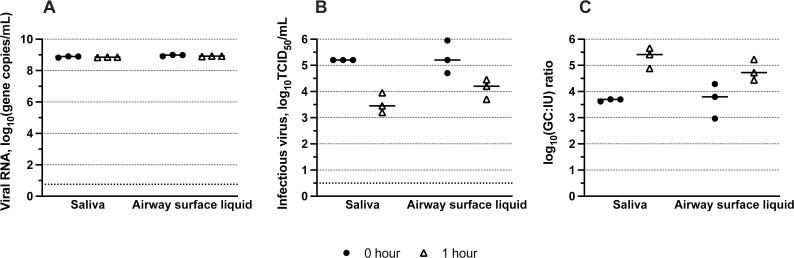
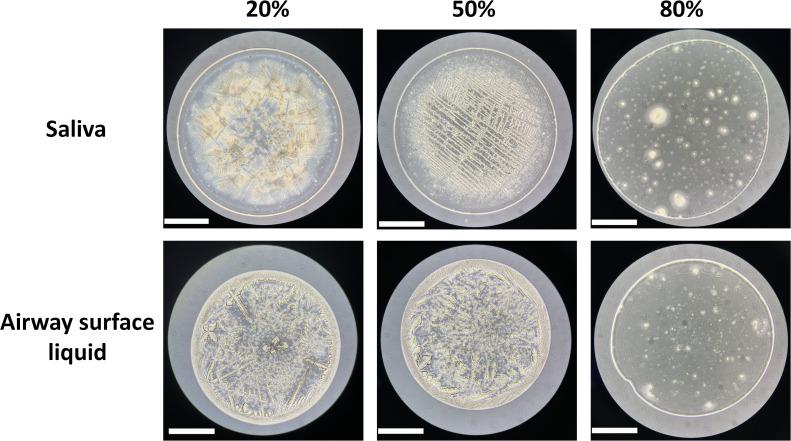
Expulsions of virus-laden aerosols or droplets from the oral and nasal cavities of an infected host are an important source of onward respiratory virus transmission. However, the presence of infectious influenza virus in the oral cavity during infection has not been widely considered, and thus, little work has explored the environmental persistence of influenza virus in oral cavity expulsions. Using the ferret model, we detected infectious virus in the nasal and oral cavities, suggesting that the virus can be expelled into the environment from both anatomical sites. We also assessed the stability of two influenza A viruses (H1N1 and H3N2) in droplets of human saliva or respiratory mucus over a range of relative humidities. We observed that influenza virus infectivity decays rapidly in saliva droplets at intermediate relative humidity, while viruses in airway surface liquid droplets retain infectivity. Virus inactivation was not associated with bulk protein content, salt content, or droplet drying time. Instead, we found that saliva droplets exhibited distinct inactivation kinetics during the wet and dry phases at intermediate relative humidity, and droplet residue morphology may lead to the elevated first-order inactivation rate observed during the dry phase. Additionally, distinct differences in crystalline structure and nanobead localization were observed between saliva and airway surface liquid droplets. Together, our work demonstrates that different respiratory fluids exhibit unique virus persistence profiles and suggests that influenza viruses expelled from the oral cavity may contribute to virus transmission in low- and high-humidity environments.IMPORTANCEDetermining how long viruses persist in the environment is important for mitigating transmission risk. Expelled infectious droplets and aerosols are composed of respiratory fluids, including saliva and complex mucus mixtures, but how well influenza viruses survive in such fluids is largely unknown. Here, we find that infectious influenza virus is present in the oral cavity of infected ferrets, suggesting that saliva-containing expulsions can play a role in onward transmission. Additionally, influenza virus in droplets composed of saliva degrades more rapidly than virus within respiratory mucus. Droplet composition impacts the crystalline structure and virus localization in dried droplets. These results suggest that viruses from distinct sites in the respiratory tract could have variable persistence in the environment, which will impact viral transmission fitness.
从感染宿主的口腔和鼻腔中排出携带病毒的气溶胶或飞沫是呼吸道病毒传播的一个重要来源。然而,在感染过程中,口腔中存在传染性流感病毒尚未得到广泛关注,因此,很少有研究探索流感病毒在口腔排出物中的环境持久性。我们使用雪貂模型检测到鼻腔和口腔中的传染性病毒,表明病毒可以从这两个解剖部位排出到环境中。我们还评估了两种流感病毒(H1N1 和 H3N2)在人唾液或呼吸道粘液飞沫中在一系列相对湿度下的稳定性。我们观察到,流感病毒在中间相对湿度的唾液飞沫中迅速失活,而在气道表面液体飞沫中的病毒保持感染性。病毒失活与蛋白质含量、盐含量或液滴干燥时间无关。相反,我们发现唾液飞沫在中间相对湿度的湿相和干相期间表现出明显不同的失活动力学,并且液滴残留形态可能导致在干相期间观察到的升高的一级失活率。此外,还观察到唾液和气道表面液体飞沫之间存在明显的晶体结构和纳米珠定位差异。总之,我们的工作表明,不同的呼吸道液体表现出独特的病毒持久性特征,并表明从口腔排出的流感病毒可能导致低湿度和高湿度环境中的病毒传播。
重要的是,确定病毒在环境中能持续多久对于降低传播风险很重要。排出的传染性飞沫和气溶胶由呼吸道液体制成,包括唾液和复杂的粘液混合物,但流感病毒在这些液体制剂中的存活情况在很大程度上尚不清楚。在这里,我们发现感染的雪貂口腔中存在传染性流感病毒,这表明含有唾液的飞沫可能在继续传播中发挥作用。此外,由唾液组成的飞沫中的流感病毒比呼吸道粘液中的病毒降解得更快。液滴组成会影响干燥液滴中的晶体结构和病毒定位。这些结果表明,来自呼吸道不同部位的病毒在环境中的持久性可能不同,这将影响病毒的传播适应性。




 Zotero 插件