
采用两步分级法提取木质素:综述
Lignin Extraction by Using Two-Step Fractionation: A Review.
作者信息
Tanis Medya Hatun, Wallberg Ola, Galbe Mats, Al-Rudainy Basel
机构信息
Department of Chemical Engineering, Lund University, P.O. Box 124, SE-221 00 Lund, Sweden.
出版信息
Molecules. 2023 Dec 22;29(1):98. doi: 10.3390/molecules29010098.
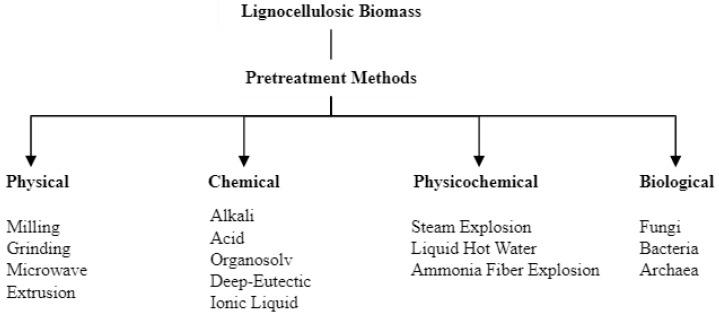
Lignocellulosic biomass represents the most abundant renewable carbon source on earth and is already used for energy and biofuel production. The pivotal step in the conversion process involving lignocellulosic biomass is pretreatment, which aims to disrupt the lignocellulose matrix. For effective pretreatment, a comprehensive understanding of the intricate structure of lignocellulose and its compositional properties during component disintegration and subsequent conversion is essential. The presence of lignin-carbohydrate complexes and covalent interactions between them within the lignocellulosic matrix confers a distinctively labile nature to hemicellulose. Meanwhile, the recalcitrant characteristics of lignin pose challenges in the fractionation process, particularly during delignification. Delignification is a critical step that directly impacts the purity of lignin and facilitates the breakdown of bonds involving lignin and lignin-carbohydrate complexes surrounding cellulose. This article discusses a two-step fractionation approach for efficient lignin extraction, providing viable paths for lignin-based valorization described in the literature. This approach allows for the creation of individual process streams for each component, tailored to extract their corresponding compounds.
木质纤维素生物质是地球上最丰富的可再生碳源,已被用于能源和生物燃料生产。涉及木质纤维素生物质的转化过程中的关键步骤是预处理,其目的是破坏木质纤维素基质。为了进行有效的预处理,全面了解木质纤维素在组分分解及后续转化过程中的复杂结构及其组成特性至关重要。木质纤维素基质中木质素 - 碳水化合物复合物的存在以及它们之间的共价相互作用赋予了半纤维素显著的不稳定性质。同时,木质素的顽固特性在分馏过程中带来了挑战,尤其是在脱木质素过程中。脱木质素是一个关键步骤,它直接影响木质素的纯度,并促进涉及纤维素周围木质素和木质素 - 碳水化合物复合物的键的断裂。本文讨论了一种用于高效提取木质素的两步分馏方法,为文献中描述的基于木质素的增值提供了可行途径。这种方法允许为每个组分创建单独的工艺流,以量身定制提取其相应的化合物。

 Zotero 插件