
儿童和青少年牙周健康和/或肥胖的唾液及龈沟液生物标志物:一项系统评价与荟萃分析
Salivary and gingival crevicular fluid biomarkers of periodontal health and/or obesity among children and adolescents: A systematic review and meta-analysis.
作者信息
Deng Qianyi, Wong Hai Ming, Peng Simin
机构信息
Paediatric Dentistry and Orthodontics, Faculty of Dentistry, The University of Hong Kong, Hong Kong SAR, China.
Hospital of Stomatology, Guanghua School of Stomatology, Sun Yat-sen University, Guangzhou, China.
出版信息
Heliyon. 2023 Dec 18;10(1):e23782. doi: 10.1016/j.heliyon.2023.e23782. eCollection 2024 Jan 15.
OBJECTIVES
To investigate the association of salivary and gingival crevicular fluid (GCF) biomarkers with periodontal status and obesity in children and adolescents.
DATA/SOURCES: A literature search up to July 2023 was conducted through PubMed, Web of Science, Embase, ProQuest Medical Database, ProQuest SciTech Premium Collection, and the Cochrane Library. Observational studies comparing salivary and GCF biomarkers in children and adolescents with compromised periodontal status and/or obesity were included for data extraction. A meta-analysis was performed to estimate the overall standardised mean difference.
STUDY SELECTION
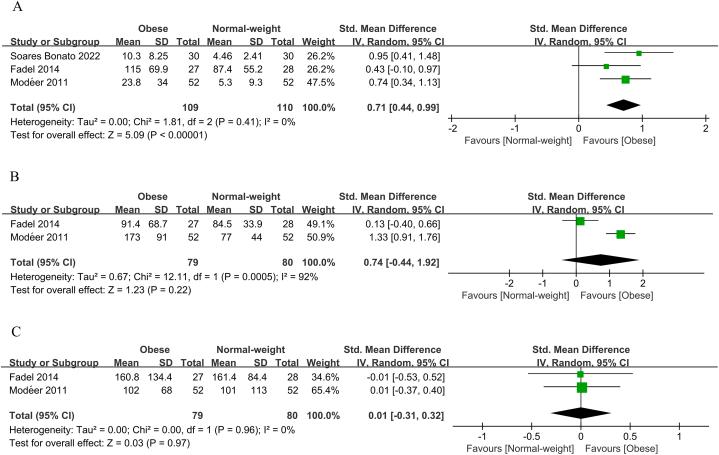
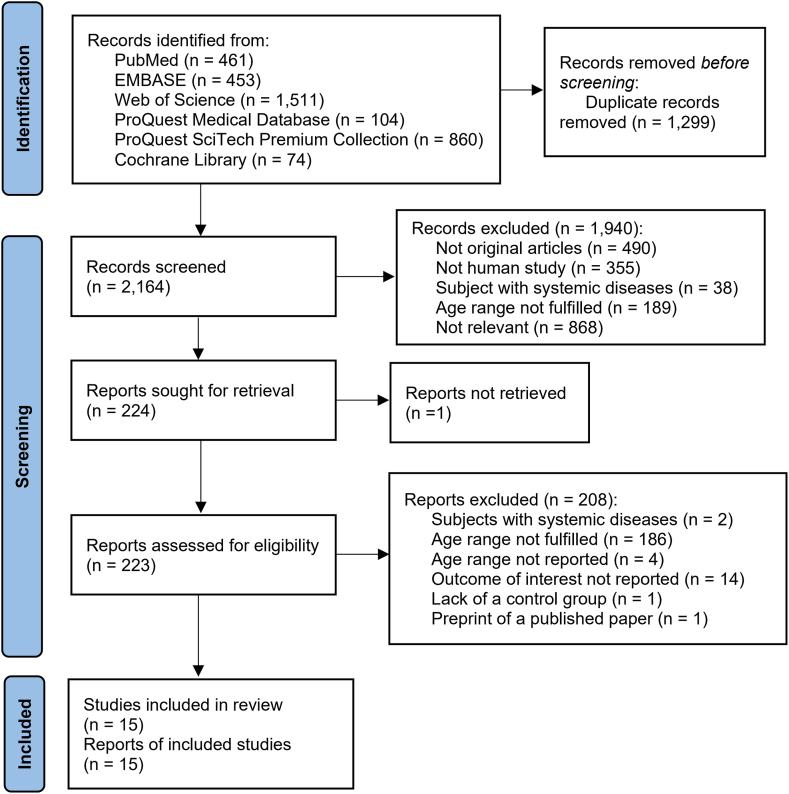
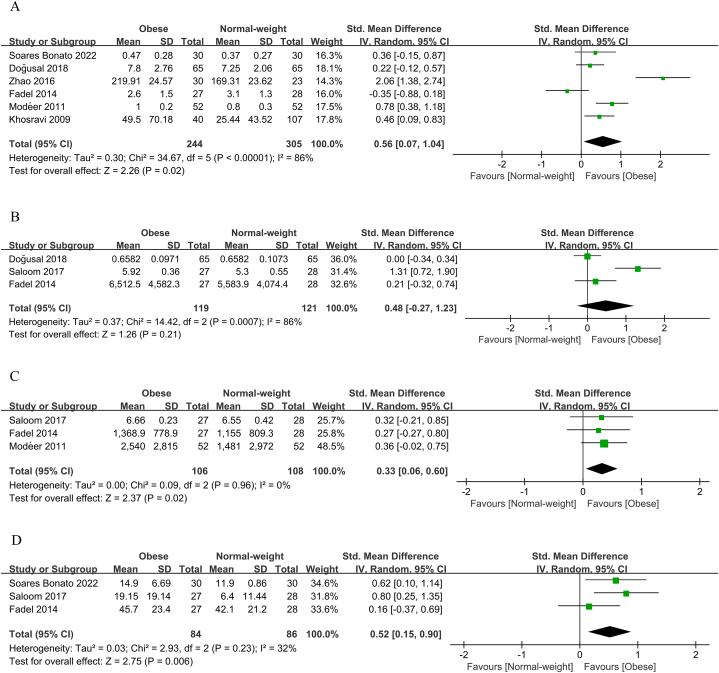
Fifteen observational studies met the inclusion criteria and were included in this systematic review. Meta-analysis was only applicable in synthesising the dyadic relationship between GCF biomarkers and obesity. The results demonstrated that children and adolescents with obesity had significantly higher GCF levels of tumour necrosis factor-alpha (SMD:0.56; 95% CI:0.07, 1.04), adiponectin (SMD:0.33; 95% CI:0.06, 0.60), leptin (SMD:0.52; 95% CI:0.15, 0.90), and interleukin-1 beta (SMD:0.71; 95% CI:0.44, 0.99) than those with normal weight.
CONCLUSION
To date, no study has well addressed the triadic association between salivary or GCF biomarkers, periodontal status, and obesity among children and adolescents. Further in-depth, high-quality studies are required to investigate these associations.
CLINICAL SIGNIFICANCE
Periodontal disease and obesity are growing public health crises worldwide. Their relationship has been intensively studied. Investigating the salivary or GCF biomarkers alterations could help better understand the relationship between periodontal disease and obesity, which would assist in tailoring future oral health promotion programs.
目的
探讨唾液和龈沟液(GCF)生物标志物与儿童及青少年牙周状况和肥胖之间的关联。
数据/来源:截至2023年7月,通过PubMed、Web of Science、Embase、ProQuest医学数据库、ProQuest科技高级文集以及Cochrane图书馆进行了文献检索。纳入了比较牙周状况受损和/或肥胖的儿童及青少年唾液和GCF生物标志物的观察性研究以进行数据提取。进行荟萃分析以估计总体标准化均数差。
研究选择
15项观察性研究符合纳入标准并被纳入本系统评价。荟萃分析仅适用于综合GCF生物标志物与肥胖之间的二元关系。结果表明,肥胖的儿童及青少年的GCF中肿瘤坏死因子-α水平显著更高(标准化均数差:0.56;95%置信区间:0.07,1.04),脂联素(标准化均数差:0.33;95%置信区间:0.06,0.60),瘦素(标准化均数差:0.52;95%置信区间:0.15,0.90),以及白细胞介素-1β(标准化均数差:0.71;95%置信区间:0.44,0.99),高于体重正常者。
结论
迄今为止,尚无研究充分探讨儿童及青少年唾液或GCF生物标志物、牙周状况和肥胖之间的三元关联。需要进一步开展深入、高质量的研究来调查这些关联。
临床意义
牙周病和肥胖是全球日益严重的公共卫生危机。它们之间的关系已得到深入研究。研究唾液或GCF生物标志物的改变有助于更好地理解牙周病与肥胖之间的关系,这将有助于制定未来的口腔健康促进计划。
 Zotero 插件