
基于智能手机的HIV病毒载量监测自检的以人为本设计。
Human-centered design of a smartphone-based self-test for HIV viral load monitoring.
作者信息
Rodriguez Natalia M, Balian Lara, Tolliver Cealia, Kataki Ishita, Jesus Julio Rivera-De, Linnes Jacqueline C
机构信息
Department of Public Health, College of Health and Human Sciences, Purdue University, West Lafayette, IN, USA.
Weldon School of Biomedical Engineering, College of Engineering, Purdue University, West Lafayette, IN, USA.
出版信息
J Clin Transl Sci. 2023 Nov 24;7(1):e262. doi: 10.1017/cts.2023.686. eCollection 2023.
BACKGROUND/OBJECTIVE: HIV viral load self-testing could enable people living with HIV (PLHIV) to monitor their viral suppression status more easily, potentially facilitating medication adherence and safe behavior decision-making. Smartphone-based viral load testing innovations have the potential to reach resource-limited and vulnerable communities to address inequities in access to HIV care. However, successful development and translation of these tests requires meaningful investigation of end-user contexts and incorporation of those context-specific needs early in the design process. The objective of this study is to engage PLHIV and HIV healthcare providers in human-centered design research to inform key design and implementation considerations for a smartphone-based HIV viral load self-testing device prototype in development.
METHODS
Semi-structured in-depth interviews were conducted with PLHIV ( = 10) and HIV providers ( = 4) in Indiana, a state with suboptimal viral suppression rates and marked disparities in access to HIV care. Interview guides were developed based on contextual investigation and human-centered design frameworks and included a demonstration of the device prototype with feedback-gathering questions.
RESULTS
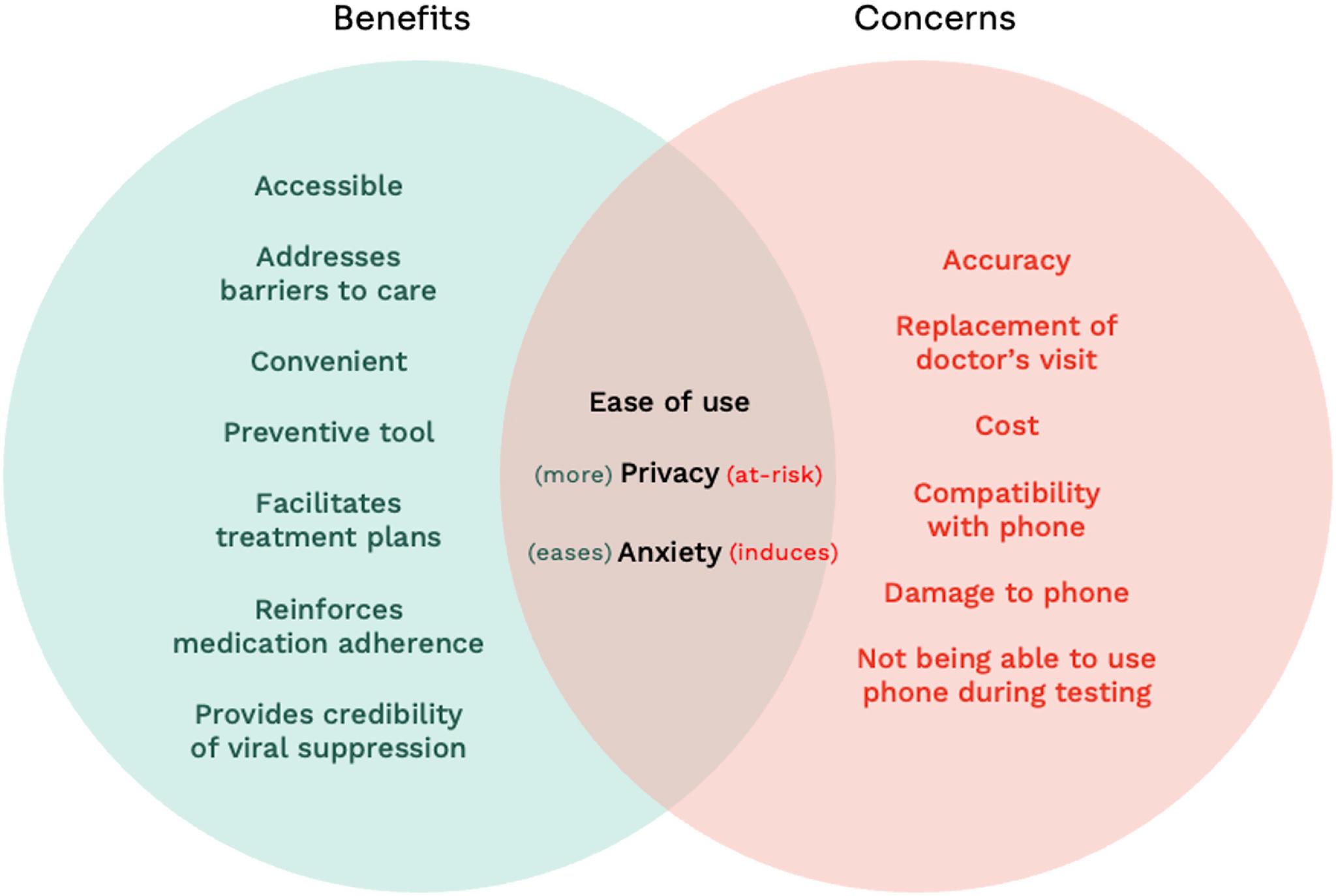
Thematic analysis of interview transcripts revealed important benefits, concerns, and user requirements for smartphone-based HIV VL self-testing within the context of PLHIV lived experience, knowledge, and barriers to care in Indiana.
CONCLUSION
End-user needs and preferences were identified as key design specifications and implementation considerations to facilitate the acceptability and inform ongoing development and ultimately real-world translation of the HIV VL monitoring device prototype.
背景/目的:HIV病毒载量自我检测可使HIV感染者(PLHIV)更轻松地监测其病毒抑制状态,有可能促进药物依从性和安全行为决策。基于智能手机的病毒载量检测创新有潜力惠及资源有限和弱势社区,以解决HIV治疗获取方面的不平等问题。然而,这些检测的成功开发和转化需要对终端用户背景进行有意义的调查,并在设计过程早期纳入这些特定背景需求。本研究的目的是让PLHIV和HIV医疗服务提供者参与以用户为中心的设计研究,为正在开发的基于智能手机的HIV病毒载量自我检测设备原型的关键设计和实施考虑提供信息。
方法
在印第安纳州对10名PLHIV和4名HIV医疗服务提供者进行了半结构化深入访谈,该州病毒抑制率不理想,且在HIV治疗获取方面存在显著差异。访谈指南基于背景调查和以用户为中心的设计框架制定,包括对设备原型的演示以及收集反馈的问题。
结果
对访谈记录的主题分析揭示了在印第安纳州PLHIV的生活经历、知识和护理障碍背景下,基于智能手机的HIV病毒载量自我检测的重要益处、担忧和用户需求。
结论
终端用户的需求和偏好被确定为关键设计规范和实施考虑因素,以促进可接受性,并为HIV病毒载量监测设备原型的持续开发及最终的实际应用提供信息。


 Zotero 插件