
糖尿病引起的神经退行性变中的神经胶质细胞改变。
Glial cell alterations in diabetes-induced neurodegeneration.
机构信息
Diabetes and Metabolism Research Unit, Vall d'Hebron Research Institute, Universitat Autònoma de Barcelona, Barcelona, Spain.
Wellcome-Wolfson Institute for Experimental Medicine, Queen's University, Belfast, UK.
出版信息
Cell Mol Life Sci. 2024 Jan 18;81(1):47. doi: 10.1007/s00018-023-05024-y.
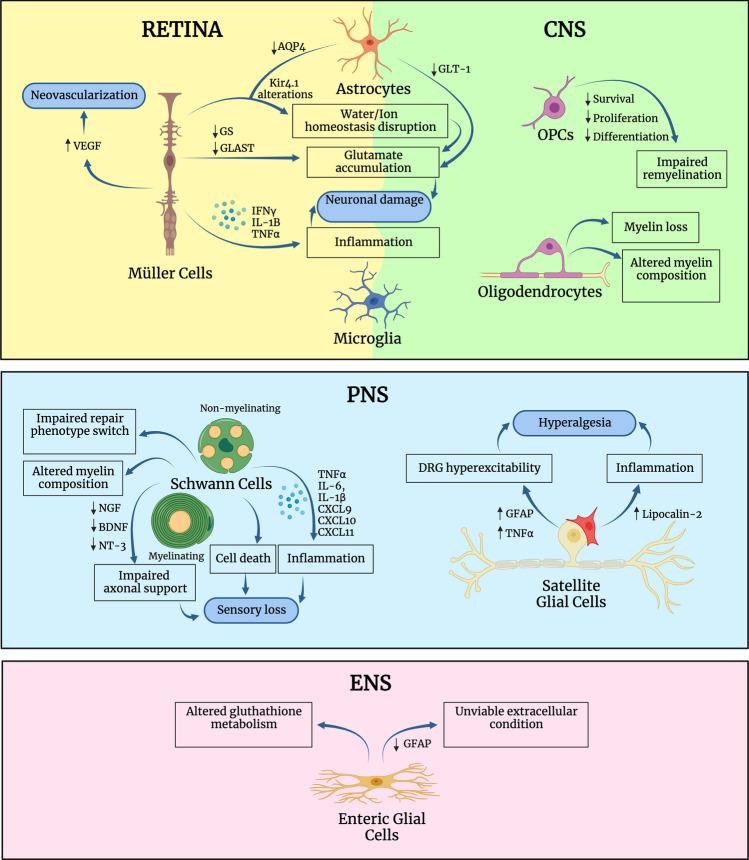
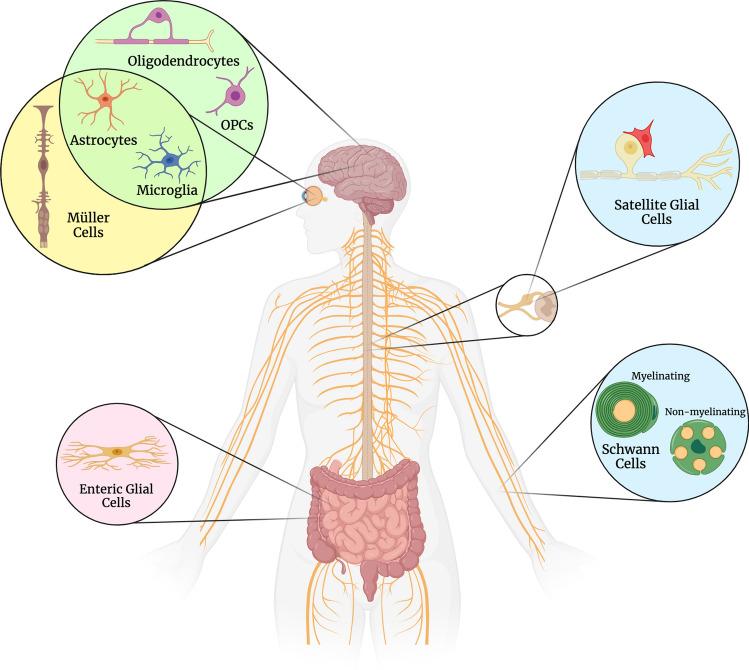
Type 2 diabetes mellitus is a global epidemic that due to its increasing prevalence worldwide will likely become the most common debilitating health condition. Even if diabetes is primarily a metabolic disorder, it is now well established that key aspects of the pathogenesis of diabetes are associated with nervous system alterations, including deleterious chronic inflammation of neural tissues, referred here as neuroinflammation, along with different detrimental glial cell responses to stress conditions and neurodegenerative features. Moreover, diabetes resembles accelerated aging, further increasing the risk of developing age-linked neurodegenerative disorders. As such, the most common and disabling diabetic comorbidities, namely diabetic retinopathy, peripheral neuropathy, and cognitive decline, are intimately associated with neurodegeneration. As described in aging and other neurological disorders, glial cell alterations such as microglial, astrocyte, and Müller cell increased reactivity and dysfunctionality, myelin loss and Schwann cell alterations have been broadly described in diabetes in both human and animal models, where they are key contributors to chronic noxious inflammation of neural tissues within the PNS and CNS. In this review, we aim to describe in-depth the common and unique aspects underlying glial cell changes observed across the three main diabetic complications, with the goal of uncovering shared glial cells alterations and common pathological mechanisms that will enable the discovery of potential targets to limit neuroinflammation and prevent neurodegeneration in all three diabetic complications. Diabetes and its complications are already a public health concern due to its rapidly increasing incidence, and thus its health and economic impact. Hence, understanding the key role that glial cells play in the pathogenesis underlying peripheral neuropathy, retinopathy, and cognitive decline in diabetes will provide us with novel therapeutic approaches to tackle diabetic-associated neurodegeneration.
2 型糖尿病是一种全球性疾病,由于其在全球的患病率不断增加,它可能成为最常见的使人衰弱的健康状况。即使糖尿病主要是一种代谢紊乱,但现在已经明确,糖尿病发病机制的关键方面与神经系统改变有关,包括神经组织的有害慢性炎症,这里称为神经炎症,以及不同的胶质细胞对应激条件和神经退行性特征的有害反应。此外,糖尿病类似于加速衰老,进一步增加了发展与年龄相关的神经退行性疾病的风险。因此,最常见和最致残的糖尿病合并症,即糖尿病视网膜病变、周围神经病变和认知能力下降,与神经退行性变密切相关。如在衰老和其他神经紊乱中所描述的,小胶质细胞、星形胶质细胞和 Müller 细胞的改变,如反应性和功能障碍增加、髓鞘丢失和施万细胞改变,在人类和动物模型的糖尿病中都得到了广泛描述,它们是周围神经系统和中枢神经系统神经组织慢性有害炎症的关键因素。在这篇综述中,我们旨在深入描述在三种主要糖尿病并发症中观察到的胶质细胞变化的共同和独特方面,目的是揭示共同的胶质细胞改变和共同的病理机制,这将使我们能够发现潜在的靶点,以限制所有三种糖尿病并发症中的神经炎症和预防神经退行性变。由于糖尿病的发病率迅速增加,其对健康和经济的影响,糖尿病及其并发症已经成为一个公共卫生关注点。因此,了解胶质细胞在糖尿病周围神经病变、视网膜病变和认知能力下降的发病机制中所起的关键作用,将为我们提供治疗糖尿病相关神经退行性变的新方法。
 Zotero 插件