
ADHD 的炎症生物型与慢性应激有关:炎症蛋白质组的数据分析。
Inflammatory biotype of ADHD is linked to chronic stress: a data-driven analysis of the inflammatory proteome.
机构信息
Goethe University Frankfurt, University Hospital, Department of Psychiatry, Psychosomatic Medicine and Psychotherapy, Frankfurt, Germany.
Fraunhofer Institute for Translational Medicine and Pharmacology ITMP, Frankfurt, Germany.
出版信息
Transl Psychiatry. 2024 Jan 18;14(1):37. doi: 10.1038/s41398-023-02729-3.
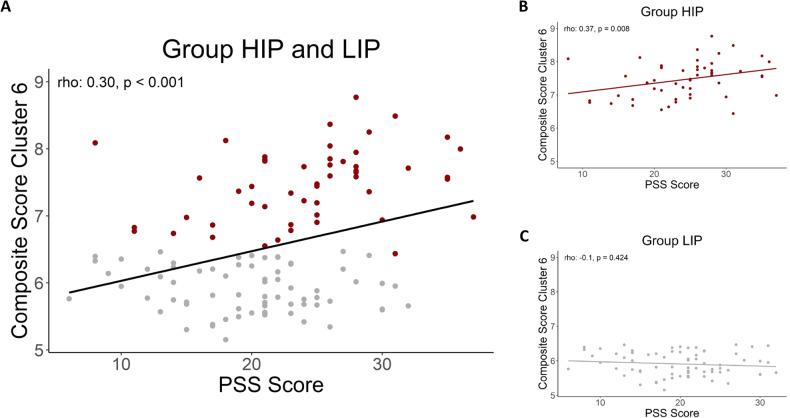
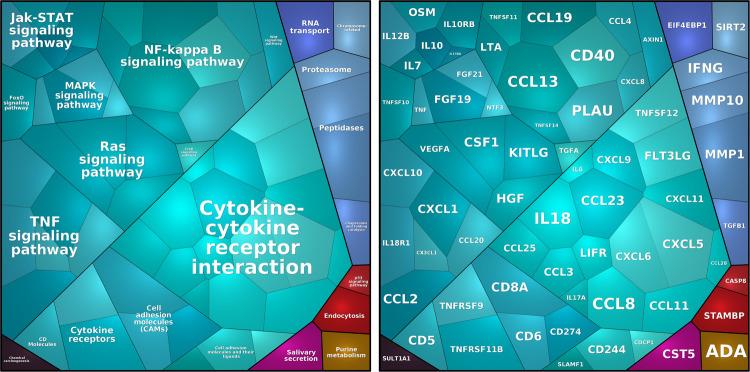
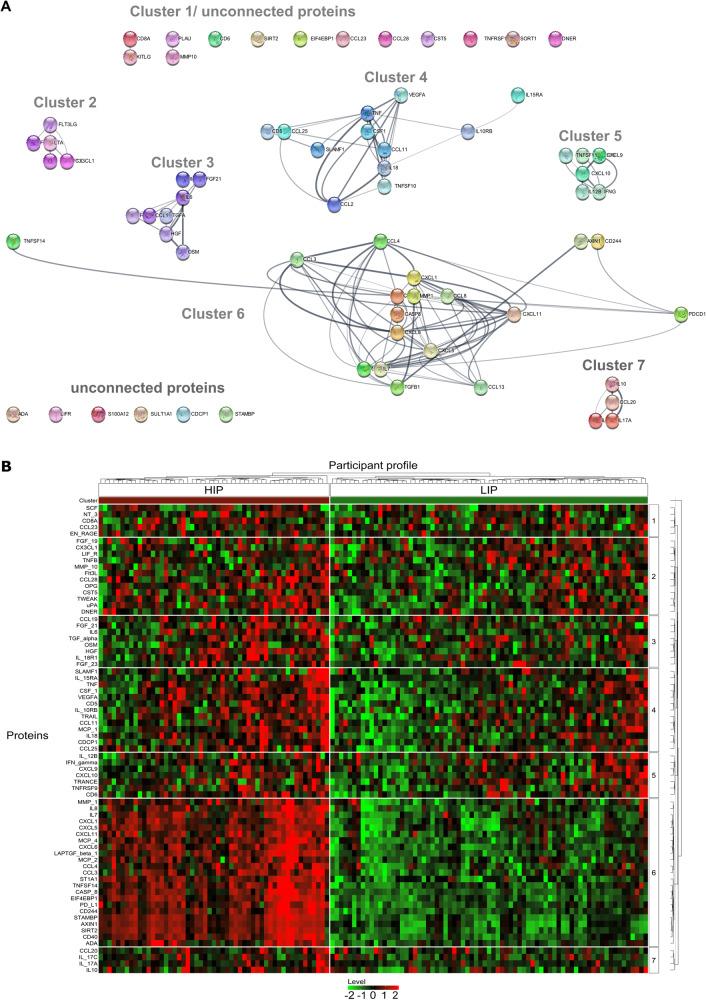
The association between Attention Deficit Hyperactivity Disorder (ADHD) and low-grade inflammation has been explored in children but rarely in adults. Inflammation is characteristic of some, but not all, patients with ADHD and might be influenced by ADHD medication but also lifestyle factors including nutrition, smoking, and stress. It is also still unclear if any specific symptoms are related to inflammation. Therefore, we assessed 96 inflammatory proteins in a deeply phenotyped cohort of 126 adult ADHD participants with a stable medication status using OLINK technology. A data-based, unsupervised hierarchical clustering method could identify two distinct biotypes within the 126 ADHD participants based on their inflammatory profile: a higher inflammatory potential (HIP) and a lower inflammatory protein potential (LIP) group. Biological processes that differed strongest between groups were related to the NF-κB pathway, chemokine signaling, IL-17 signaling, metabolic alterations, and chemokine attraction. A comparison of sample characteristics revealed that the HIP group was more likely to have higher levels of chronic stress (p < 0.001), a higher clinical global impression scale score (p = 0.030), and a higher risk for suicide (p = 0.032). Medication status did not influence protein levels significantly (p ≥ 0.074), but psychotropic co-medication (p ≤ 0.009) did. In conclusion, our data suggest the presence of two distinct biotypes in adults with ADHD. Higher levels of inflammatory proteins in ADHD are linked to higher levels of chronic perceived stress in a linear fashion. Further research on inflammation in adults with ADHD should take stress levels into account.
注意缺陷多动障碍(ADHD)与低度炎症之间的关联在儿童中已有探讨,但在成人中很少见。炎症是某些但不是所有 ADHD 患者的特征,可能受到 ADHD 药物治疗以及包括营养、吸烟和压力在内的生活方式因素的影响。也尚不清楚是否有任何特定症状与炎症有关。因此,我们使用 OLINK 技术在一个具有稳定药物治疗状态的 126 名成年 ADHD 参与者的深度表型队列中评估了 96 种炎症蛋白。基于数据的无监督层次聚类方法可以根据参与者的炎症特征将 126 名 ADHD 参与者分为两种不同的生物型:更高炎症潜能(HIP)和更低炎症蛋白潜能(LIP)组。组间差异最强的生物学过程与 NF-κB 途径、趋化因子信号、IL-17 信号、代谢改变和趋化因子吸引有关。对样本特征的比较表明,HIP 组更有可能具有更高水平的慢性应激(p<0.001)、更高的临床总体印象量表评分(p=0.030)和更高的自杀风险(p=0.032)。药物治疗状态对蛋白质水平没有显著影响(p≥0.074),但精神药物合并治疗有显著影响(p≤0.009)。总之,我们的数据表明 ADHD 成人中存在两种不同的生物型。ADHD 中炎症蛋白水平升高与慢性感知应激水平呈线性相关。对 ADHD 成人的炎症进一步研究应考虑应激水平。
 Zotero 插件