
一项关于疼痛性子宫内膜异位症心理体验的定性研究和调查的主题综合分析。
A thematic synthesis of qualitative studies and surveys of the psychological experience of painful endometriosis.
机构信息
Research Dept of Clinical, Educational & Health Psychology, University College London, Gower St, London, WC1E 6BT, UK.
出版信息
BMC Womens Health. 2024 Jan 18;24(1):50. doi: 10.1186/s12905-023-02874-3.
BACKGROUND
Endometriosis is a widespread problem in women of reproductive age, causing cyclical and non-cyclical pain in the pelvis and elsewhere, and associated with fatigue, fertility problems, and other symptoms. As a chronic pain problem, psychological variables are important in adjustment and quality of life, but have not been systematically studied.
METHODS
A systematic search of multiple databases was conducted to obtain surveys and qualitative studies of women's experience of pain from endometriosis. Surveys were combined narratively; qualitative studies were combined by thematic synthesis, and the latter rated for methodological quality.
RESULTS
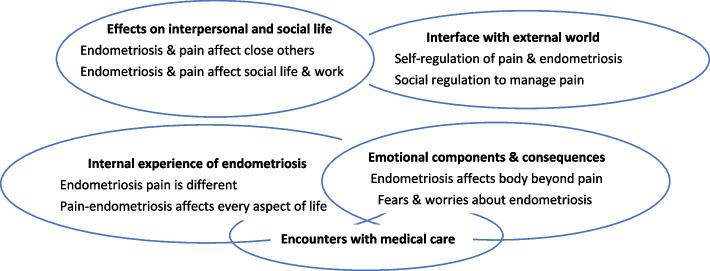
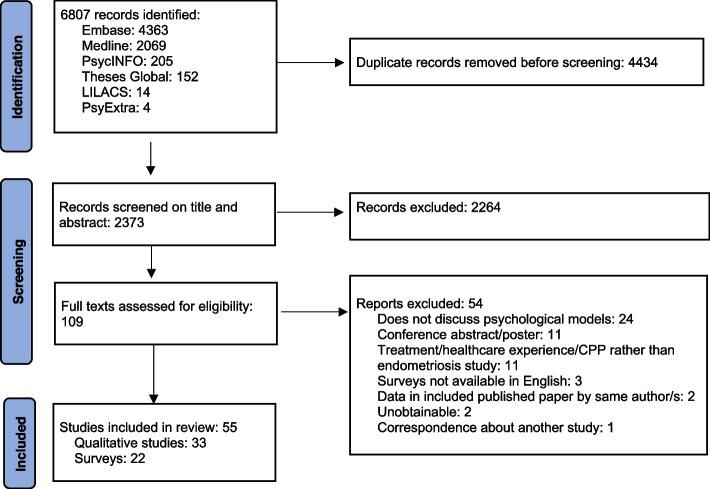
Over 2000 records were screened on title and abstract, and provided 22 surveys and 33 qualitative studies from which accounts could be extracted of the psychological components of pain in endometriosis. Surveys mostly addressed quality of life in endometriosis, with poorer quality of life associated with higher levels of pain and of distress, but few referred to coherent psychological models. Qualitative studies focused rather on women's experience of living with endometriosis, including trajectories of diagnosis and treatment, with a few addressing meaning and identity. Thematic synthesis provided 10 themes, under the groupings of internal experience of endometriosis (impact on body, emotions, and life); interface with the external world (through self-regulation and social regulation); effects on interpersonal and social life, and encounters with medical care.
CONCLUSIONS
The psychological components of pain from endometriosis only partly corresponded with standard psychological models of pain, derived from musculoskeletal pain studies, with fewer fears about physical integrity and more about difficulties of managing pain and other symptoms in social settings, including work. Better understanding of the particular psychological threats of endometriosis, and integration of this understanding into medical care with opportunities for psychologically-based pain management, would substantially improve the experience and quality of life of women with painful endometriosis.
背景
子宫内膜异位症是育龄妇女中普遍存在的问题,会导致骨盆和其他部位周期性和非周期性疼痛,并伴有疲劳、生育问题和其他症状。作为一种慢性疼痛问题,心理变量在适应和生活质量方面很重要,但尚未得到系统研究。
方法
通过对多个数据库进行系统搜索,获得了关于女性子宫内膜异位症疼痛体验的调查和定性研究。对调查进行了叙述性综合;对定性研究进行了主题综合,并对后者的方法学质量进行了评分。
结果
在标题和摘要上筛选了超过 2000 条记录,提供了 22 项调查和 33 项定性研究,从中可以提取出子宫内膜异位症疼痛的心理组成部分。调查主要涉及子宫内膜异位症的生活质量,生活质量较差与疼痛和痛苦程度较高相关,但很少涉及连贯的心理模型。定性研究则更关注女性患有子宫内膜异位症的体验,包括诊断和治疗的轨迹,少数研究涉及意义和身份。主题综合提供了 10 个主题,分为子宫内膜异位症的内部体验(对身体、情绪和生活的影响);与外部世界的接口(通过自我调节和社会调节);对人际关系和社会生活的影响,以及与医疗保健的接触。
结论
子宫内膜异位症疼痛的心理组成部分与源自肌肉骨骼疼痛研究的标准心理疼痛模型部分对应,与对身体完整性的恐惧较少,而与在社会环境中管理疼痛和其他症状的困难更多,包括工作。更好地理解子宫内膜异位症的特殊心理威胁,并将这种理解纳入医疗保健中,为有疼痛的子宫内膜异位症妇女提供机会进行基于心理的疼痛管理,将大大改善她们的体验和生活质量。
 Zotero 插件