
颈椎融合手术后骨不连的相关因素。
Factors Associated With Nonunion After Cervical Fusion Surgery.
作者信息
Inose Hiroyuki, Takahashi Takuya, Matsukura Yu, Hashimoto Jun, Utagawa Kurando, Egawa Satoru, Yamada Kentaro, Hirai Takashi, Yoshii Toshitaka
机构信息
Department of Orthopedics, Dokkyo Medical University Saitama Medical Center, Saitama, JPN.
Department of Orthopedics, Tokyo Medical and Dental University, Tokyo, JPN.
出版信息
Cureus. 2023 Dec 20;15(12):e50866. doi: 10.7759/cureus.50866. eCollection 2023 Dec.
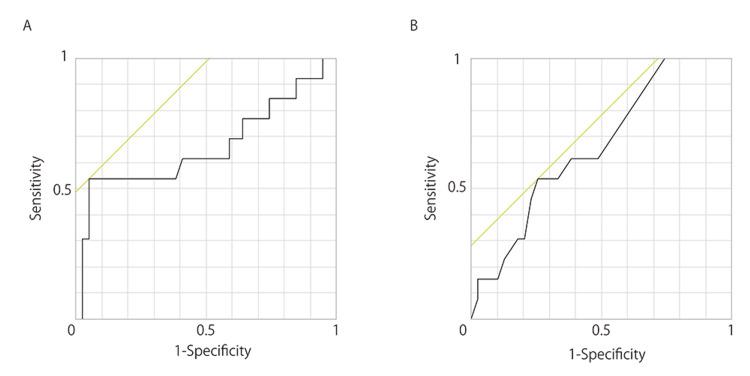
Background Bony fusion is a critical factor in the outcome of cervical spinal fusion surgery. While several factors have been proposed to affect bony fusion, their relative importance remains unclear. This study aimed to investigate the factors associated with bony fusion after cervical spinal fusion surgery. Methods We retrospectively evaluated the significance of the various factors on bone fusion after cervical fusion surgery. Then, multivariate logistic regression analyses were performed to determine the independent factors associated with bony fusion. A receiver operating characteristic (ROC) analysis was performed to evaluate the cutoff threshold. Results This study included a total of 52 patients with a mean age of 64 years. Among them, 28 (54%) were male, and 39 (75.0%) achieved bony fusion. The multivariate logistic regression analysis showed that preoperative intact parathyroid hormone (PTH) levels (odds ratio, 1.04; 95% confidence interval, 1.01-1.08; p-value = 0.02) and hemoglobin A1c (HbA1c) levels (odds ratio, 2.87; 95% confidence interval, 1.07-8.74; p-value = 0.04) were significant factors associated with bony fusion after cervical fusion surgery. The optimum cutoff values of intact PTH and HbA1c were 63.5 pg/mL and 6.2%, respectively. Conclusions This study identified preoperative intact PTH and HbA1c as significant factors associated with bony fusion after cervical fusion surgery. These biomarkers can be used to identify patients at higher risk of nonunion to optimize patient conditions and guide preoperative and postoperative management strategies.
背景 骨融合是颈椎融合手术结果的关键因素。虽然已提出多种因素会影响骨融合,但其相对重要性仍不明确。本研究旨在调查颈椎融合手术后与骨融合相关的因素。方法 我们回顾性评估了颈椎融合手术后各种因素对骨融合的意义。然后,进行多因素逻辑回归分析以确定与骨融合相关的独立因素。进行受试者工作特征(ROC)分析以评估临界阈值。结果 本研究共纳入52例患者,平均年龄64岁。其中,28例(54%)为男性,39例(75.0%)实现了骨融合。多因素逻辑回归分析显示,术前完整甲状旁腺激素(PTH)水平(比值比,1.04;95%置信区间,1.01 - 1.08;p值 = 0.02)和糖化血红蛋白(HbA1c)水平(比值比,2.87;95%置信区间,1.07 - 8.74;p值 = 0.04)是颈椎融合手术后与骨融合相关的重要因素。完整PTH和HbA1c的最佳临界值分别为63.5 pg/mL和6.2%。结论 本研究确定术前完整PTH和HbA1c是颈椎融合手术后与骨融合相关的重要因素。这些生物标志物可用于识别骨不连风险较高的患者,以优化患者状况并指导术前和术后管理策略。
 Zotero 插件