
暴露于蓝藻毒素 BMAA 中的港海豹大脑中的 TDP-43 和阿尔茨海默病病理。
TDP-43 and Alzheimer's Disease Pathology in the Brain of a Harbor Porpoise Exposed to the Cyanobacterial Toxin BMAA.
机构信息
Department of Neurology, Miller School of Medicine, University of Miami, Miami, FL 33136, USA.
Department of Pathology, Immunology and Laboratory Medicine, University of Florida, Gainesville, FL 32610, USA.
出版信息
Toxins (Basel). 2024 Jan 12;16(1):42. doi: 10.3390/toxins16010042.
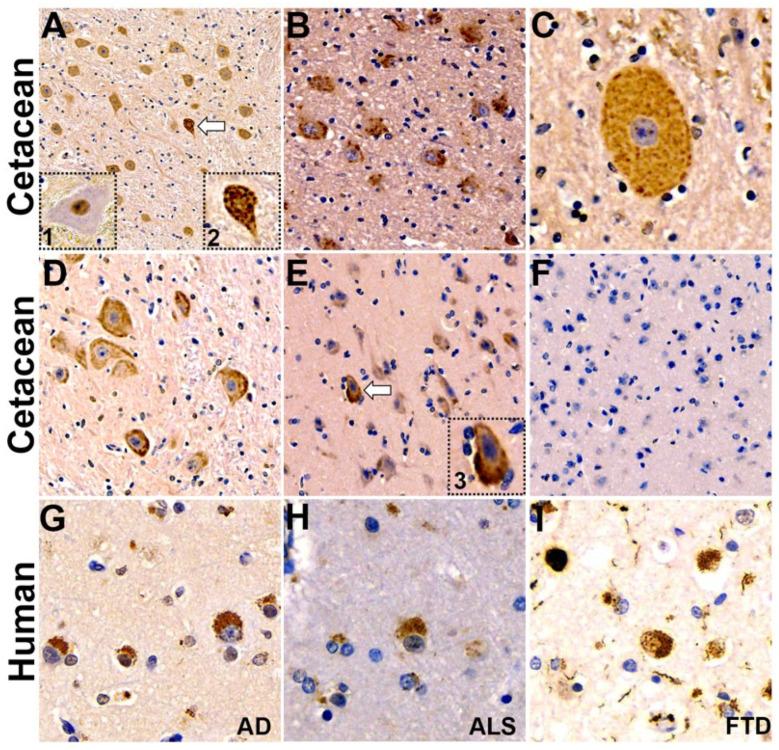
Cetaceans are well-regarded as sentinels for toxin exposure. Emerging studies suggest that cetaceans can also develop neuropathological changes associated with neurodegenerative disease. The occurrence of neuropathology makes cetaceans an ideal species for examining the impact of marine toxins on the brain across the lifespan. Here, we describe TAR DNA-binding protein 43 (TDP-43) proteinopathy and Alzheimer's disease (AD) neuropathological changes in a beached harbor porpoise () that was exposed to a toxin produced by cyanobacteria called β-N-methylamino-L-alanine (BMAA). We found pathogenic TDP-43 cytoplasmic inclusions in neurons throughout the cerebral cortex, midbrain and brainstem. P62/sequestosome-1, responsible for the autophagy of misfolded proteins, was observed in the amygdala, hippocampus and frontal cortex. Genes implicated in AD and TDP-43 neuropathology such as and were expressed in the brain. AD neuropathological changes such as amyloid-β plaques, neurofibrillary tangles, granulovacuolar degeneration and Hirano bodies were present in the hippocampus. These findings further support the development of progressive neurodegenerative disease in cetaceans and a potential causative link to cyanobacterial toxins. Climate change, nutrient pollution and industrial waste are increasing the frequency of harmful cyanobacterial blooms. Cyanotoxins like BMAA that are associated with neurodegenerative disease pose an increasing public health risk.
鲸类动物被认为是毒素暴露的良好监测者。新兴研究表明,鲸类动物也可能发展出与神经退行性疾病相关的神经病理学变化。神经病理学的发生使鲸类动物成为研究海洋毒素对整个生命周期大脑影响的理想物种。在这里,我们描述了暴露于蓝藻产生的毒素 β-N-甲基氨基-L-丙氨酸 (BMAA) 后搁浅的港湾鼠海豚 () 中 TAR DNA 结合蛋白 43 (TDP-43) 蛋白病和阿尔茨海默病 (AD) 神经病理学变化。我们在大脑皮层、中脑和脑干的神经元中发现了致病性 TDP-43 细胞质包涵体。P62/自噬体-1,负责错误折叠蛋白的自噬,在杏仁核、海马体和额叶皮质中被观察到。与 AD 和 TDP-43 神经病理学相关的基因,如 和 ,在大脑中表达。AD 神经病理学变化,如淀粉样β斑块、神经原纤维缠结、颗粒空泡变性和希拉诺体,存在于海马体中。这些发现进一步支持了鲸类动物进行性神经退行性疾病的发展,并与蓝藻毒素有潜在的因果关系。气候变化、营养污染和工业废物增加了有害蓝藻水华的发生频率。与神经退行性疾病相关的蓝藻毒素 BMAA 构成了日益严重的公共健康风险。


 Zotero 插件