
多态性与药物基因组学:过去与未来。
Polymorphisms and Pharmacogenomics of : The Past and the Future.
机构信息
Laboratory of Cellular and Molecular Toxicology, Department of Health Science, University "Magna Græcia" of Catanzaro, 88100 Catanzaro, Italy.
Laboratory of Neuroendocrine Endocrine and Germinal Differentiation and Communication (NorDiC), Université de Rouen Normandie, INSERM, UMR 1239, 76000 Rouen, France.
出版信息
Genes (Basel). 2024 Jan 10;15(1):87. doi: 10.3390/genes15010087.
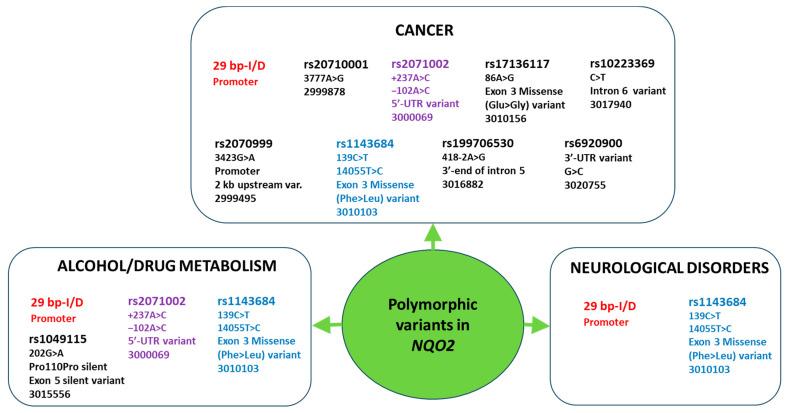
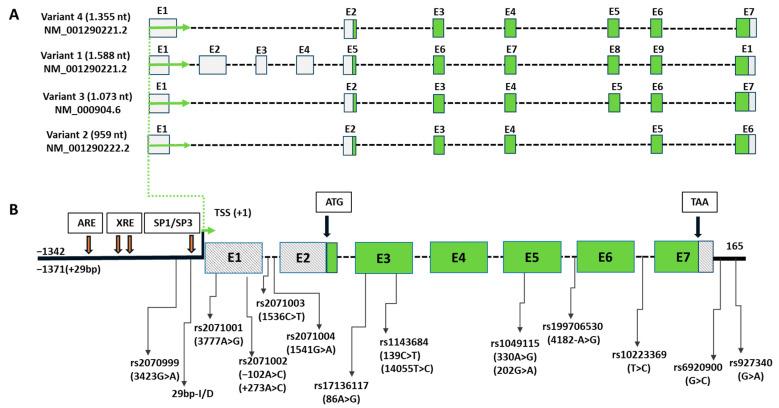
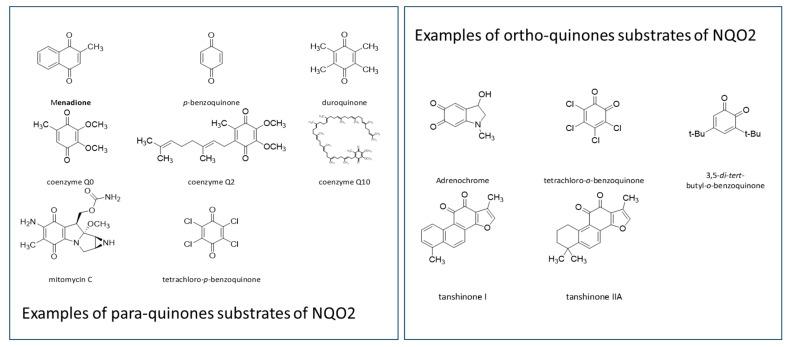
The flavoenzyme N-ribosyldihydronicotinamide (NRH):quinone oxidoreductase 2 (NQO2) catalyzes two-electron reductions of quinones. NQO2 contributes to the metabolism of biogenic and xenobiotic quinones, including a wide range of antitumor drugs, with both toxifying and detoxifying functions. Moreover, NQO2 activity can be inhibited by several compounds, including drugs and phytochemicals such as flavonoids. NQO2 may play important roles that go beyond quinone metabolism and include the regulation of oxidative stress, inflammation, and autophagy, with implications in carcinogenesis and neurodegeneration. is a highly polymorphic gene with several allelic variants, including insertions (I), deletions (D) and single-nucleotide (SNP) polymorphisms located mainly in the promoter, but also in other regulatory regions and exons. This is the first systematic review of the literature reporting on NQO2 gene variants as risk factors in degenerative diseases or drug adverse effects. In particular, hypomorphic 29 bp I alleles have been linked to breast and other solid cancer susceptibility as well as to interindividual variability in response to chemotherapy. On the other hand, hypermorphic polymorphisms were associated with Parkinson's and Alzheimer's disease. The I and D promoter variants and other NQO2 polymorphisms may impact cognitive decline, alcoholism and toxicity of several nervous system drugs. Future studies are required to fill several gaps in NQO2 research.
黄素酶 N-核糖二氢烟酰胺(NRH):醌氧化还原酶 2(NQO2)催化醌的两电子还原。NQO2 有助于生物和外源性醌的代谢,包括广泛的抗肿瘤药物,具有毒性和解毒功能。此外,几种化合物可以抑制 NQO2 活性,包括药物和植物化学物质如类黄酮。NQO2 可能发挥超出醌代谢的重要作用,包括调节氧化应激、炎症和自噬,对癌症发生和神经退行性变有影响。NQO2 是一个高度多态性基因,有几个等位基因变体,包括插入(I)、缺失(D)和单核苷酸(SNP)多态性,主要位于启动子,但也位于其他调节区域和外显子中。这是首次对文献进行系统综述,报告 NQO2 基因变异作为退行性疾病或药物不良反应的风险因素。特别是,弱效的 29 bp I 等位基因与乳腺癌和其他实体癌易感性以及化疗反应的个体间变异性有关。另一方面,超效多态性与帕金森病和阿尔茨海默病有关。I 和 D 启动子变体和其他 NQO2 多态性可能会影响认知能力下降、酗酒和几种神经系统药物的毒性。需要进一步的研究来填补 NQO2 研究中的几个空白。
 Zotero 插件