
一种体外模型,用于评估上皮细胞在存在[具体物质未给出]的情况下共同暴露于炭黑(纳米)颗粒后早期免疫标志物:应激细胞在毒理学测试中的作用。
An In Vitro Model to Assess Early Immune Markers Following Co-Exposure of Epithelial Cells to Carbon Black (Nano)Particles in the Presence of : A Role for Stressed Cells in Toxicological Testing.
作者信息
Brown Scott, Evans Stephen J, Burgum Michael J, Meldrum Kirsty, Herridge Jack, Akinbola Blessing, Harris Llinos G, Jenkins Rowena, Doak Shareen H, Clift Martin J D, Wilkinson Thomas S
机构信息
Microbiology and Infectious Disease, Institute of Life Science, Swansea University Medical School (SUMS), Swansea SA2 8PP, UK.
In Vitro Toxicology Group, Institute of Life Science, Swansea University Medical School (SUMS), Swansea SA2 8PP, UK.
出版信息
Biomedicines. 2024 Jan 8;12(1):128. doi: 10.3390/biomedicines12010128.
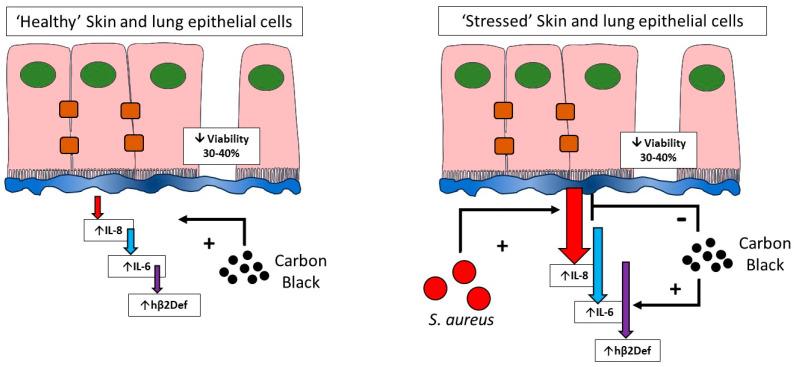
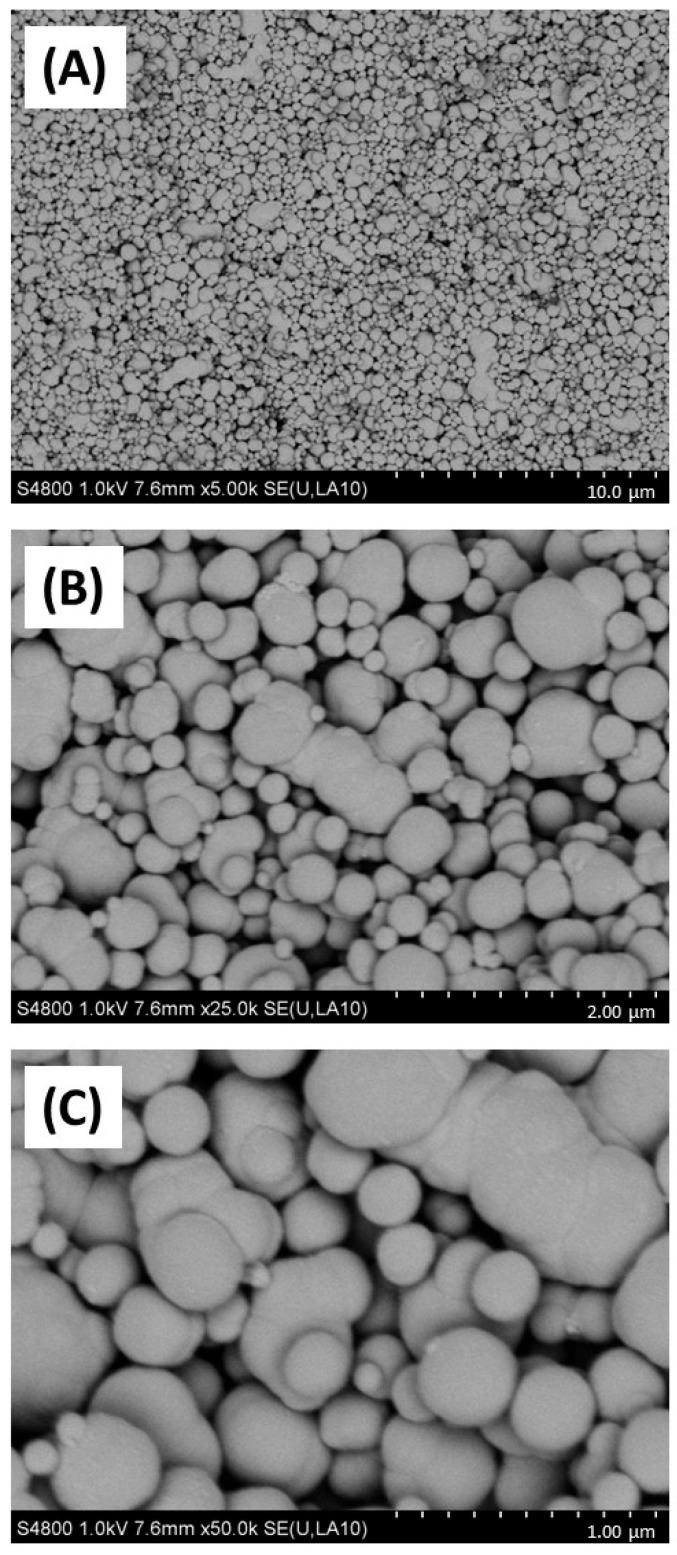
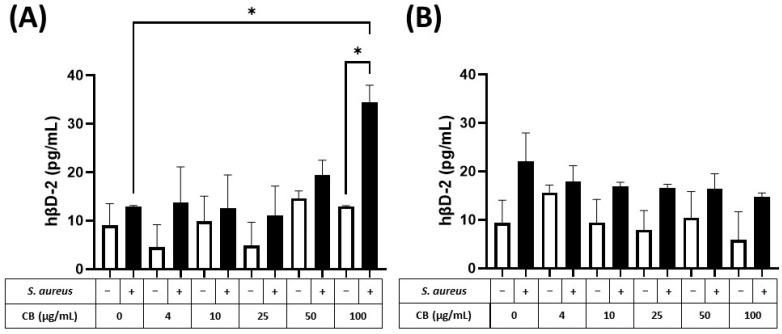
The exposure of human lung and skin to carbon black (CB) is continuous due to its widespread applications. Current toxicological testing uses 'healthy' cellular systems; however, questions remain whether this mimics the everyday stresses that human cells are exposed to, including infection. lung and skin infections remain prevalent in society, and include pneumonia and atopic dermatitis, respectively, but current in vitro toxicological testing does not consider infection stress. Therefore, investigating the effects of CB co-exposure in 'stressed' infected epithelial cells in vitro may better approximate true toxicity. This work aims to study the impact of CB exposure during infection stress in A549 (lung) and HaCaT (skin) epithelial cells. Physicochemical characterisation of CB confirmed its dramatic polydispersity and potential to aggregate. CB significantly inhibited growth in cell culture media. CB did not induce cytokines or antimicrobial peptides from lung and skin epithelial cells, when given alone, but did reduce HaCaT and A549 cell viability to 55% and 77%, respectively. In contrast, induced a robust interleukin (IL)-8 response in both lung and skin epithelial cells. IL-6 and human beta defensin (hβD)-2 could only be detected when cells were stimulated with with no decreases in cell viability. However, co-exposure to CB (100 µg/mL) and resulted in significant inhibition of IL-8 (compared to alone) without further reduction in cell viability. Furthermore, the same co-exposure induced significantly more hβD-2 (compared to alone). This work confirms that toxicological testing in healthy versus stressed cells gives significantly different responses. This has significant implications for toxicological testing and suggests that cell stresses (including infection) should be included in current models to better represent the diversity of cell viabilities found in lung and skin within a general population. This model will have significant application when estimating CB exposure in at-risk groups, such as factory workers, the elderly, and the immunocompromised.
由于炭黑(CB)的广泛应用,人类的肺部和皮肤持续暴露于其中。目前的毒理学测试使用的是“健康”细胞系统;然而,这种系统能否模拟人类细胞所面临的日常压力(包括感染)仍存在疑问。肺部和皮肤感染在社会中仍然普遍存在,分别包括肺炎和特应性皮炎,但目前的体外毒理学测试并未考虑感染压力。因此,在体外研究炭黑与“应激”感染上皮细胞共同暴露的影响可能更接近真实毒性。这项工作旨在研究炭黑暴露对A549(肺部)和HaCaT(皮肤)上皮细胞在感染应激期间的影响。炭黑的物理化学特性证实了其显著的多分散性和聚集潜力。炭黑显著抑制了细胞培养基中的生长。单独给予炭黑时,它不会诱导肺部和皮肤上皮细胞产生细胞因子或抗菌肽,但确实分别将HaCaT和A549细胞活力降低至55%和77%。相比之下,单独刺激肺部和皮肤上皮细胞时会引发强烈的白细胞介素(IL)-8反应。只有在用刺激细胞时才能检测到IL-6和人β-防御素(hβD)-2,且细胞活力没有降低。然而,同时暴露于炭黑(100µg/mL)和时,与单独相比,IL-8受到显著抑制,且细胞活力没有进一步降低。此外,相同的共同暴露诱导产生的hβD-2显著增多(与单独相比)。这项工作证实,在健康细胞与应激细胞中进行毒理学测试会产生显著不同的反应。这对毒理学测试具有重要意义,并表明细胞应激(包括感染)应纳入当前模型,以更好地反映普通人群中肺部和皮肤细胞活力的多样性。在评估高危人群(如工厂工人、老年人和免疫功能低下者)的炭黑暴露时,该模型将具有重要应用价值。


 Zotero 插件