
揭示miR-200b-3p在注意力缺陷多动障碍(ADHD)中的作用及其对自发性高血压大鼠(SHR)的治疗潜力。
Unraveling the Role of miR-200b-3p in Attention-Deficit/Hyperactivity Disorder (ADHD) and Its Therapeutic Potential in Spontaneously Hypertensive Rats (SHR).
作者信息
Chang Tung-Ming, Lin Hsiu-Ling, Tzang Chih-Chen, Liang Ju-An, Hsu Tsai-Ching, Tzang Bor-Show
机构信息
Pediatric Neurology, Changhua Christian Children's Hospital, Changhua Christian Hospital, Changhua 500, Taiwan.
Cardiac Function Examination Room, Chung Shan Medical University Hospital, Taichung 402, Taiwan.
出版信息
Biomedicines. 2024 Jan 10;12(1):144. doi: 10.3390/biomedicines12010144.
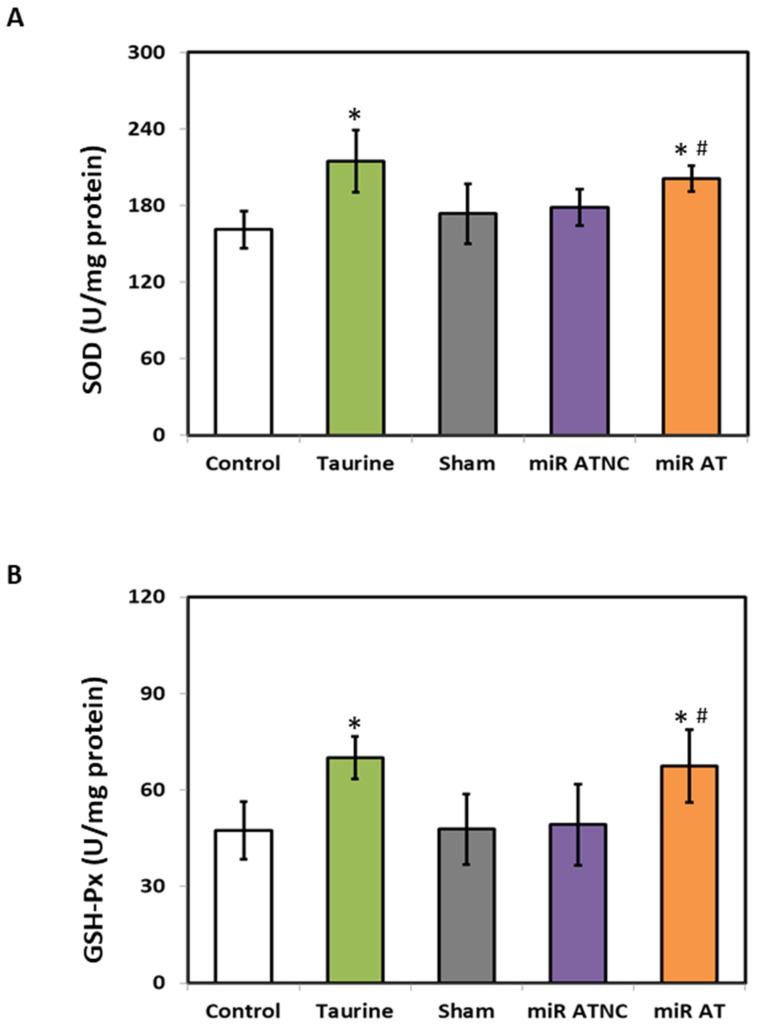
Attention-deficit/hyperactivity disorder (ADHD) is a prevalent neurodevelopmental disorder in children with unknown etiology. Impaired learning ability was commonly reported in ADHD patients and has been associated with dopamine uptake in the striatum of an animal model. Another evidence also indicated that micro-RNA (miR)-200b-3p is associated with learning ability in various animal models. However, the association between miR-200b-3p and ADHD-related symptoms remains unclear. Therefore, the current study investigated the role of miR-200b-3p in ADHD-related symptoms such as inattention and striatal inflammatory cytokines. To verify the influence of miR-200b-3p in ADHD-related symptoms, striatal stereotaxic injection of miR-200b-3p antagomir (AT) was performed on spontaneously hypertensive rats (SHR). The antioxidant activity and expressions of miR-200b-3p, slit guidance ligand 2 (Slit2), and inflammatory cytokines in the striatum of SHR were measured using quantitative real-time polymerase chain reaction (RT-qPCR), immunohistochemistry (IHC), immunoblotting, and enzyme-linked immunosorbent assay (ELISA). The spontaneous alternation of SHR was tested using a three-arm Y-shaped maze. The administration of miR-200b-3p AT or taurine significantly decreased striatal tumor necrosis factor (TNF)-α, interleukin (IL)-1β, and IL-6 in SHR, along with increased super-oxide dismutase (SOD) and glutathione peroxidase (GSH-Px) activities and significantly higher spontaneous alternation. In this paper, we show that miR-200b-3p AT and taurine alleviates ADHD-related symptoms in SHR. These findings provide insights into ADHD's molecular basis and suggest miR-200b-3p as a potential therapeutic target. Concurrently, this study also suggests broad implications for treating neurodevelopmental disorders affecting learning activity such as ADHD.
注意力缺陷多动障碍(ADHD)是一种常见于儿童的神经发育障碍,病因不明。ADHD患者普遍存在学习能力受损的情况,并且这与动物模型纹状体中的多巴胺摄取有关。另一项证据还表明,微小RNA(miR)-200b-3p在各种动物模型中与学习能力相关。然而,miR-200b-3p与ADHD相关症状之间的关联仍不清楚。因此,本研究调查了miR-200b-3p在ADHD相关症状(如注意力不集中和纹状体炎性细胞因子)中的作用。为了验证miR-200b-3p对ADHD相关症状的影响,对自发性高血压大鼠(SHR)进行了纹状体立体定向注射miR-200b-3p拮抗剂(AT)。使用定量实时聚合酶链反应(RT-qPCR)、免疫组织化学(IHC)、免疫印迹和酶联免疫吸附测定(ELISA)测量SHR纹状体中的抗氧化活性以及miR-200b-3p、缝隙引导配体2(Slit2)和炎性细胞因子的表达。使用三臂Y型迷宫测试SHR的自发交替行为。给予miR-200b-3p AT或牛磺酸可显著降低SHR纹状体中的肿瘤坏死因子(TNF)-α、白细胞介素(IL)-1β和IL-6,同时超氧化物歧化酶(SOD)和谷胱甘肽过氧化物酶(GSH-Px)活性增加,且自发交替行为显著增强。在本文中,我们表明miR-200b-3p AT和牛磺酸可减轻SHR中的ADHD相关症状。这些发现为ADHD的分子基础提供了见解,并表明miR-200b-3p是一个潜在的治疗靶点。同时,本研究还对治疗影响学习活动的神经发育障碍(如ADHD)具有广泛的意义。



 Zotero 插件