
四跨膜蛋白在4期结肠癌原发肿瘤及肝转移灶中的空间转录组分析
Spatial Transcriptomic Profiling of Tetraspanins in Stage 4 Colon Cancer from Primary Tumor and Liver Metastasis.
作者信息
Suwatthanarak Thanawat, Thanormjit Kullanist, Suwatthanarak Tharathorn, Acharayothin Onchira, Methasate Asada, Chinswangwatanakul Vitoon, Tanjak Pariyada
机构信息
Siriraj Cancer Center, Faculty of Medicine Siriraj Hospital, Mahidol University, Bangkok 10700, Thailand.
Department of Surgery, Faculty of Medicine Siriraj Hospital, Mahidol University, Bangkok 10700, Thailand.
出版信息
Life (Basel). 2024 Jan 15;14(1):126. doi: 10.3390/life14010126.
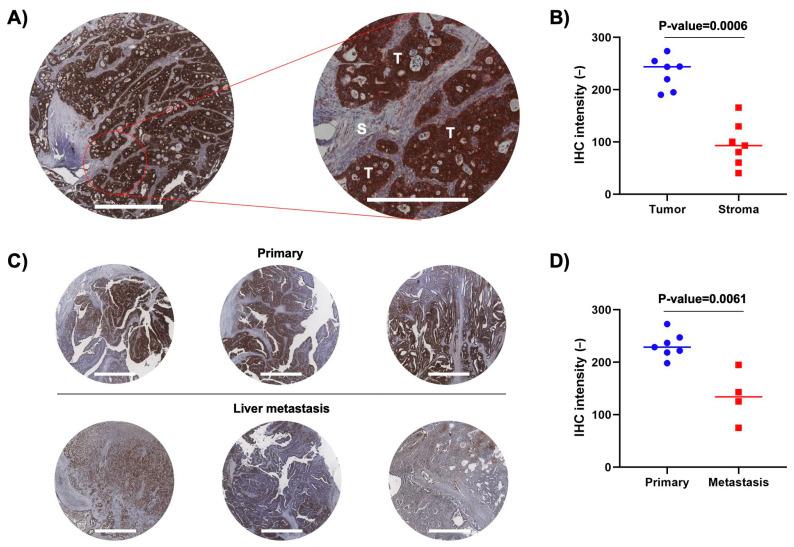
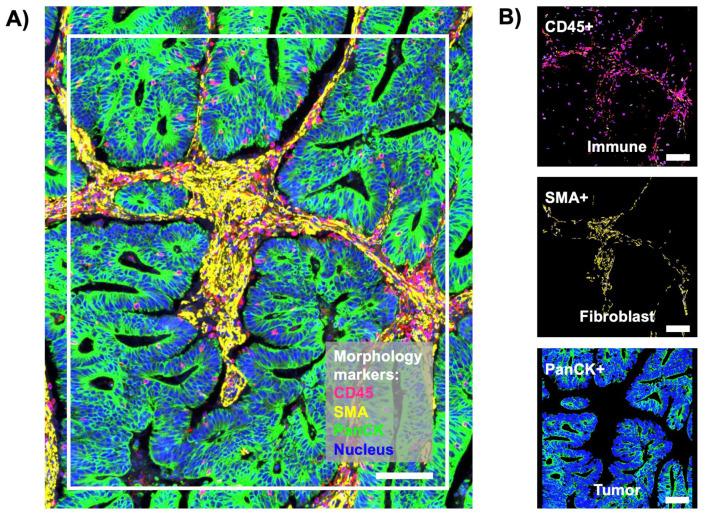
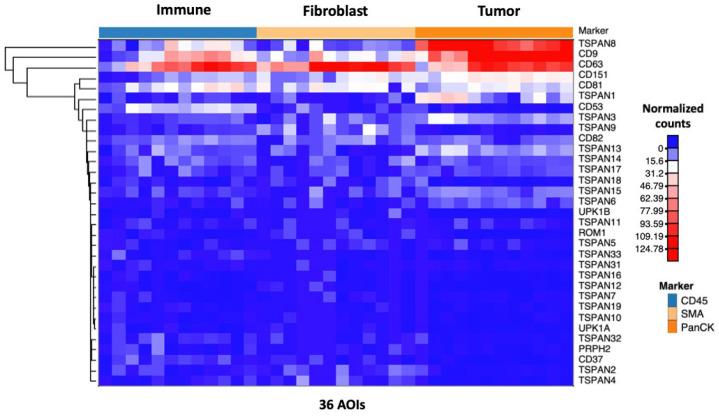
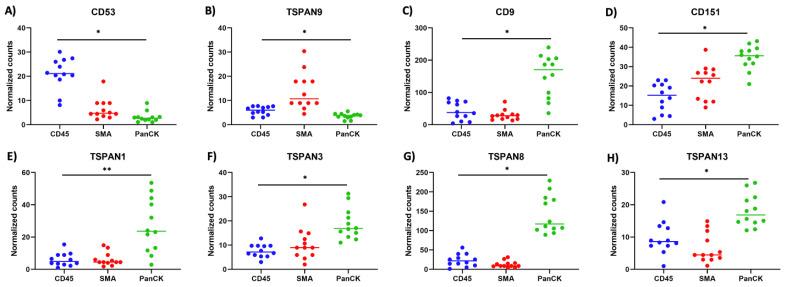
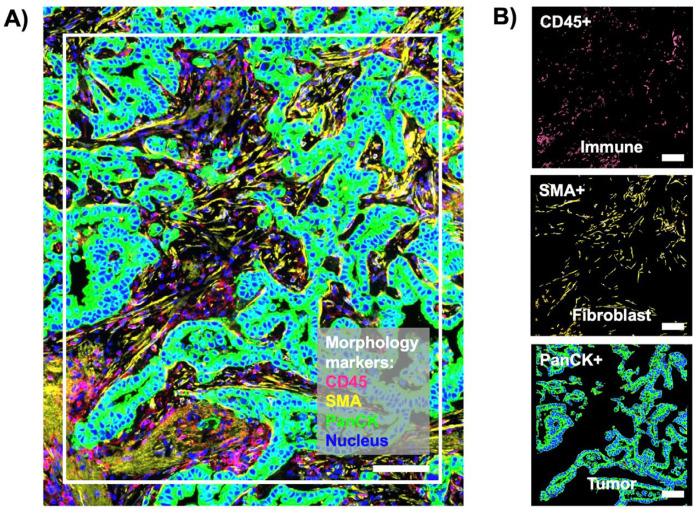
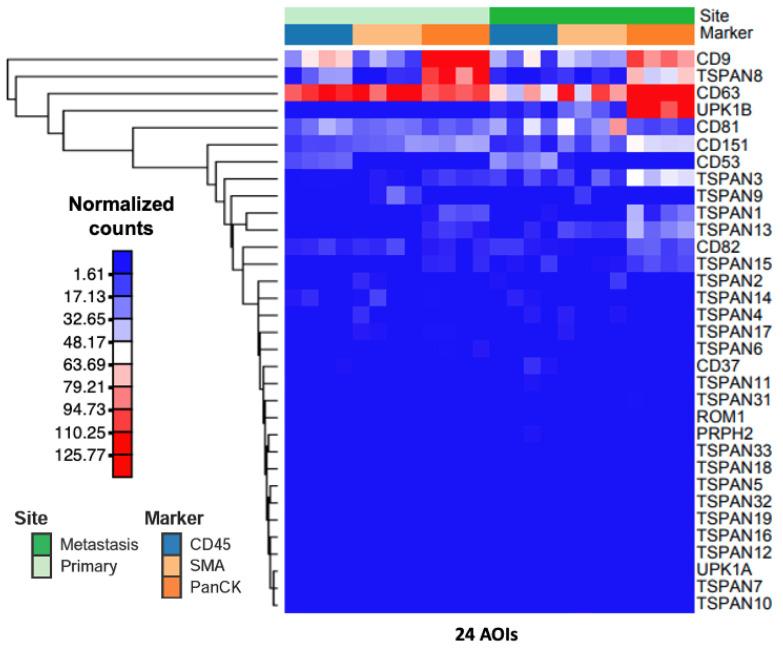
Stage 4 colon cancer (CC) presents a significant global health challenge due to its poor prognosis and limited treatment options. Tetraspanins, the transmembrane proteins involved in crucial cancer processes, have recently gained attention as diagnostic markers and therapeutic targets. However, their spatial expression and potential roles in stage 4 CC tissues remain unknown. Using the GeoMx digital spatial profiler, we profiled all 33 human tetraspanin genes in 48 areas within stage 4 CC tissues, segmented into immune, fibroblast, and tumor compartments. Our results unveiled diverse gene expression patterns across different primary tumor sub-regions. CD53 exhibited distinct overexpression in the immune compartment, hinting at a potential role in immune modulation. TSPAN9 was specifically overexpressed in the fibroblast compartment, suggesting involvement in tumor invasion and metastasis. CD9, CD151, TSPAN1, TSPAN3, TSPAN8, and TSPAN13 displayed specific overexpression in the tumor compartment, indicating potential roles in tumor growth. Furthermore, our differential analysis revealed significant spatial changes in tetraspanin expression between patient-matched stage 4 primary CC and metastatic liver tissues. These findings provide spatially resolved insights into the expression and potential roles of tetraspanins in stage 4 CC progression, proposing their utility as diagnostic markers and therapeutic targets. Understanding this landscape is beneficial for tailoring therapeutic strategies to specific sub-tumor regions in the context of stage 4 CC and liver metastasis.
由于预后较差且治疗选择有限,四期结肠癌(CC)对全球健康构成了重大挑战。四跨膜蛋白是参与关键癌症进程的跨膜蛋白,最近作为诊断标志物和治疗靶点受到关注。然而,它们在四期CC组织中的空间表达及其潜在作用仍不清楚。我们使用GeoMx数字空间分析平台,对四期CC组织内48个区域的所有33个人类四跨膜蛋白基因进行了分析,这些区域被划分为免疫、成纤维细胞和肿瘤区室。我们的结果揭示了不同原发性肿瘤亚区域的多种基因表达模式。CD53在免疫区室中表现出明显的过表达,暗示其在免疫调节中可能发挥作用。TSPAN9在成纤维细胞区室中特异性过表达,表明其参与肿瘤侵袭和转移。CD9、CD151、TSPAN1、TSPAN3、TSPAN8和TSPAN13在肿瘤区室中表现出特异性过表达,表明其在肿瘤生长中可能发挥作用。此外,我们的差异分析揭示了患者匹配的四期原发性CC和转移性肝组织之间四跨膜蛋白表达的显著空间变化。这些发现为四跨膜蛋白在四期CC进展中的表达及其潜在作用提供了空间解析见解,提出了它们作为诊断标志物和治疗靶点的效用。了解这一情况有助于在四期CC和肝转移的背景下,针对特定的肿瘤亚区域制定治疗策略。

 Zotero 插件