
铁死亡作为一种细胞死亡的调控形式,是开发预防缺血/再灌注心脏损伤、心肌病和应激诱导性心脏损伤的新型药物的靶点。
Ferroptosis, a Regulated Form of Cell Death, as a Target for the Development of Novel Drugs Preventing Ischemia/Reperfusion of Cardiac Injury, Cardiomyopathy and Stress-Induced Cardiac Injury.
机构信息
Laboratory of Experimental Cardiology, Department of Emergency Cardiology, Cardiology Research Institute, Tomsk National Research Medical Center, Russian Academy of Sciences, Tomsk 634012, Russia.
Department of Biophysics and Functional Diagnostics, Siberian State Medical University, Tomsk 634050, Russia.
出版信息
Int J Mol Sci. 2024 Jan 11;25(2):897. doi: 10.3390/ijms25020897.
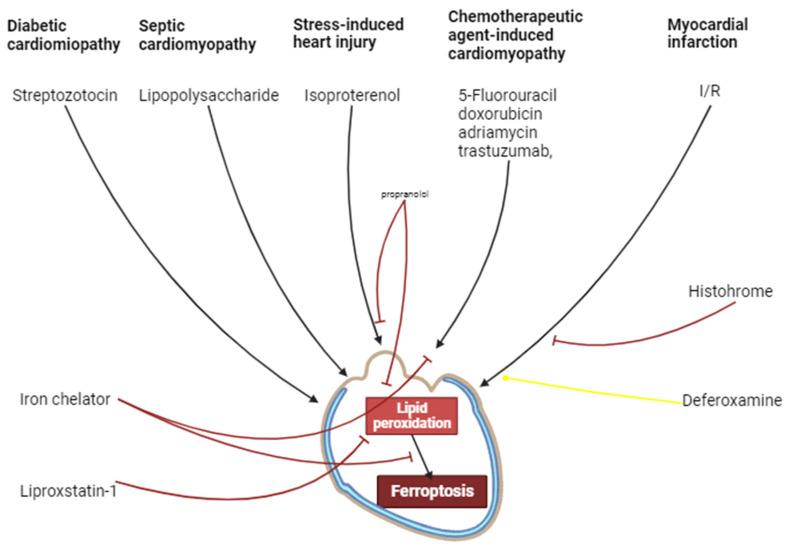
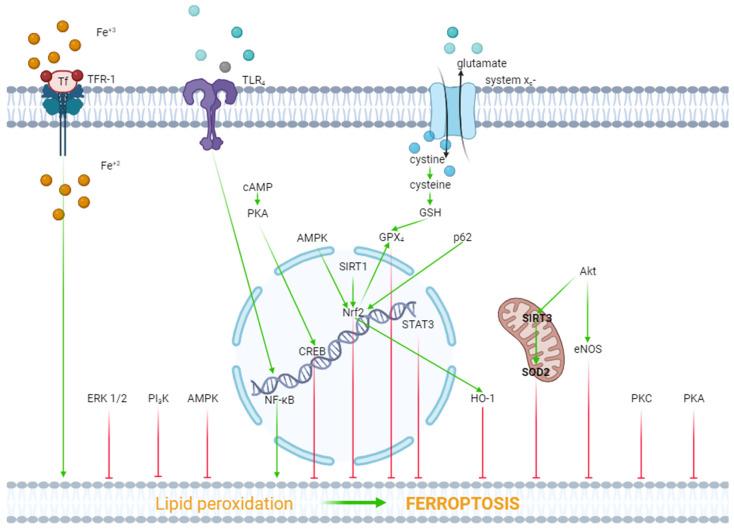
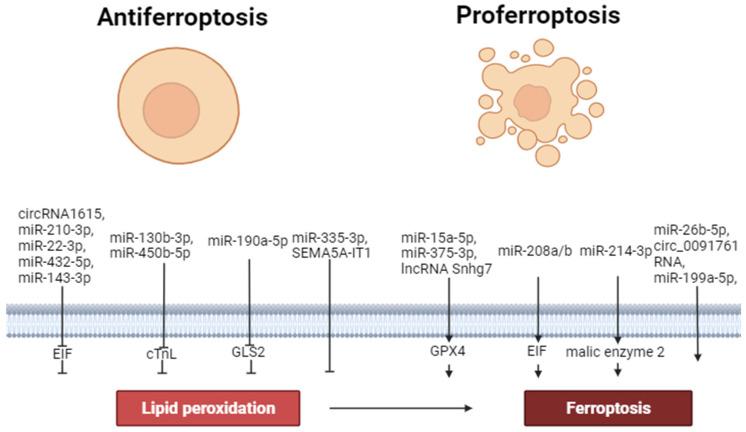
The hospital mortality in patients with ST-segment elevation myocardial infarction (STEMI) is about 6% and has not decreased in recent years. The leading cause of death of these patients is ischemia/reperfusion (I/R) cardiac injury. It is quite obvious that there is an urgent need to create new drugs for the treatment of STEMI based on knowledge about the pathogenesis of I/R cardiac injury, in particular, based on knowledge about the molecular mechanism of ferroptosis. In this study, it was demonstrated that ferroptosis is involved in the development of I/R cardiac injury, antitumor drug-induced cardiomyopathy, diabetic cardiomyopathy, septic cardiomyopathy, and inflammation. There is indirect evidence that ferroptosis participates in stress-induced cardiac injury. The activation of AMPK, PKC, ERK1/2, PI3K, and Akt prevents myocardial ferroptosis. The inhibition of HO-1 alleviates myocardial ferroptosis. The roles of GSK-3β and NOS in the regulation of ferroptosis require further study. The stimulation of Nrf2, STAT3 prevents ferroptosis. The activation of TLR4 and NF-κB promotes ferroptosis of cardiomyocytes. MiR-450b-5p and miR-210-3p can increase the tolerance of cardiomyocytes to hypoxia/reoxygenation through the inhibition of ferroptosis. Circ_0091761 RNA, miR-214-3p, miR-199a-5p, miR-208a/b, miR-375-3p, miR-26b-5p and miR-15a-5p can aggravate myocardial ferroptosis.
ST 段抬高型心肌梗死(STEMI)患者的院内死亡率约为 6%,且近年来并未降低。这些患者死亡的主要原因是缺血/再灌注(I/R)心脏损伤。很明显,迫切需要根据 I/R 心脏损伤的发病机制知识,特别是根据铁死亡的分子机制知识,开发治疗 STEMI 的新药。本研究表明,铁死亡参与了 I/R 心脏损伤、抗肿瘤药物诱导的心肌病、糖尿病心肌病、脓毒症性心肌病和炎症的发生发展。有间接证据表明,铁死亡参与了应激诱导的心脏损伤。AMPK、PKC、ERK1/2、PI3K 和 Akt 的激活可防止心肌铁死亡。HO-1 的抑制可减轻心肌铁死亡。GSK-3β 和 NOS 在铁死亡调节中的作用需要进一步研究。Nrf2、STAT3 的刺激可防止铁死亡。TLR4 和 NF-κB 的激活促进心肌细胞的铁死亡。miR-450b-5p 和 miR-210-3p 可通过抑制铁死亡增加心肌细胞对缺氧/复氧的耐受性。Circ_0091761 RNA、miR-214-3p、miR-199a-5p、miR-208a/b、miR-375-3p、miR-26b-5p 和 miR-15a-5p 可加重心肌铁死亡。


 Zotero 插件